How We Build Custom CRMs for Wicker Park
The first conversation is about your relationship types, not your software requirements. We want to understand the categories of people you work with, how those relationships begin, how they evolve, and what information is actually useful to you when you are sitting in front of a returning client or reviewing your pipeline. For an agency on Damen Avenue, that might mean project type, referral source, and last-contact date. For a tattoo studio on Hoyne Avenue, it might mean deposit status, session history, and preferred artist. The data model follows the relationship model, not a default template.
We build the CRM to fit the tools you already use. If your client intake starts with a form on your website, the CRM captures that data without manual re-entry. If your project management runs in Notion or Asana, we build connection points so the CRM reflects project status without duplicating data entry. If your invoicing is in QuickBooks or FreshBooks, the payment history appears in the client record. The goal is a single place to understand a client relationship, not another silo to maintain.
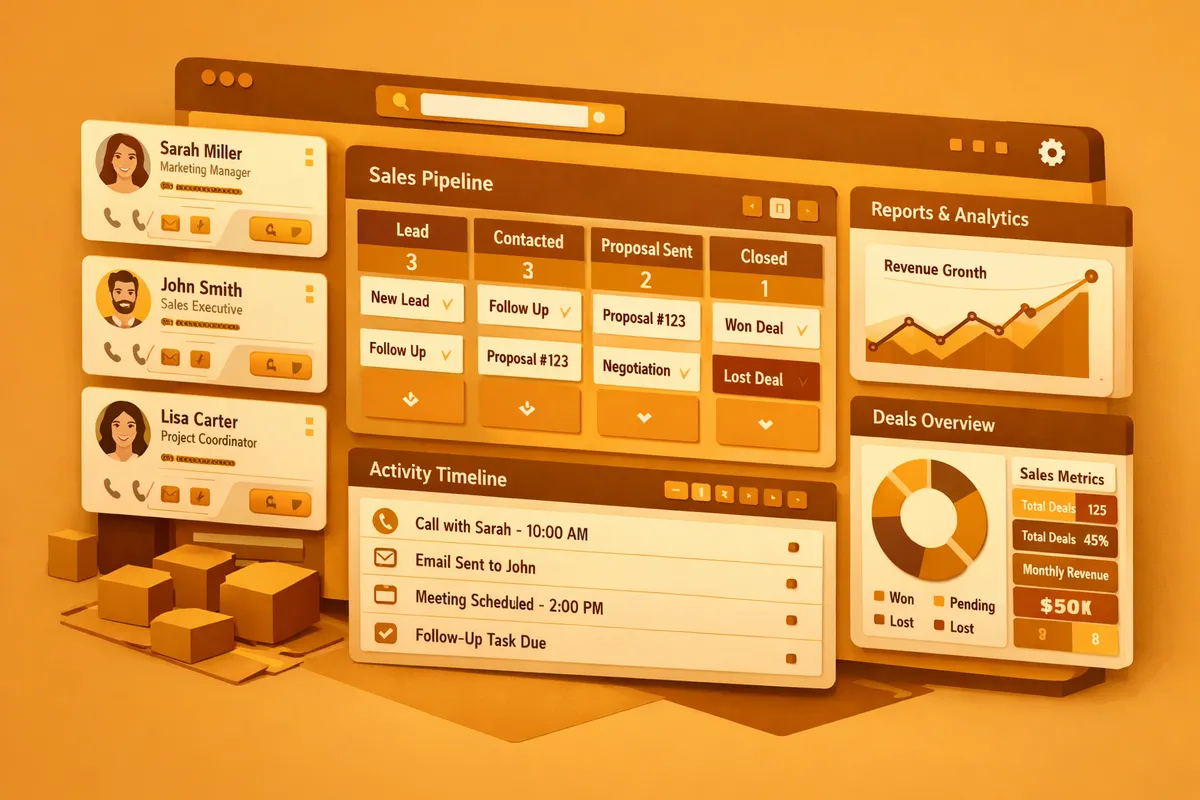
The interface matters more for a small team than it does for a large enterprise. An enterprise with dedicated CRM administrators can absorb a complex tool. A two-person studio near North Avenue cannot. We design CRM interfaces that surface the most important information immediately: who you need to follow up with this week, which active projects have upcoming milestones, which long-dormant clients have not been contacted in over six months. The tool should be something you open because it tells you something useful, not something you update out of obligation.
Industries We Serve in Wicker Park
Design and branding studios concentrated around Damen Avenue and the Flat Iron Arts Building manage multi-project client relationships where the same client may have a branding engagement, a packaging project, and a website in flight simultaneously. A custom CRM that links projects to client records, tracks feedback cycles, and flags which retainer clients are approaching contract renewal saves the studio principal from running those things in their head.
The tattoo shops and body art studios along Division Street and Hoyne Avenue have a client relationship model built on appointment history, artist preference, and design continuity across multiple sessions. A CRM built for this context tracks which designs are in progress, which clients are healing and ready to continue, and which regular customers have not booked in a while, details that matter enormously for the studio's scheduling health and client retention.
Creative and communications agencies in Wicker Park work with clients across long engagement windows that include strategy, production, and ongoing retainer phases. Managing the communication history, scope change records, and billing milestones for a dozen simultaneous clients without a purpose-built system is where agency ops break down. A custom CRM structures the engagement lifecycle so nothing falls through between phases.
Independent music venues and booking operations near North Avenue manage relationships with artists, promoters, sound engineers, and regulars who return across years. A venue's relationship database is effectively its competitive advantage. Knowing which artists drew well in the past, which promoters are reliable, and which regulars deserve personal outreach before a show sells out is the kind of knowledge that a general-purpose CRM is not built to hold.
Personal service businesses, from hair studios to fitness coaches operating out of Wicker Park's storefront and mixed-use spaces, run on appointment history and preference data that needs to be accessible before each client interaction. A CRM that loads a client's full history, including last service, any noted preferences, and outstanding gift card balances, in the seconds before the appointment makes the interaction feel intentional rather than generic.
Boutique retail shops along Milwaukee Avenue build customer relationships that go beyond transactional history. Knowing which customers buy a particular category, which ones have asked to be notified about specific arrivals, and which relationships have gone quiet after a strong start is the kind of intelligence that turns a customer list into a genuine relationship asset. Off-the-shelf retail tools rarely capture these nuances.
What to Expect Working With Us
1. Relationship mapping before any architecture. We spend the first session understanding how your client relationships actually work. Who are your categories of contacts? How do they come to you? What do you need to remember about them across time? For a studio near the Flat Iron Arts Building, this conversation will surface different requirements than it would for a venue on North Avenue. The data model we design is a direct output of this conversation.
2. Prototype and review before full build. We build a prototype of the core CRM views and walk you through them before writing production code. You see what the contact record looks like, how the pipeline or project tracker is organized, and how the follow-up queue is surfaced. You give feedback on what is useful and what is missing. This step prevents expensive build-and-discard cycles.
3. Integration setup and data migration. If you have existing client data in a spreadsheet, an old CRM, or scattered across your email history, we migrate it into the new system. Integrations with your existing tools, website forms, calendar, and billing software go live alongside the CRM so the system is connected from day one, not maintained as a separate island.
4. Training and a sixty-day ownership window. We do not hand you a tool and walk away. The first sixty days include direct support as you build the habit of using the system. We track adoption, adjust the interface based on how you are actually using it versus how we thought you would, and refine the follow-up logic to fit your real relationship rhythms, including seasonal cycles like the ramp-up before Wicker Park Fest or the post-holiday slow period in January.