How We Build Business Process Automation for Wicker Park
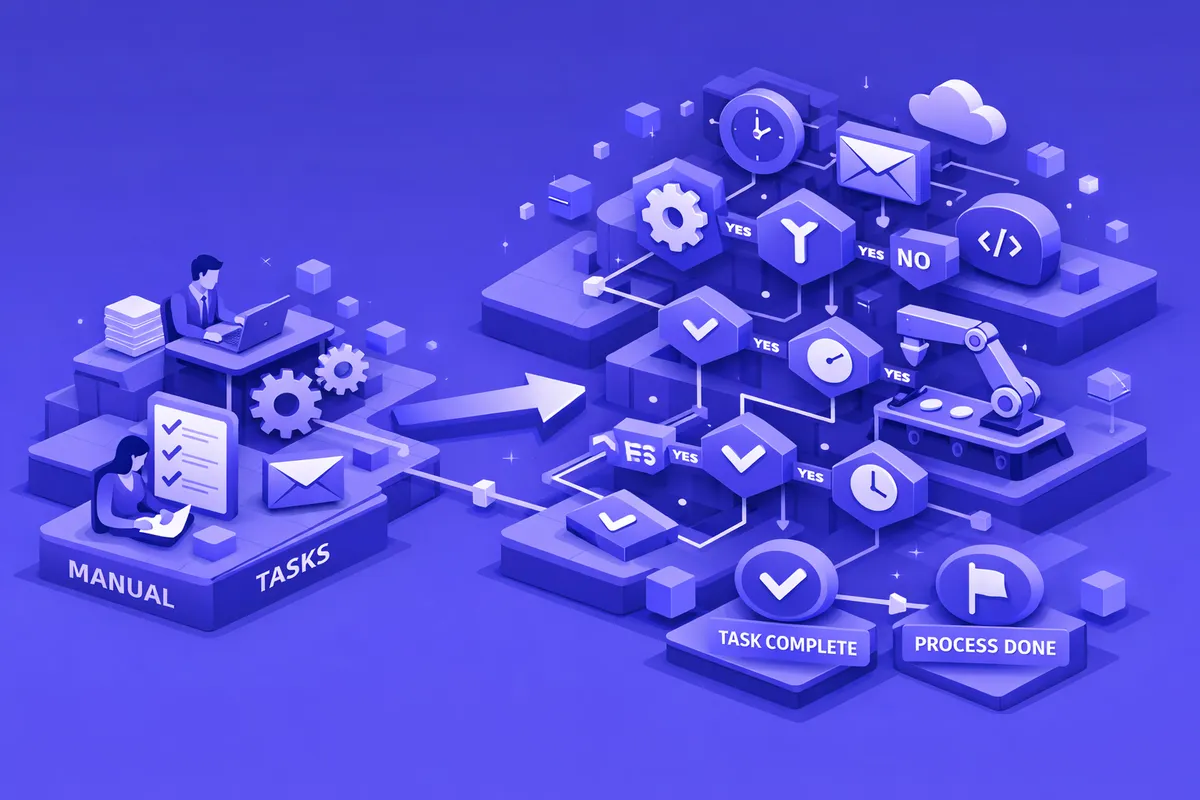
We start by spending time with the actual work. For a bar or venue on North Avenue, that means mapping the weekly cycle from booking confirmation to day-of logistics to post-event settlement. For a design studio near Damen Avenue, it means tracing what happens between receiving a client brief and issuing an invoice. We are looking for the exact moments where someone is doing the same thing they did last Tuesday and the Tuesday before that, with no variation that requires judgment.
From that mapping, we identify three categories: things that can be fully automated and removed from the human queue, things that can be partially automated to reduce the time they take, and things that genuinely require a person's judgment every time. The first category is where we start. Appointment confirmations, intake forms, invoice generation, inventory reorder alerts, review request emails, staff scheduling notifications. These move off someone's plate first.
The build phase is tight. We connect your existing tools where possible. If you already use Square at your register on Milwaukee Avenue or Booksy for your tattoo shop appointments, we automate from those systems rather than replacing them. New infrastructure enters only when the existing stack cannot support the automation. By the time we are done, the recurring tasks that consumed most of your administrative time run without your involvement. What remains on your plate is the work that actually requires you.
Industries We Serve in Wicker Park
Independent music venues and live event spaces around North Avenue and the blocks near The Robey Hotel have to manage booking inquiries, artist contracts, advance ticket sales, day-of load-in logistics, and post-show settlement across a calendar that changes every week. Automating the intake and confirmation cycle alone can return several hours of coordinator time per event, time that currently goes to email threads that could be a form.
Vintage and boutique clothing retailers on Milwaukee Avenue carry inventory across hundreds of SKUs and often manage consignment relationships with local sellers alongside their own bought stock. Consignment tracking, payout calculations, and restock alerts are all repeatable processes that do not require a human to run on repeat. Automation handles the tracking; the buyer's eye stays focused on the floor.
Bars and restaurants with rotating programming face a scheduling and operations challenge that does not look like a standard restaurant problem. A North Avenue bar that hosts DJ nights, trivia, and private buyouts in the same week has three different staffing and setup models. Automated scheduling logic that adjusts prep checklists and staff assignments based on event type is straightforward to build and immediately reduces the pre-shift communication burden.
Wicker Park's design and creative agencies clustered around Damen Avenue operate on project timelines with multiple deliverables and client feedback cycles. Time tracking, milestone reminders, invoice triggers at project completion, and client status update emails are all process tasks that fall out of the work naturally. Automating them means fewer things fall through the gaps at the end of a project.
Tattoo shops and personal service studios on Division Street and Hoyne Avenue work on appointment-heavy models with high no-show rates and long per-client sessions. Automated confirmation sequences, deposit requests, aftercare instruction delivery, and review requests after the appointment close out the client lifecycle without requiring anyone to remember to do it manually.
The specialty food and beverage retailers who occupy the ground-floor storefronts along Milwaukee Avenue run tight margins and lean teams. Supplier ordering tied to point-of-sale inventory levels, automated low-stock alerts, and recurring order templates for staple products reduce the cognitive load of staying in stock without overstocking during slow shoulder seasons.
What to Expect Working With Us
1. Operational walkthrough, in person or remote. We map your actual weekly and monthly work cycle. Not what you think you do, but what the calendar and inbox actually show. For a venue near the Flat Iron Arts Building, that means going through a typical event week start to finish. We identify the repeating patterns and the manual handoffs that automation can absorb.
2. Workflow design before any build begins. We document the automation logic for every process we plan to automate and walk you through it before touching your tools. You approve the logic. We do not build anything you have not seen and agreed to. This step saves the most time later because misunderstandings surface at the diagram stage instead of the deployment stage.
3. Staged rollout, starting with the highest-volume tasks. We launch the highest-return automations first. By week two, the tasks that were consuming the most time are running without input. Remaining workflows come online over the following two weeks. We do not hand you fifteen automations at once and expect you to validate all of them simultaneously.
4. Monitoring and tuning through the first full cycle. The first month after launch we watch the automations run through your actual operational calendar, including any seasonal spikes tied to Wicker Park Fest or end-of-year holiday retail season. We catch exceptions, adjust thresholds, and confirm that the logic holds up under real conditions before stepping back to quarterly check-ins.