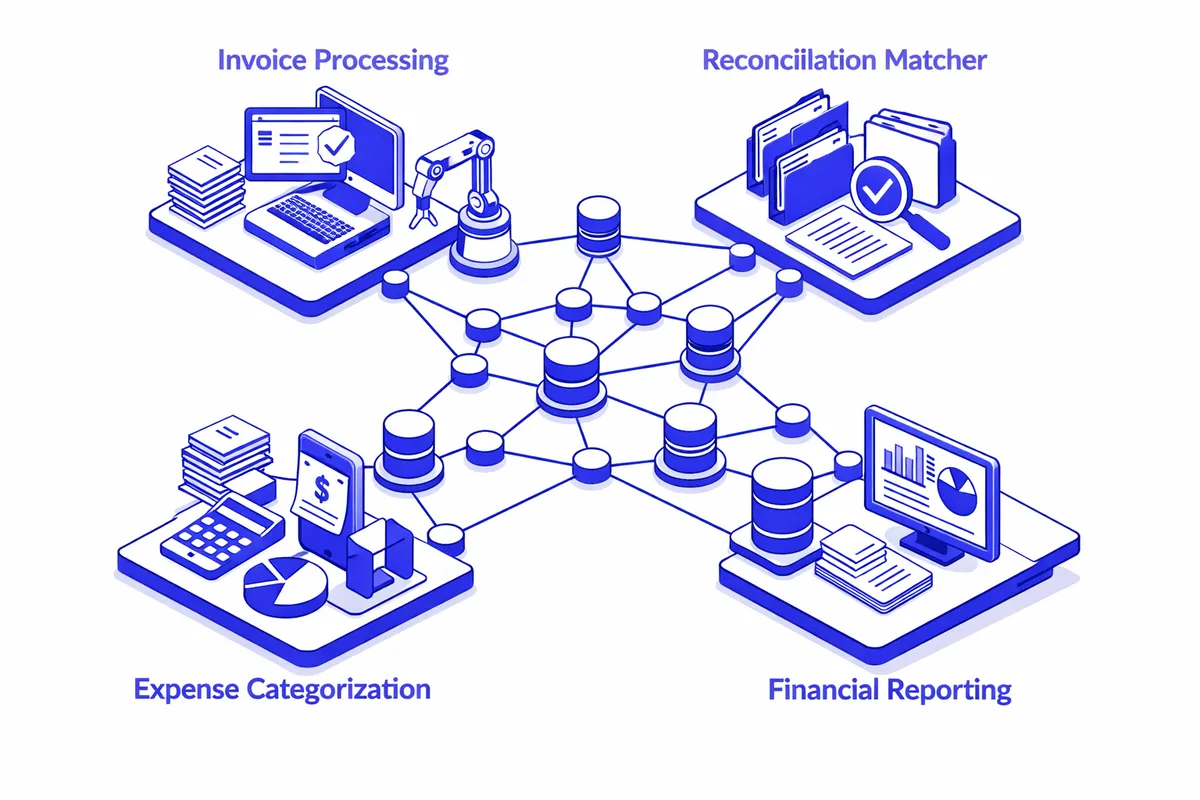
How We Build Accounting Automation for Wicker Park
Wicker Park businesses typically come to us at one of two moments: before hiring a full-time bookkeeper because they want to understand whether automation can replace or reduce that need, or after a painful tax season where the manual close process revealed how much time was being lost. In both cases, the starting point is the same.
We document the current process in detail. For a creative agency on Milwaukee Avenue, that means tracing every step from time entry through client invoicing through expense posting through bank reconciliation. For an independent retailer on Damen Avenue, it means mapping the flow from point-of-sale through inventory to the general ledger. Most Wicker Park businesses find during this exercise that their most painful accounting steps are entirely rule-based: they require consistency, not judgment.
From the process map, we identify the two or three automations that would most directly reduce the owner's time burden. We build those first, validate them against historical data, and deploy them before building anything else. The goal for most Wicker Park clients is not enterprise accounting automation. It is getting the weekly and monthly accounting burden from eight or ten hours down to two or three, so the person running the business can focus on what built it.
We work with the accounting software Wicker Park businesses actually use: QuickBooks, Xero, Wave, and industry-specific platforms for hospitality and retail. We do not require software upgrades or migrations. We build the automation layer on top of what already exists.
Industries We Serve in Wicker Park
Creative agencies and design studios along Milwaukee Avenue and at the Flat Iron Arts Building use accounting automation to handle project expense tracking, client invoice generation from completed milestones, time-based billing calculations, and accounts receivable follow-up sequences. The most common pain point for design studios is the gap between completed project work and collected revenue. Automated invoicing and follow-up sequences close that gap without the principal having to remember to chase each client individually.
Independent retailers and boutique shops on Damen Avenue and Milwaukee Avenue use accounting automation to connect point-of-sale data to accounting software, automate inventory adjustment postings, schedule vendor invoice processing, and generate weekly sales reconciliation reports. Retailers who previously spent several hours each weekend on manual accounting entries often reduce that to a thirty-minute exception review after automation is in place.
Restaurants and bars near the Robey Hotel, the Damen Blue Line station, and along North Avenue use accounting automation to handle daily revenue audit reconciliation, tip distribution calculations, sales tax accrual posting, and vendor payment scheduling. Food and beverage businesses have high transaction volumes and tight margins. Accounting errors compound faster in this industry than in most others.
Music venues and entertainment businesses on Wolcott Avenue and Hoyne Avenue use accounting automation to handle ticket revenue reconciliation, artist payment processing, merchandise sales posting, and event expense tracking against per-event budgets. Venues that host shows across multiple nights per week benefit significantly from automation that closes the books on each event automatically rather than requiring manual processing after every show.
Tattoo shops and personal service businesses in Wicker Park use accounting automation to handle service revenue posting, tip reporting, product retail reconciliation, and prepaid service package tracking. These businesses often operate at the intersection of service and retail revenue, which creates accounting complexity that is straightforward to automate once the rules are mapped.
Real estate and property offices along Division Street and around the Wicker Park neighborhood use accounting automation to handle rental income postings, maintenance expense routing, lease deposit accounting, and monthly close packages for property owners. Small residential property managers often run manual processes that could be fully automated without any change to the underlying software they use.
What to Expect Working With Us
1. Process documentation first. Before we build anything, we document your current accounting workflow in precise detail. Every manual step, every software tool, every spreadsheet that exists because two systems do not connect. This takes one to two weeks and produces the scope for everything that follows.
2. Priority sequencing by time burden. We rank the identified automation opportunities by hours saved per week. You start with the automations that give you the most time back immediately, not the ones that are most technically interesting. For most Wicker Park businesses, the highest-priority automation is also the simplest to build.
3. Historical data testing before live deployment. Every automation runs against actual historical data before touching current transactions. For a retailer on Damen Avenue, that means running the inventory-to-accounting automation against three months of actual sales data and comparing the outputs to the manually produced records. You approve the match before the automation goes live.
4. Owner-level documentation at handoff. We document every automation at a level that a business owner, not just a software engineer, can understand and monitor. You know what the automation does, what triggers it, what it does when it encounters an exception, and how to read the reports it produces. The goal is that you are never dependent on us to understand your own accounting system.