How We Build Workflow Automation for West Town
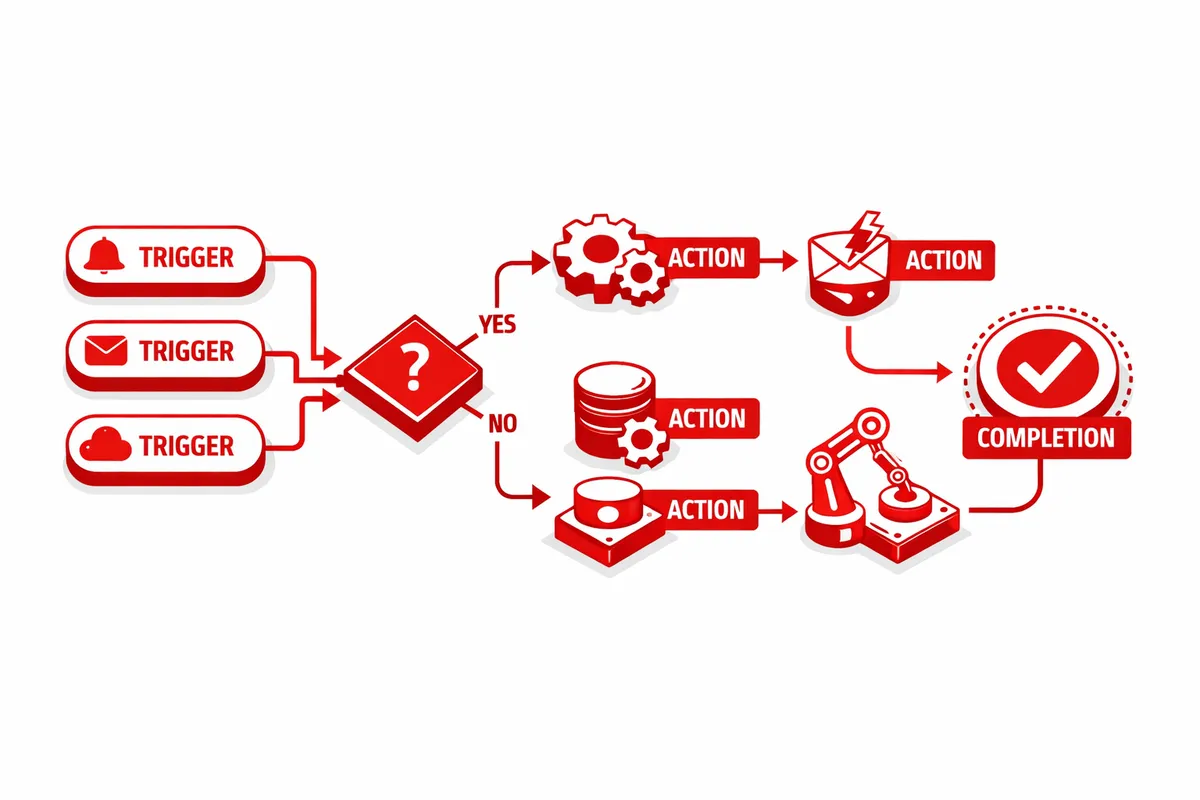
We begin every engagement with a half-day working session at your location or ours. We want to see the actual process. Where do invoices come in? What does the approval step look like when the owner is out? How does a proposal get from intake form to signed contract? For a West Town design studio, this might mean watching how a new client request flows from the contact form on the site through Slack, email, Asana, QuickBooks, and finally into a Notion project space. The redundancy and the drop-off points become obvious fast.
After discovery, we produce a process map and an automation priority list. We do not recommend automating everything at once. For most West Town businesses, the right sequence is: start with the process that hurts the worst, deliver a working automation within four weeks, and expand from there. A Noble Square B2B firm might start with proposal automation. A Division Street retailer might start with purchase order reconciliation. A craft brewery with a tasting room on Chicago Avenue might start with wholesale invoice generation. The starting point depends on where the pain concentrates.
Build typically uses a mix of tools chosen for the specific job. Native API integration where the systems support it. Make or Zapier for mid-complexity connections between SaaS tools. Custom scripting when a process requires logic that off-the-shelf connectors cannot handle cleanly. We prefer tools your team can observe and adjust without calling us, and we design with your long-term ownership in mind rather than locking you into our agency as a dependency.
Testing runs against your actual historical data. We process a month of real invoices, real proposals, real orders through the automation before it goes live. Edge cases surface during testing rather than in production. Exception handling gets designed for the specific scenarios your business actually encounters, not generic hypotheticals.
After launch, we stay engaged for a period covering at least one full business cycle, which for most West Town clients is a month. New exceptions always surface once the automation hits live volume. We refine, you observe, and the system settles into a steady state with a documented playbook your team owns going forward.
Industries We Serve in West Town
Creative agencies and design studios clustered along Grand Avenue and in the converted industrial buildings near Ashland use workflow automation for client onboarding, project kickoff sequences, proposal generation from intake forms, and the billing workflows that turn time tracking into invoices without a designer spending Friday assembling them manually. Studios that automate their operations side preserve their billable capacity for the client work that pays the rent.
Boutique retail and specialty food businesses along Division Street, Chicago Avenue, and in the Noble Square commercial pockets use automation for inventory reconciliation across POS and e-commerce, wholesale order processing, supplier communication, and the marketing workflows that turn customer purchases into returning visits. Small retail cannot carry a full operations team, and automation covers the gap.
Craft breweries, distilleries, and small food producers operating tasting rooms and production facilities in the historic industrial pockets of West Town use workflow automation to coordinate wholesale accounts, TTB and state reporting obligations, keg and barrel tracking, and the scheduling workflows that keep production and front-of-house aligned.
B2B professional services firms in East Village and along Chicago Avenue, including consultancies, specialty accounting practices, and marketing strategy firms, use automation for client intake, proposal generation, engagement kickoff, and the recurring billing and reporting workflows that consume operations capacity disproportionately in small firms.
Nonprofits and community organizations based in West Town, particularly those serving the Latino communities with deep roots in the neighborhood, use workflow automation for donor management, grant reporting, volunteer coordination, and program participant intake. Limited administrative staff means automation is often the difference between a functioning back office and one that limps.
What to Expect Working With Us
1. Process mapping on site. We come to your West Town location or meet at a working space in the neighborhood for a half-day discovery session. We watch the process, we interview the people running it, and we document the actual flow including all the exceptions and workarounds that have accumulated over time.
2. Prioritized automation roadmap. We produce a document that lays out the automation candidates, the estimated hours saved per month for each, the expected complexity, and a recommended sequence. You decide where to start. No automation project begins without your sign-off on the priority and scope.
3. Build, test, and launch. Build typically runs three to six weeks for a focused first automation. Testing uses your actual historical data. Launch includes training for anyone on your team who will monitor or adjust the automation. Documentation stays with you.
4. Post-launch refinement. We stay engaged for a month after launch to catch edge cases surfaced by live volume. After that, we offer optional monthly retainers for teams that want ongoing optimization and expansion, or a clean handoff for teams that want to own and extend the automation themselves.