How We Build UI/UX Design for West Town
The starting point is always the user. We want to understand who is using the interface, what they are trying to accomplish, and what context they are in when they use it. For a Division Street restaurant's ordering system, that means understanding that the primary users are regulars on their phones during a lunch break. For a creative studio's client portal, it means understanding that users are project stakeholders who open it once a week to review deliverables and approve work. Different users, different contexts, fundamentally different design problems.
We conduct structured discovery with real users where possible: short interviews, observation sessions, or analysis of support requests and drop-off data that reveals where existing interfaces fail. For West Town businesses serving a bilingual community, we include Spanish-speaking users in the research process rather than designing for English-language assumptions and retrofitting translation.
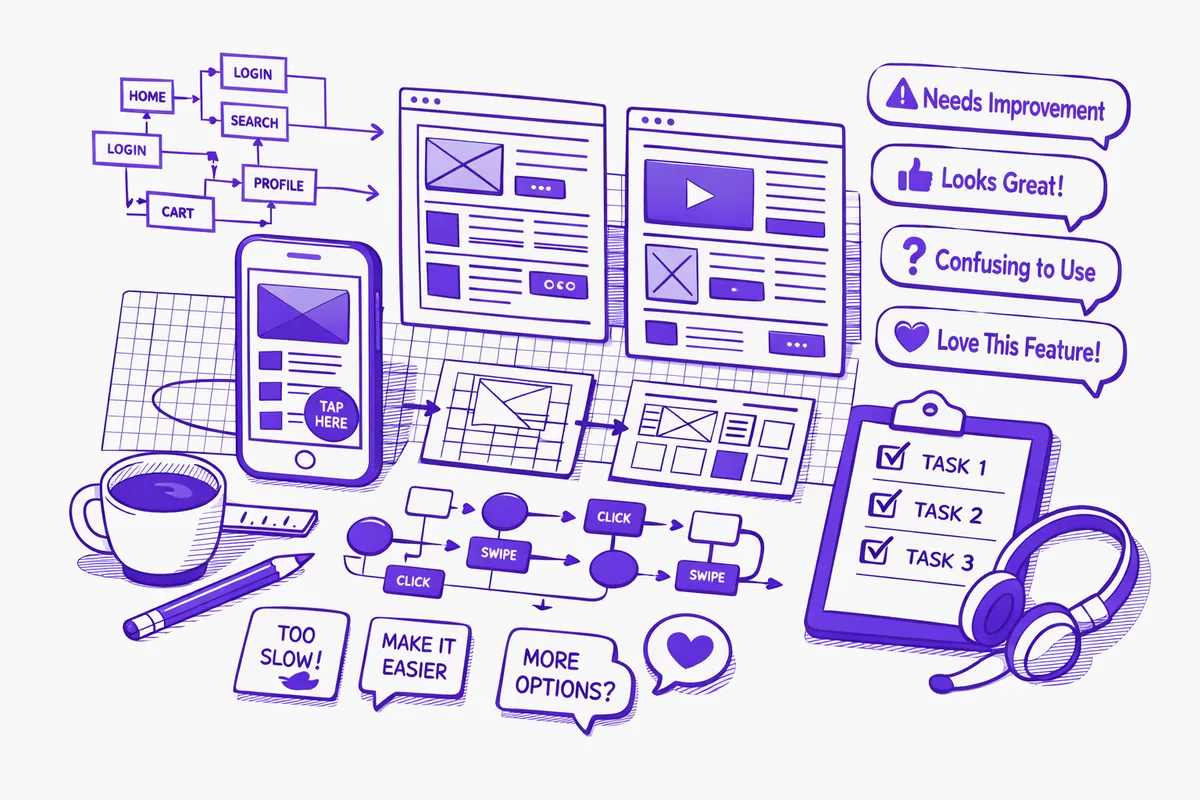
From research we build information architecture: the map of how content and functionality should be organized before any visual design begins. A boutique on Chicago Avenue that wants to launch an online reservation system needs the information architecture to answer: what does a user see first, what decisions do they make in what order, and what information needs to be present at each step. Getting that structure right makes every subsequent design decision easier and avoids the expensive problem of discovering structural problems late in the process.
Visual design and interaction design happen in parallel, tested in prototype form before development begins. West Town business owners review working prototypes on actual devices, not static mockups, because the difference between a design that looks right and a design that works right only surfaces when you interact with it.
Industries We Serve in West Town
Creative studios and design firms on the Ashland Avenue corridor use UI/UX design for client-facing portals, project management interfaces, and their own web-based tools. For a studio whose credibility depends on demonstrating design excellence, the interface of its own internal products is a visible signal about the quality of work it delivers to clients.
Restaurants and cafes along Division Street and Chicago Avenue with digital ordering, reservation, or loyalty systems use UI/UX design to ensure those interfaces work for their specific customer base, including customers unfamiliar with the brand who arrive through discovery and regulars who want fast, frictionless repeat interactions. The two user types have different needs that a thoughtful information architecture can serve simultaneously.
Independent retail boutiques on Chicago Avenue that have launched appointment-based shopping or virtual showroom tools use UI/UX design to make those experiences feel as curated as the in-store visit they are meant to complement. An interface that communicates quality through its design reinforces the boutique's brand positioning in ways that a generic booking template cannot.
Event businesses and quinceañera boutiques rooted in West Town's Latino commercial fabric use UI/UX design for booking and planning portals that guide clients through the multi-step process of planning an event. A well-designed booking flow near Pulaski Park reduces the administrative friction for both the business and the client, and makes the process feel organized and professional from the first interaction.
Technology startups and product companies that have located in West Town given its proximity to the Wicker Park and River North tech corridors use UI/UX design for their product interfaces. West Town has a growing cluster of early-stage companies whose product quality depends directly on the quality of their user experience.
Healthcare and professional service practices near Emmett Till Academy use UI/UX design for patient portals, intake forms, and appointment management interfaces. For practices serving West Town's mixed language community, accessible, language-appropriate interface design directly affects whether patients complete intake processes and maintain care engagement.
What to Expect Working With Us
1. User research and discovery. We spend the first phase understanding users and context. For West Town businesses, this involves at minimum a structured review of existing interface data or support requests, and ideally short sessions with two to three real users. The discovery phase produces a user profile, a context map, and a list of the specific design problems we are solving before any design work begins.
2. Information architecture and flow mapping. Before any visual design begins, we map the structure of the interface: every screen, every decision point, every path a user can take. For a Division Street restaurant's ordering flow, this means mapping every step from menu browse to order confirmation and identifying where users currently drop off or make errors. For a creative studio's client portal, it means organizing project information in the hierarchy that matches how clients actually look for it.
3. Prototype development and usability testing. We build interactive prototypes using your real content and test them with representative users before development begins. For West Town businesses serving a bilingual community, prototypes are tested in both languages. Problems identified in prototype testing cost a fraction of the same problems found in built code.
4. Design system and developer handoff. Final UI/UX design deliverables include a complete design system: documented components, interaction states, spacing and typography specifications, and annotated designs that developers can implement without making interpretation guesses. For West Town businesses working with their own development teams, the handoff package is complete enough to build from without ongoing design consultation.