How We Build Supply Chain Automation for West Town
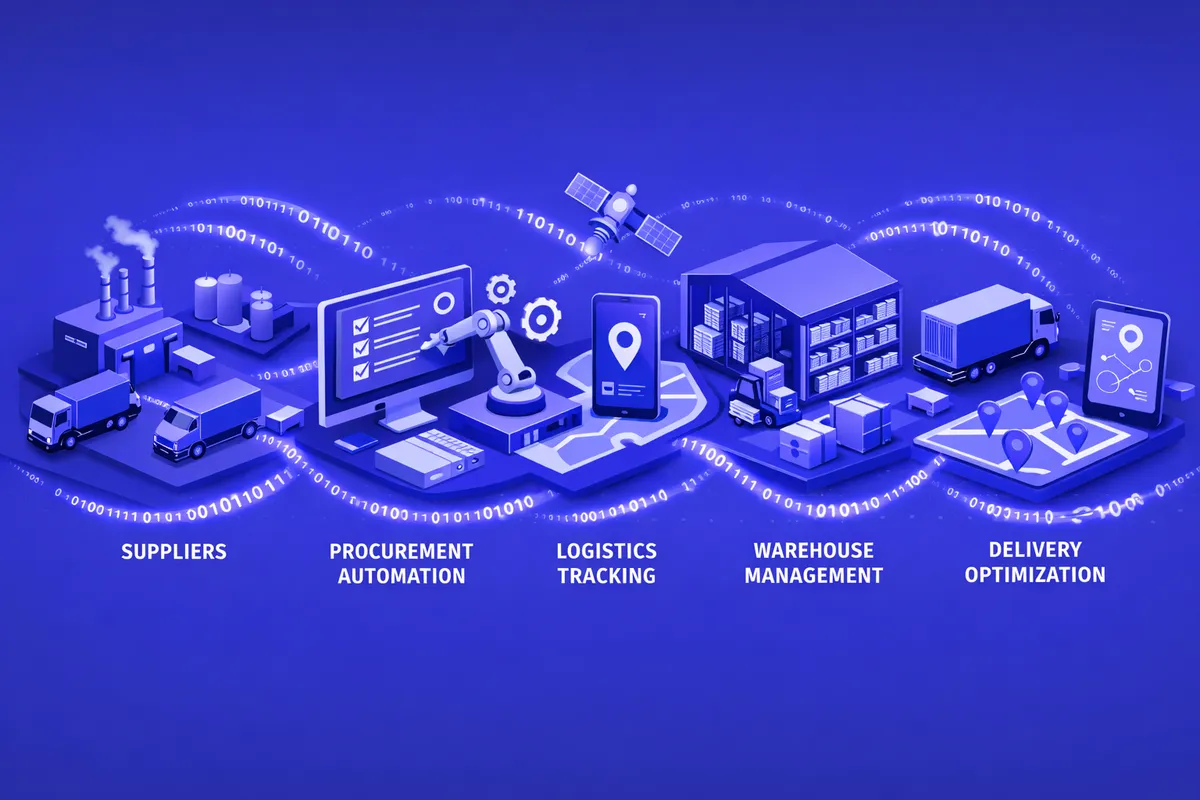
We start every West Town engagement with a workflow audit: mapping your current purchasing processes, identifying where manual steps create the most cost or risk, and producing a prioritized automation roadmap. For independent retailers, this typically surfaces four to six high-cost manual touchpoints: inventory checking, reorder triggering, purchase order generation, delivery confirmation, and invoice reconciliation. For food producers, it maps the connections between production planning, raw material procurement, packaging inventory, and outbound logistics.
Integration architecture is designed around the platforms West Town businesses already use. Most independent retailers run Shopify or Square. Food producers often use a combination of Shopify for DTC and QuickBooks for accounting. Our automation layer connects your existing tools rather than replacing them, adding the monitoring logic, workflow triggers, and vendor communication automation that your current systems cannot provide on their own.
Implementation is phased to deliver value incrementally. For an independent retailer, the first phase typically automates inventory monitoring and reorder triggering. For a food producer, the first phase connects production schedule inputs to raw material reorder triggers. Subsequent phases add supplier communication automation, delivery tracking, and the reporting layer that provides supply chain visibility across all channels.
Industries We Serve in West Town
Independent Boutique Retailers: Chicago Avenue and Division Street boutiques managing multi-supplier product catalogs across seasonal purchasing cycles need automation that monitors inventory levels continuously, triggers reorders at the right threshold, and handles vendor communication workflows without consuming staff time on routine transactional ordering.
Small Food Producers and Manufacturers: Food producers near Eckhart Park selling through wholesale, DTC, and market channels manage production inputs, packaging materials, and outbound logistics across supply chains with different lead times and coordination requirements. Automated raw material reordering, packaging inventory management, and multi-channel shipment tracking keep production running without the manual coordination overhead that grows with each new sales channel.
Independent Restaurants and Cafes: Restaurants and cafes along Chicago Avenue and near Commercial Park manage daily ordering cycles, multiple vendor relationships, and perishable inventory with tight freshness windows. Automated purchasing triggered by inventory depletion, delivery confirmation workflows, and FIFO management reduce waste and eliminate the ordering errors that erode margin.
Design Firms and Creative Workshops: Design firms and creative workshops near Pulaski Park manage project supply procurement, material ordering, and vendor relationships across multiple concurrent projects. Automated procurement workflows handle routine supply ordering and track project material costs without requiring creative staff to manage purchasing administration manually.
Small Manufacturers and Makers: Small manufacturers and workshop businesses in West Town's mixed-use buildings manage raw material procurement and production supply chains that manual purchasing handles inconsistently as volume grows. Automated inventory monitoring, reorder triggering, and vendor communication keep production supply chains running without the administrative overhead that scales with order volume.
Specialty and Home Goods Retailers: Specialty retailers near Emmett Till Academy managing seasonal inventory cycles, consignment relationships, and the custom-order workflows common in home goods retail need automation that handles the routine procurement cycle while keeping specialty order tracking accurate and visible.
What to Expect Working With Us
1. Workflow Audit. We map your current supply chain processes across purchasing, inventory, and vendor communication. We identify the highest-cost manual touchpoints and produce a prioritized automation roadmap. For West Town food producers, this includes assessment of the connections between production planning and raw material procurement.
2. Integration Architecture. We design the connections between your existing platforms and the automated workflows. For Shopify-based retailers and food producers, we map the data flow from sales depletion to reorder trigger to purchase order generation. You approve the architecture before any development begins.
3. Phased Implementation. Highest-impact automations go live first. Your team sees operational benefit before the full program is complete. Each phase is tested against your actual supply chain scenarios, including the seasonal and promotional patterns that drive demand variability in West Town's independent retail economy.
4. Monitoring and Optimization. Post-launch monitoring tracks purchasing cycle times, fill rates, and inventory accuracy. We establish baseline metrics during the workflow audit and report improvement against those baselines throughout the engagement.