How We Build POS Systems for West Town
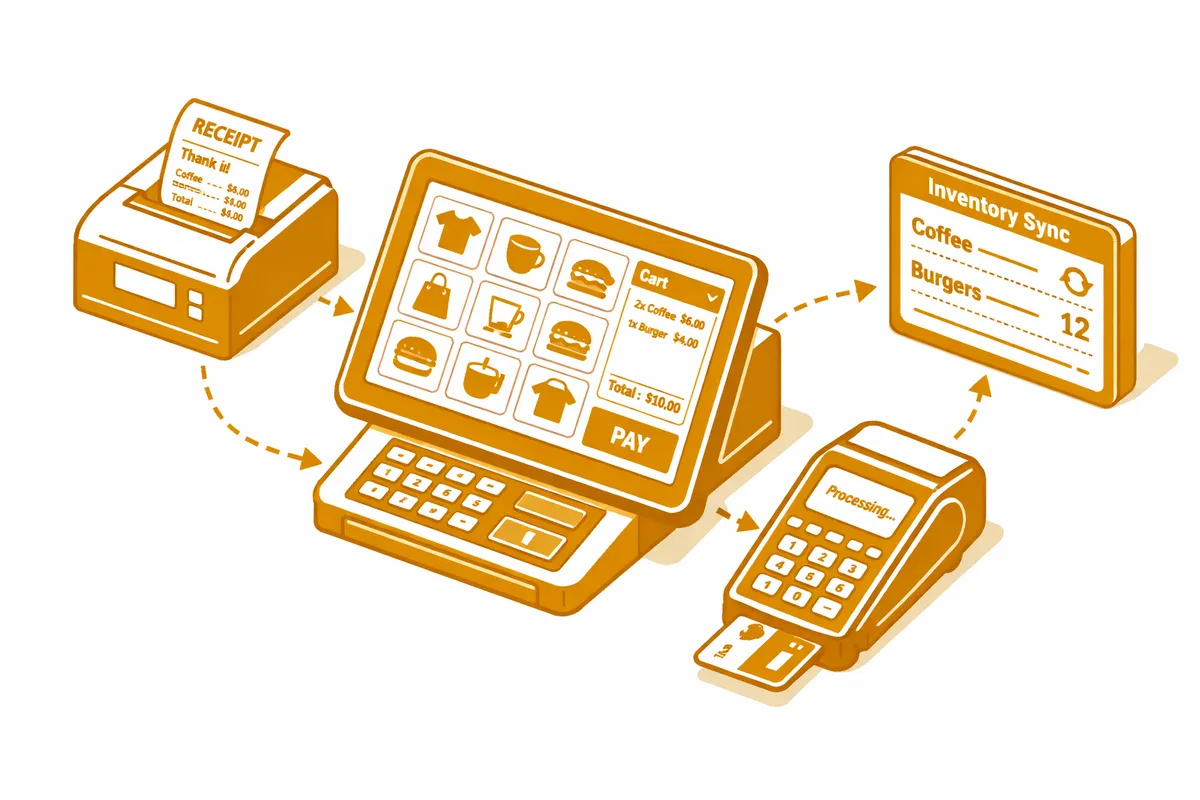
West Town implementations are designed around the omnichannel operation as the primary use case. For restaurants, that means integrating the in-house POS with third-party delivery platforms from the start: DoorDash, Uber Eats, and Grubhub orders route to the kitchen display through the same queue as table orders and phone orders. We test the order routing workflow under concurrent load before deployment so that the Friday night surge from all three platforms does not create a kitchen display traffic jam.
For retail, omnichannel implementation means Shopify sync as a design requirement, not an integration we will get to later. Lightspeed Retail's native Shopify connector or the equivalent for other platforms is configured and tested during implementation so that the product catalog, inventory levels, and pricing are synchronized before the first post-launch sale.
Menu management configuration for West Town's rotating-menu restaurants includes the training to add and retire items through the POS without configuration support. We document the menu management workflow clearly enough that a front-of-house manager can update the menu on a Wednesday morning when the new dishes are finalized without calling for help. For restaurants with weekly or biweekly menu rotations, this self-service capability is not a nice-to-have. It is essential.
Platform selection for West Town restaurants typically points toward Toast or Revel for full-service operations and Square for Restaurants at its mid-to-advanced tier for simpler operations with strong delivery volume. For omnichannel retail, Lightspeed Retail is the standard recommendation because of its Shopify integration depth and its rotating-inventory catalog management.
Industries We Serve in West Town
Independent restaurants on Chicago Avenue and Grand Avenue managing dine-in, takeout, and third-party delivery simultaneously need a unified order management workflow. We configure these restaurants with an integrated kitchen display that aggregates all order channels into a single queue, a delivery order management workflow that handles the third-party platform order formats, and the daily revenue report that breaks revenue by channel so the owner can evaluate which channels are profitable. For restaurants near Eckhart Park managing a patio service alongside indoor dining, the floor plan management extends to outdoor seating.
Boutique retail shops on Ashland Avenue and near Pulaski Park selling both in-store and online need the omnichannel inventory management that keeps both channels honest. We configure Lightspeed Retail with Shopify integration for these businesses, build the unified product catalog, and set up the synchronization rules so that inventory updates in both channels simultaneously. For boutiques that handle a significant volume of online orders from customers outside the neighborhood, the click-and-ship fulfillment workflow connects online orders to a pick-and-pack process at the physical store.
Design studios and creative agencies near St. Stanislaus Kostka Church that sell physical product alongside services need POS capability for the retail transaction side of their business. We configure these operations with the project billing capability for service work alongside the retail POS for physical product sales, connected to a single revenue report that shows total business performance.
Cafes and specialty coffee roasters on Division Street near Western Avenue with both a café retail operation and a wholesale roasting business need the inventory management that separates cafe-use green coffee from wholesale-finished bags. We configure these operations with the production batch tracking that connects green coffee inventory to roasted batch output, the wholesale order management for their restaurant accounts, and the retail POS for cafe and bag sales at the counter.
Bars and cocktail bars on Chicago Avenue with a bar program built on rotating craft spirits and seasonal cocktail menus need the inventory management that tracks a complex spirits program at the bottle and pour level. We configure these bars with cocktail recipe costing, spirits depletion tracking, and the rotating menu management that lets the bar manager update the cocktail list when a seasonal spirit arrives without requiring a full menu rebuild.
Small manufacturers and workshop businesses near Commercial Park on Grand Avenue with over-the-counter product sales need the basic retail POS connected to their production inventory. We configure these operations for the retail sale workflow alongside the production inventory tracking that connects raw material use to finished goods output.
What to Expect Working With Us
1. Omnichannel architecture as the foundation. We design the omnichannel order routing and inventory sync before configuring any menus or catalog. The channel integrations need to be correct from the first transaction, not added after the system is running.
2. Delivery platform integration. For West Town restaurants with third-party delivery volume, we configure and test every delivery platform integration before go-live. The test includes a simulated concurrent order surge from multiple platforms to verify that the kitchen display handles the routing correctly under realistic volume conditions.
3. Self-service menu management training. For restaurants with rotating menus, we spend training time on the menu management interface specifically. The goal is a manager who can update the menu independently, not a manager who depends on external support for every menu change.
4. Post-launch channel performance review. Thirty days after launch, we review the revenue-by-channel data and assess whether the configuration is routing orders correctly, whether the inventory sync is performing cleanly, and whether any channel's performance data is raising questions that warrant a configuration review.