How We Build Logo Design for West Town
Logo design starts with conversation, not software. We need to understand what the business actually is, who it serves, what it stands for, and what the owner wants the logo to do. For a Division Street restaurant, the logo might need to signal warmth and cultural authenticity. For a Grand Avenue design studio, it might need to convey expertise and restraint. Those are different briefs that produce different work.
We research the visual context specifically. We look at every competitor in your category on your corridor, what their visual identities look like, where the gaps and opportunities are, and what conventions exist that your logo should either follow or consciously break. A business that looks like its competitors has not differentiated. A business that looks too different from its category loses the cues that help customers recognize what you do.
For West Town businesses serving a bilingual community, we consider how the logo reads in both contexts from the start. Some marks work identically in both languages; others need to be designed as a system that includes both an English and a Spanish version. We make that determination based on how the business actually presents itself in each context.
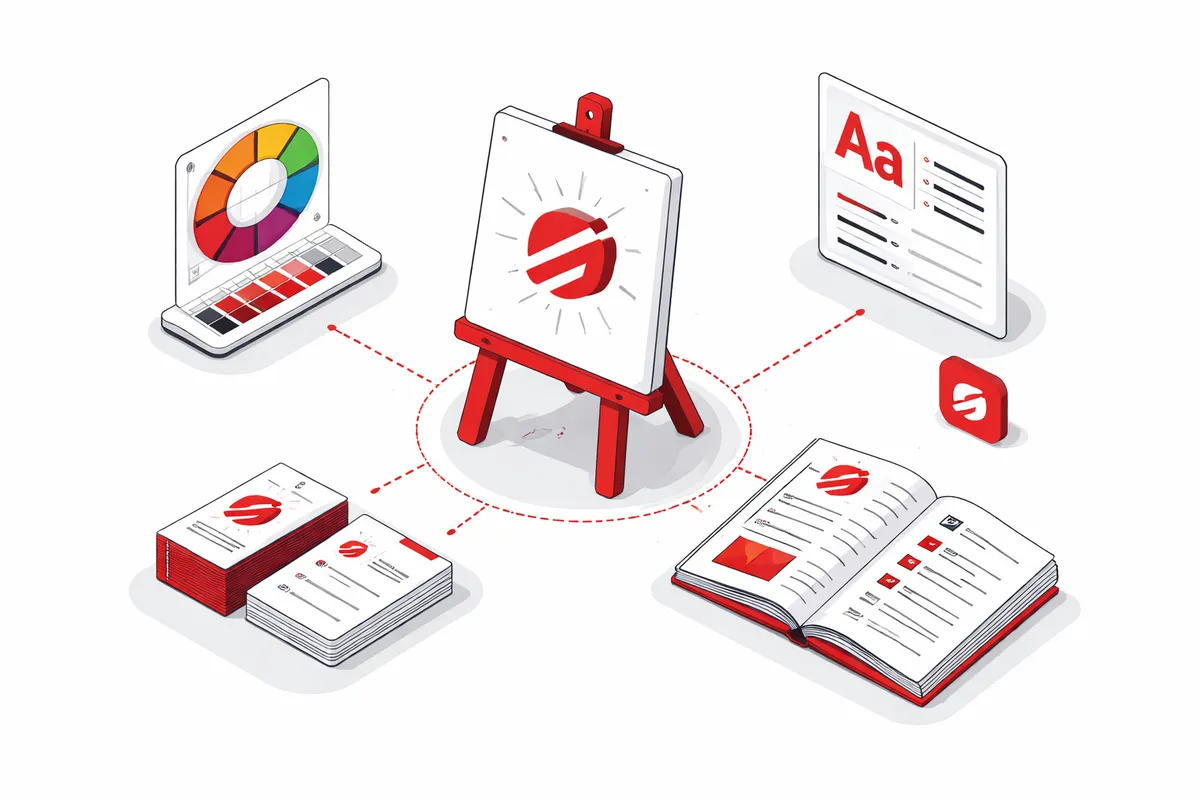
Deliverables include the logo in every format needed for digital and print use: vector source files, SVG, PNG with transparent background, and any lockup variations required for horizontal, stacked, and icon-only applications. We also provide a usage guide that covers color specifications, minimum sizes, background compatibility, and what not to do so the logo does not get degraded by future misuse.
Industries We Serve in West Town
Restaurants and cafes on Division Street and Chicago Avenue use logo design to build the first layer of their visual identity, the mark that appears on the awning, the menu, the takeout bag, and the Instagram profile image. For a West Town restaurant, the logo signals cuisine type, price point, and cultural context before a customer reads a single word. We build restaurant marks that accomplish all three without overexplaining.
Design and creative firms along Ashland Avenue and the Grand Avenue corridor need logos that work as demonstrations of craft. A studio whose own mark is poorly designed sends an obvious message about the quality of its client work. We design studio logos with the same rigor we bring to client identity work, because the firms that use us as an outside perspective on their own brand typically arrive because they know their work deserves better than what they have.
Quinceañera boutiques and event businesses rooted in West Town's Latino commercial fabric need logos that carry warmth, ceremony, and community credibility. These marks need to resonate in print materials, event signage near Pulaski Park, and the social media posts that circulate through the Chicago Latino community when a daughter's event is being planned.
Independent retail boutiques on Chicago Avenue need logos that function as curatorial signals: marks that attract the right customer by communicating clearly about what kind of shop this is. The logo on the window and the shopping bag is often a customer's first data point about whether your shop matches their taste, and it makes that judgment in a fraction of a second.
Workshops and maker businesses near Western Avenue use logo design to build credibility in the trade and direct-to-consumer markets they serve. A fabrication studio or furniture maker whose logo looks professional attracts the kind of design professional referral and high-value client relationship that drives their best work.
Community service organizations and nonprofits connected to West Town's neighborhood institutions, including those associated with Emmett Till Academy and the community around St. Stanislaus Kostka, use logo design to build organizational identity that travels well across grant applications, community events, and digital platforms.
What to Expect Working With Us
1. Brand discovery conversation. We spend an hour with you asking about your business, your customers, the feeling you want your logo to create, and the logos you admire and why. We also ask what you actively dislike. This conversation shapes every concept we develop. For a West Town business with cultural specificity, we ask about heritage, community context, and how you want to represent that identity visually.
2. Three distinct concepts. We present three fully developed logo directions, each built from a different strategic premise rather than three visual variations on the same idea. Each concept is shown in context: on a business card, on a storefront mock-up, on a social profile. You see how each mark lives in the world, not just how it looks on a white background.
3. Refinement of the chosen direction. Once you select a direction, we refine it through two structured revision rounds. Refinements can address color, weight, letterforms, or proportion within the chosen concept. We document the reasoning behind each refinement so the decisions are transparent.
4. Final production and format delivery. Final files are delivered organized by application: print-ready, digital-ready, icon versions, and any lockup variations. The delivery package includes a one-page usage guide that covers the most common application questions a West Town business owner will face, including how the logo should appear on signage, what background colors it works on, and minimum display sizes.