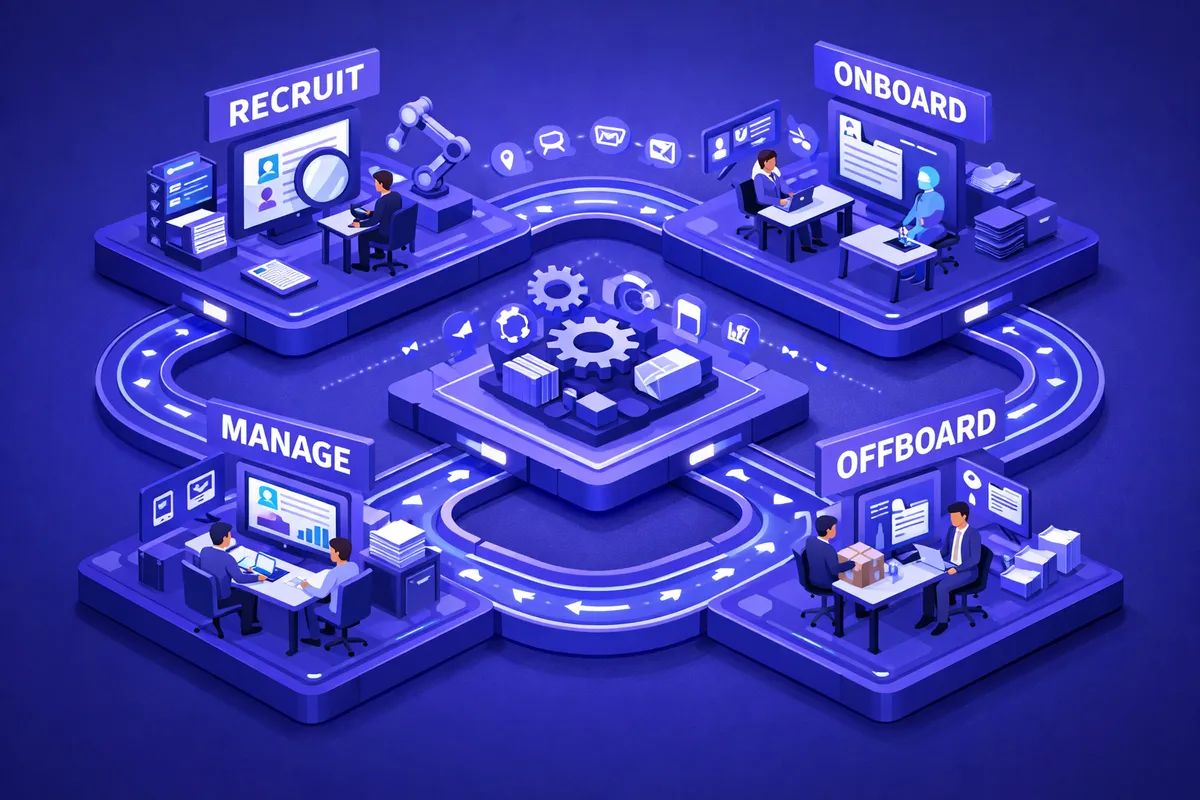
How We Build HR Automation for West Town
West Town employers typically use a combination of tools that do not talk to each other: Gusto or QuickBooks for payroll, a project management platform for team coordination, Google Workspace for everything else. The gaps between these tools are where HR process breaks down. A new hire enters the payroll system manually after a week because someone forgot to create the account. PTO requests happen in Slack because the payroll system's request workflow is too cumbersome. I-9s live in a Dropbox folder that no one has audited in two years. We build automation that connects these existing tools and fills the workflow gaps that create administrative risk.
For West Town's design firms and creative agencies, the highest-priority automations are onboarding sequence management, compliance documentation collection, and time tracking integration. Onboarding that starts automatically when an offer is accepted, routes document collection tasks to the new hire and the relevant internal stakeholders, confirms completion, and triggers payroll and system access setup eliminates the coordination overhead that currently lands on a founder or office manager who has other priorities. Time tracking integration that feeds correctly categorized hours directly into the payroll system eliminates the manual reconciliation that consumes the last business day of every pay period.
We also build the contractor management layer that design firms and agencies need: automated SOW and contract routing, W-9 collection workflows, and the document retention system that supports 1099 issuance and classification documentation. For West Town employers managing 5 to 20 contractors alongside their employee headcount, this layer addresses the compliance risk that manual contractor management consistently fails to prevent.
Industries We Serve in West Town
Design Studios and Creative Agencies: The design firms and creative agencies along Chicago Avenue and Ashland Avenue manage mixed employee-contractor workforces, project-based billing cycles, and the specific HR complexity of creative professional employment. Onboarding automation, contractor document management, and time tracking integration address the three highest-cost manual processes.
Independent Restaurants and Food Businesses: West Town's restaurant and food business corridor on Division Street and Damen Avenue employs hourly kitchen, service, and management staff with scheduling complexity, tip documentation requirements, and Chicago's paid sick leave accrual obligations. Automated scheduling, time tracking, and compliance management reduce the administrative burden on owner-operators who manage HR alongside everything else.
Small Manufacturers and Workshops: The workshops and small manufacturing operations that represent West Town's industrial heritage along Grand Avenue employ skilled tradespeople with specific classification and safety training documentation requirements. Automated credential tracking, training certification management, and onboarding workflows handle the documentation these workforces require.
Architecture and Interior Design Firms: The architecture and design practices near Eckhart Park and Pulaski Park manage credentialed professional staff with licensing requirements, continuing education compliance, and project-based billing structures that create specific HR tracking needs. Automated license expiration monitoring and CPD tracking address the compliance obligations that licensed professional firms face.
Real Estate Offices and Property Management Firms: West Town's growing real estate sector employs licensed agents alongside administrative staff, creating mixed license-tracking and standard HR needs. Automated license renewal tracking, onboarding workflows, and document management reduce administrative complexity for brokerages managing agents across multiple license types.
Cafes and Independent Retail: The independent retail and cafe businesses along Chicago Avenue employ part-time and full-time staff with variable scheduling, Chicago paid sick leave accrual obligations, and the onboarding throughput that seasonal hiring creates. Automated onboarding and compliance tracking reduce the administrative load for business owners managing both operations and workforce administration.
What to Expect Working With Us
1. HR process audit and opportunity mapping. We map every HR workflow your organization currently manages manually, identify the compliance gaps creating ongoing risk, and prioritize automation opportunities by impact and implementation complexity.
2. System integration architecture. We assess your existing payroll, HR, and operational tools and design the integration architecture that connects them through automated workflows, eliminating the manual data entry that lives between systems today.
3. Phased implementation starting with the highest-impact workflows. We build and test automation in phases, delivering the onboarding and compliance workstreams first so you see operational benefit before the full program is complete.
4. Launch support and compliance calendar management. We train your team on exception management, deliver 30 days of post-launch support, and maintain the compliance calendar updates that keep your automation aligned with Chicago and Illinois employment law changes.