How We Build ERP Integration for West Town
West Town creative and professional services clients often have more opinions about their tools than clients in other industries. A design studio that has been using Harvest for time tracking for five years is not going to switch to the time tracking module in an ERP just to get better integration. Our approach is to connect the platforms the business already trusts rather than requiring platform replacement as the price of better integration.
We start by mapping your current stack: every platform in use, what data each system owns, and where the manual transfers currently happen. For a design firm on Division Street, this means mapping from project kickoff through time tracking, client invoicing, expense recording, and accounting reconciliation.
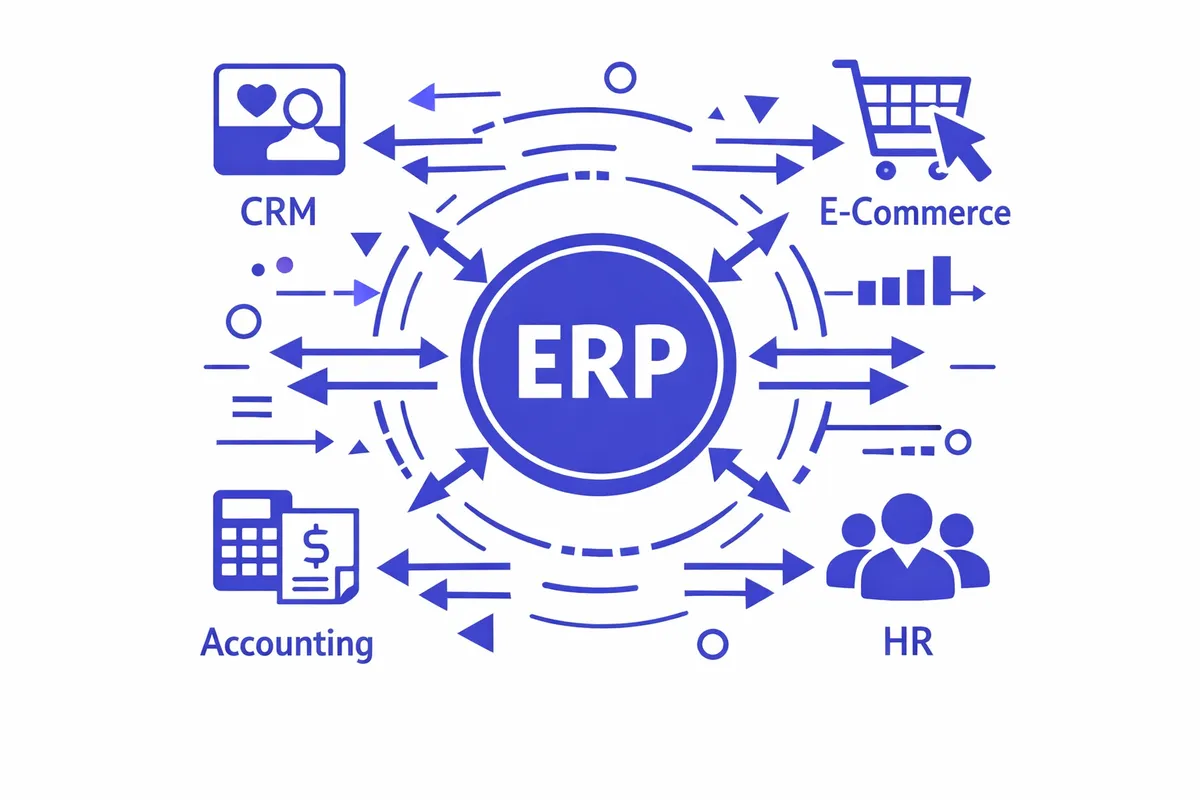
From that map, we design the integration architecture. For a West Town creative agency, a typical architecture might connect the project management platform to time tracking for task-level time allocation, time tracking to the billing platform for invoice generation, and billing to accounting for revenue recognition. Each connection is designed separately so the integration can be built incrementally.
Implementation starts with the connection that generates the most manual work. For most West Town creative firms, that is the billing-to-accounting sync. For manufacturers, it is usually inventory. Each completed connection delivers immediate relief before the next phase begins.
The density of design and creative businesses near Pulaski Park and St. Stanislaus Kostka Church means West Town clients often have colleagues in adjacent businesses facing the same integration challenges, making our work here directly relevant across a connected professional community.
Industries We Serve in West Town
Design and creative studios on Division Street and Chicago Avenue run project management, time tracking, billing, and accounting in separate platforms with no native connection between them. We connect project data to time tracking, time tracking to invoicing, and invoicing to accounting so creative revenue flows through to financial reporting without manual data assembly.
Marketing and advertising agencies along Damen Avenue managing client projects, media spend, and retainer billing across multiple tools need the connection between project management, billing, and accounting that eliminates month-end reconciliation. We connect these platforms so project costs and client revenue are visible without manual compilation.
Small manufacturers and craftspeople operating workshops off Grand Avenue and selling through multiple channels need inventory, order management, and accounting to share data. We connect production tracking or inventory management to ecommerce and wholesale order platforms to accounting so financial reporting reflects actual inventory position and multi-channel revenue.
Independent retail shops near Commercial Park running point-of-sale alongside accounting and inventory management tools need the data flows that keep inventory counts accurate across physical and online channels and move sales data to accounting without daily manual entry.
Real estate and property management firms on Ashland Avenue managing properties across multiple platforms need lease data, maintenance costs, and rent collection to flow to accounting without manual reconciliation. We connect property management platforms to accounting tools and produce unified financial reporting.
Freelance and independent consultants who have grown into small teams and adopted a mix of project management, billing, and accounting tools often have the same integration gap as larger studios. We build lightweight integrations appropriate for smaller scale that deliver the same automation benefit.
What to Expect Working With Us
1. Stack audit. We document every platform your business uses, map the manual processes between them, and assess the integration options available for each platform. For creative businesses with distinctive tool preferences, we specifically evaluate integration options for the platforms you want to keep.
2. Integration design. We produce a written architecture document covering each connection, data direction, error handling, and monitoring. We design around your existing platforms rather than requiring tool replacement.
3. Phased build. We implement the highest-priority connection first, typically within six to eight weeks. Subsequent connections build on the same infrastructure.
4. Monitoring and support. Every integration includes automated monitoring and error alerting. Post-launch warranty period and optional maintenance retainers for platform API changes.