How We Build Document Management for West Town
We start in your space. For a fabrication shop near Pulaski Park, that means walking the floor and seeing how a job folder actually moves: who opens it, what gets added at each stage, where it sits when the job ships. We map your real document lifecycle before we design anything, because a system built for how a West Town design studio works looks nothing like one built for a metal shop two doors down.
Next we build the structure. We design a folder taxonomy and naming convention that matches how your team thinks about work, then we migrate your existing files into it. That migration is the hard part, and we do it with you rather than handing you an empty system. Years of job files from a workshop on Grand Avenue get sorted, named, and indexed so the archive is searchable from day one, not just everything filed after launch.
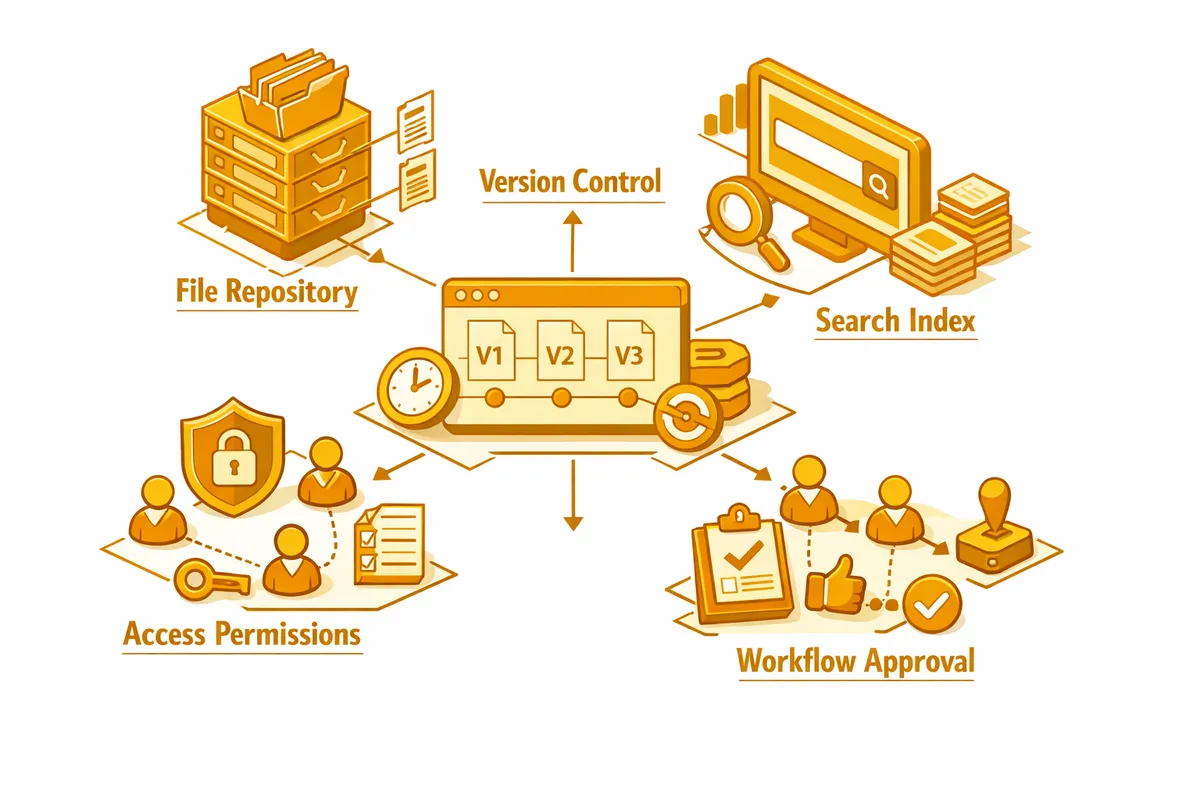
Then we wire in retrieval and control. We set permission tiers so shop staff, bookkeepers, and owners see what they should. We connect the system to the tools you already run, whether that is accounting software, a project tracker, or shared drives. We add AI-assisted tagging so incoming documents get classified and filed automatically, and we set retention rules so permits, contracts, and compliance records are kept as long as they need to be. We validate search against your actual files before we call it live.
Industries We Serve in West Town
Small manufacturers and fabrication shops along the Grand Avenue industrial frontage rely on document management to hold job files together across long project timelines. A metal or woodworking shop near Commercial Park keeps shop drawings, material certifications, client sign-offs, and finished-job photos in one indexed record, so a warranty question two years out is answered in minutes rather than from memory.
Design and creative agencies on Chicago Avenue use document management to pull contracts, brand assets, and revision histories out of email threads and personal drives. When a studio near Eckhart Park brings on a new account manager, the entire client history is already organized and permissioned, instead of living in the head of whoever ran the account first.
Independent retailers and boutiques on Division Street and Damen Avenue manage supplier agreements, wholesale terms, and seasonal buy sheets through a single system. A shop owner stops reconstructing last year's vendor terms from memory and starts each buying season with every contract and order history a search away.
Real estate and property management offices working the West Town rental market keep leases, inspection reports, renewal notices, and tenant correspondence in one controlled archive. As one team runs more units across Division Street, document management is what keeps a fast-growing portfolio from outrunning the people managing it.
Architecture and construction firms handling West Town buildouts use document management for permit packages, drawing sets, and change orders. During the spring permit rush, a firm working projects near Pulaski Park retrieves last year's filed plans instantly instead of refiling from scratch with the city.
Restaurants and cafes along Chicago Avenue and Grand Avenue organize health permits, liquor licensing, vendor contracts, and lease paperwork in one place. An operator near St. Stanislaus Kostka Church tracks every renewal date and license copy through the system, so a compliance deadline never arrives as a surprise and a license copy is never missing when an inspector asks for it.
What to Expect Working With Us
1. Walk-through and document audit. We visit your West Town location and catalog every document type you handle, how much of each you generate, and where the current process breaks. For a workshop, that usually means job files. For a design firm, it is contracts and assets. We start where the pain is sharpest.
2. Taxonomy and migration plan. We design a folder structure and naming standard that fits how your team works, then lay out exactly how your existing files move into it. Nothing about the plan is generic. It is built around your job folders, your client list, your vendor set.
3. Build, migrate, and connect. We stand up the system, migrate and index your back archive alongside new files, set permission tiers, and integrate with the accounting, project, or drive tools you already run. AI-assisted tagging gets configured so new documents file themselves.
4. Launch and seasonal tuning. We go live, train your team, and stay on through the first full cycle. West Town runs on a spring buildout and permit rhythm, so we check that the system holds up when that paperwork wave hits and adjust retention and tagging rules as real documents flow through.