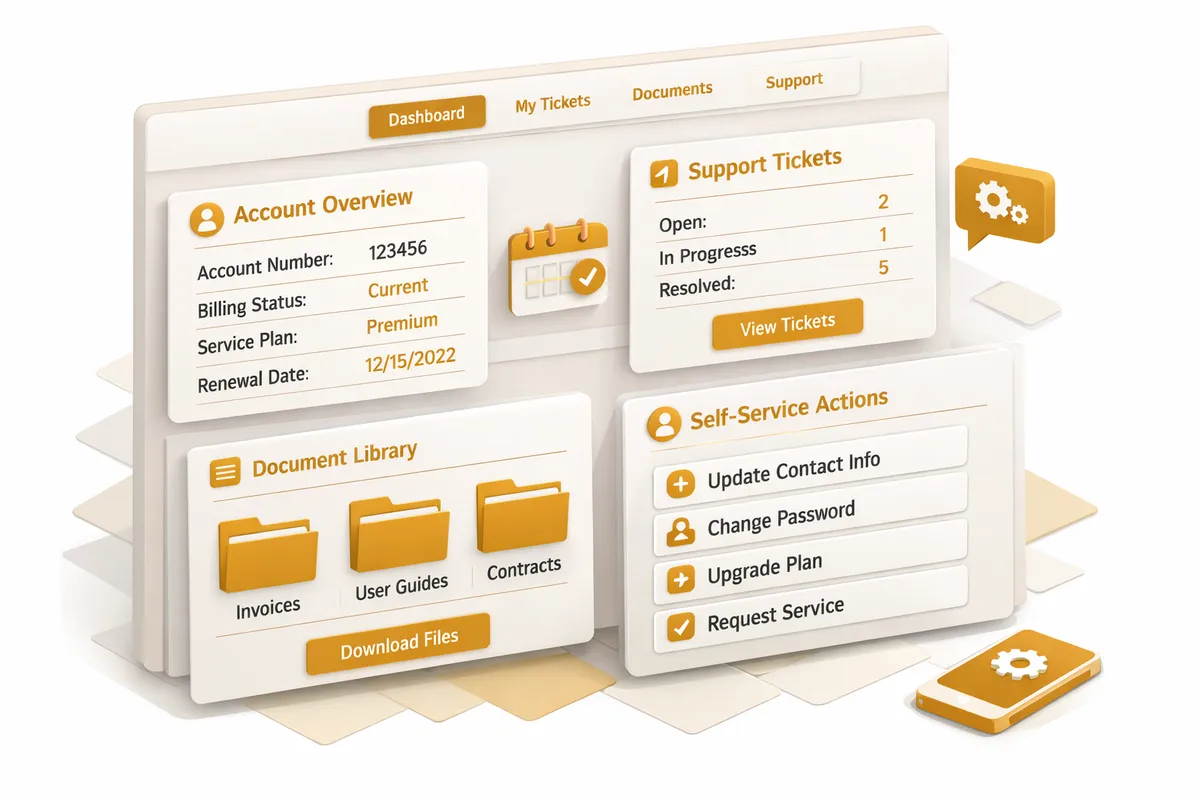
How We Build Customer Portals for West Town
Portal design for West Town creative businesses begins with the project types the studio runs and the client experience they want to deliver. A branding studio that does identity work in phases has a different milestone structure than a web development shop that runs agile sprints. A content production agency on retainer has ongoing deliverable flows rather than project-end deliveries. We map the specific workflow before defining the portal's functional scope.
For project-based studios, the portal's core architecture typically organizes around project phases and deliverable rounds. Each phase has a status indicator the client can read at a glance. Deliverables are uploaded to the phase where they belong and presented with a clear call to action: review, approve, or send feedback. Revision rounds are numbered and tracked. The full project timeline is visible to the client at all times, not just when the studio remembers to send an update.
For retainer-based creative relationships, the portal organizes differently: by month or period rather than project phase. The client sees what was delivered in the current period, what is in progress, and what is coming next. Monthly invoices are attached to the period they cover. Communication history is organized by topic rather than buried in a single thread.
Approval workflow design is where West Town portals produce the most immediate operational value. The feedback review cycle that currently runs through email, often across multiple threads with different stakeholders, collapses into a single structured workflow. A client reviews a specific deliverable in the portal, selects from a set of response options (approve, approve with revisions, revise and resubmit), and leaves comments that the studio can see in context with the work. Both parties know exactly what was requested and what was approved without archaeology through email threads.
We design portal interfaces to the visual standard of each studio. A West Town branding agency does not benefit from presenting clients with an interface that looks like a project management tool from 2015. The portal's design reflects the studio's professional identity.
Industries We Serve in West Town
Brand strategy and identity studios near Eckhart Park and along Chicago Avenue build portals organized around the phases of an identity engagement: discovery and research, strategy development, concept exploration, refinement, and final delivery. Clients access each phase's deliverables as they are completed, leave feedback through a structured review flow, and sign off on final assets with a timestamped approval record. The portal replaces the client presentation deck as the primary deliverable vehicle.
Web design and development studios on Ashland Avenue and Grand Avenue structure portals around sprint milestones or development phases. Clients access wireframes, design comps, staging site links, and development documentation at each milestone. For studios that manage ongoing retainer development work, the portal tracks the sprint backlog and gives clients visibility into priority order without requiring a weekly backlog review call.
Marketing and content agencies along Chicago Avenue running ongoing retainer engagements use portals to organize monthly deliverable packages: content calendar approvals, published content links, performance reports, and upcoming production requests. Retainer clients who can review and approve next month's content calendar in the portal accelerate the approval cycle and reduce the back-and-forth that delays production schedules.
Architectural visualization and rendering studios near Commercial Park build portals for clients managing large-scale real estate or development projects. Each rendering request has its own thread in the portal with reference materials, progress updates, revision rounds, and final delivery. For clients managing multiple buildings or phases, the portal provides a consolidated view of all active rendering work without requiring the studio to send individual project update emails.
Photography and creative direction studios with commercial clients running seasonal campaigns use portals for shot list review and approval, image delivery organized by campaign, usage rights documentation, and invoice access. Commercial photography clients who need to route approvals through multiple stakeholders benefit from a portal that tracks each stakeholder's sign-off and consolidates the approval record.
Copywriting and editorial studios working with B2B clients on content programs use portals for brief submission, draft review, revision tracking, and final delivery. For editorial studios managing content programs across multiple channels for a single client, the portal provides a single organized view of all content in progress rather than a scattered set of shared documents across multiple platforms.
What to Expect Working With Us
1. Project workflow documentation and portal scope mapping. We start by documenting your studio's actual project and retainer workflows, from initial brief to final delivery. From that documentation, we define the portal's scope to ensure it covers the complete client journey. Studios that have consistent project types get a more structured portal architecture. Studios with variable project types get a more flexible framework.
2. Approval workflow design and visual interface design. We design the approval workflow for your specific deliverable types and present a visual prototype of the portal interface before building. For West Town design businesses, the portal's visual quality matters and we design it to your standards before any development begins.
3. Integration with your project management and file storage tools. We connect the portal to the project management platform and file storage you already use so deliverables flow into the portal automatically rather than requiring manual uploads. For studios on Notion, Asana, ClickUp, or similar platforms, we assess integration availability during discovery.
4. Pilot with one or two current clients. Before rolling out to your full client base, we launch the portal with one or two existing clients who will be candid about what works and what needs adjustment. For West Town studios whose clients include other design professionals, pilot testers tend to provide detailed and useful feedback.