How We Build Autonomous Workflow Agents for West Town
We begin with workflow discovery. We map how your business actually operates: what triggers each process, what steps follow in sequence, who handles each step, what decisions get made along the way, and where things fall through the cracks. For a West Town design studio, that might reveal that new client onboarding involves 14 distinct steps across three team members and that two of them are consistently delayed because they require a specific person's attention. For a repair shop, it might reveal that parts ordering is delayed an average of two days because someone has to remember to check inventory.
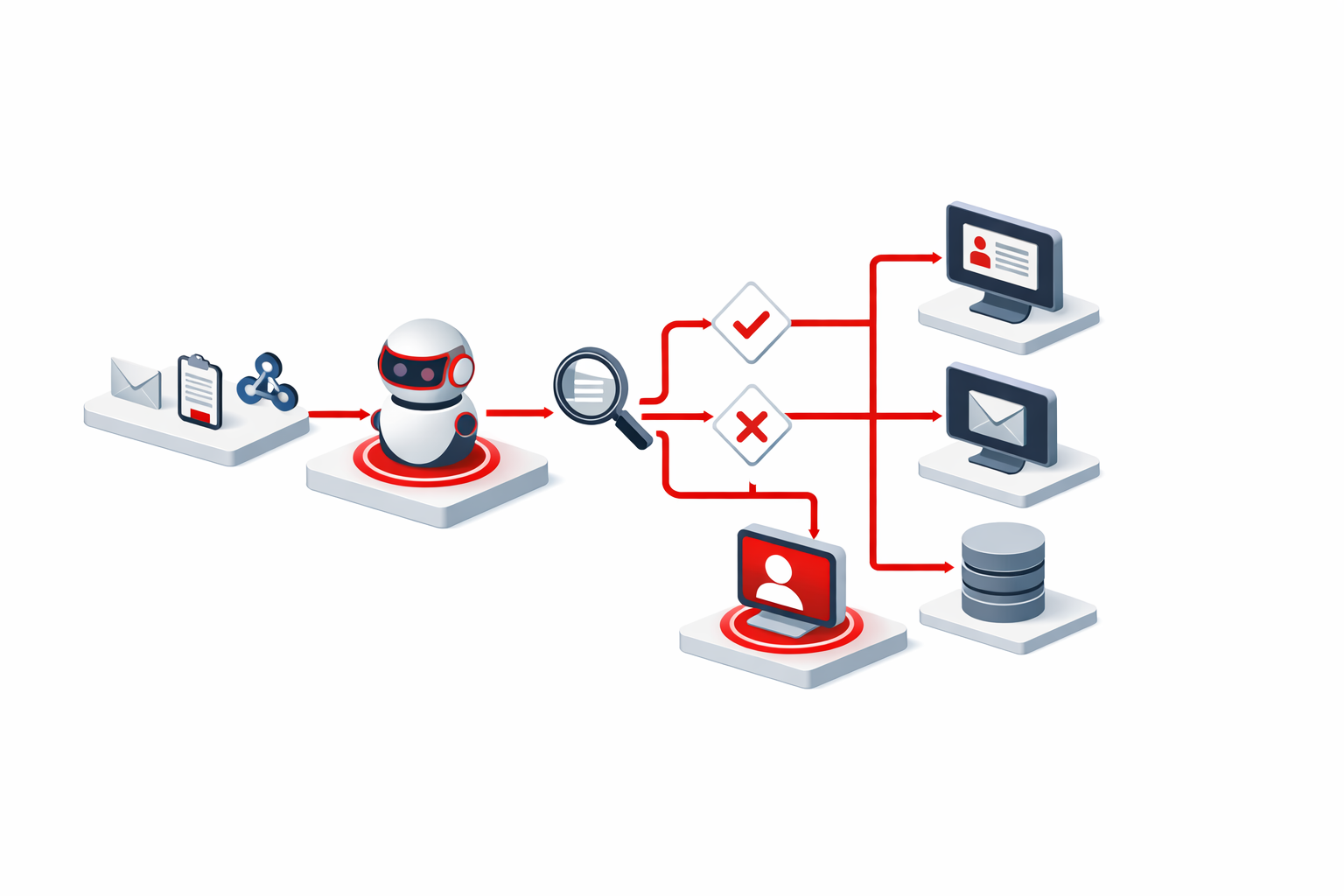
Once we understand your workflows, we design agents for the highest-impact ones. We map each workflow into a decision tree: what inputs trigger the workflow, what conditions determine the path it takes, what actions execute at each step, and what happens when an exception occurs that the agent cannot resolve. We identify which steps can be fully automated, which need a human decision, and which need a human to execute but can be automatically queued and tracked.
We then build the agents using your existing tools where possible. Most West Town businesses already use scheduling software, project management platforms, CRM tools, and email. We build agents that operate within those systems rather than replacing them. A workflow agent for a design studio might connect their project management platform, client communication tool, and billing system, automating the handoffs between each. A repair shop agent might connect their job management software, parts supplier portal, and customer notification system.
We test agents against real workflows before deployment, run them in parallel with manual processes briefly to verify accuracy, and then hand off with clear documentation so your team knows how to monitor the agents and handle the exceptions they escalate.
Industries We Serve in West Town
Design and creative studios along Chicago Avenue and Damen Avenue use autonomous agents for client onboarding, project setup, timeline management, revision tracking, and invoice generation. Studios eliminate the coordination overhead that consumes project managers and allow those team members to focus on client relationships and creative quality.
Repair and specialty service shops near Pulaski Park and across the Grand Avenue corridor use agents for job intake, parts ordering, scheduling, customer communication, and completion notifications. Shops that previously required a dedicated front-desk coordinator to manage communication now run the same volume with staff focused on technical work.
Independent retail and e-commerce businesses on Division Street and Damen Avenue use agents for inventory monitoring, reorder triggering, order fulfillment tracking, customer shipping notifications, and return processing. Retail automation allows smaller teams to manage larger inventory volumes without service degradation.
Real estate and property management firms in West Town use agents for lead intake, showing scheduling, follow-up sequences, document collection, and lease renewal processes. Agents maintain consistent communication with prospects and tenants even during high-volume periods.
Cafes, restaurants, and hospitality businesses on Grand Avenue use agents for reservation management, waitlist handling, event inquiry response, and supplier order automation. Hospitality agents manage the administrative layer so front-of-house staff concentrate on the guest experience.
Professional service firms including consultants, accountants, and legal services use agents for client intake, document collection, appointment scheduling, follow-up reminders, and billing triggers. Firms reduce administrative staff overhead while improving client communication consistency.
What to Expect Working With Us
1. Workflow discovery and mapping. We interview your team and observe your actual operations to map current workflows, identify bottlenecks, and prioritize which processes will deliver the most value when automated. We document each target workflow in detail. This phase takes one to two weeks.
2. Agent design and architecture. We design the agent logic for your prioritized workflows, mapping decision trees, exception handling, and integration points with your existing tools. We present the design for your review before we build anything. Design takes one to two weeks.
3. Development and integration. We build the agents and connect them to your existing systems. We start with one or two high-impact workflows so you see results quickly before we expand. Development typically takes two to four weeks per workflow depending on complexity.
4. Testing, deployment, and monitoring. We run agents in parallel with your manual processes to verify accuracy, then transition to automated operation. We monitor agent performance, handle edge cases as they emerge, and refine logic based on real-world results. We remain available for adjustments for the first 60 days after launch.