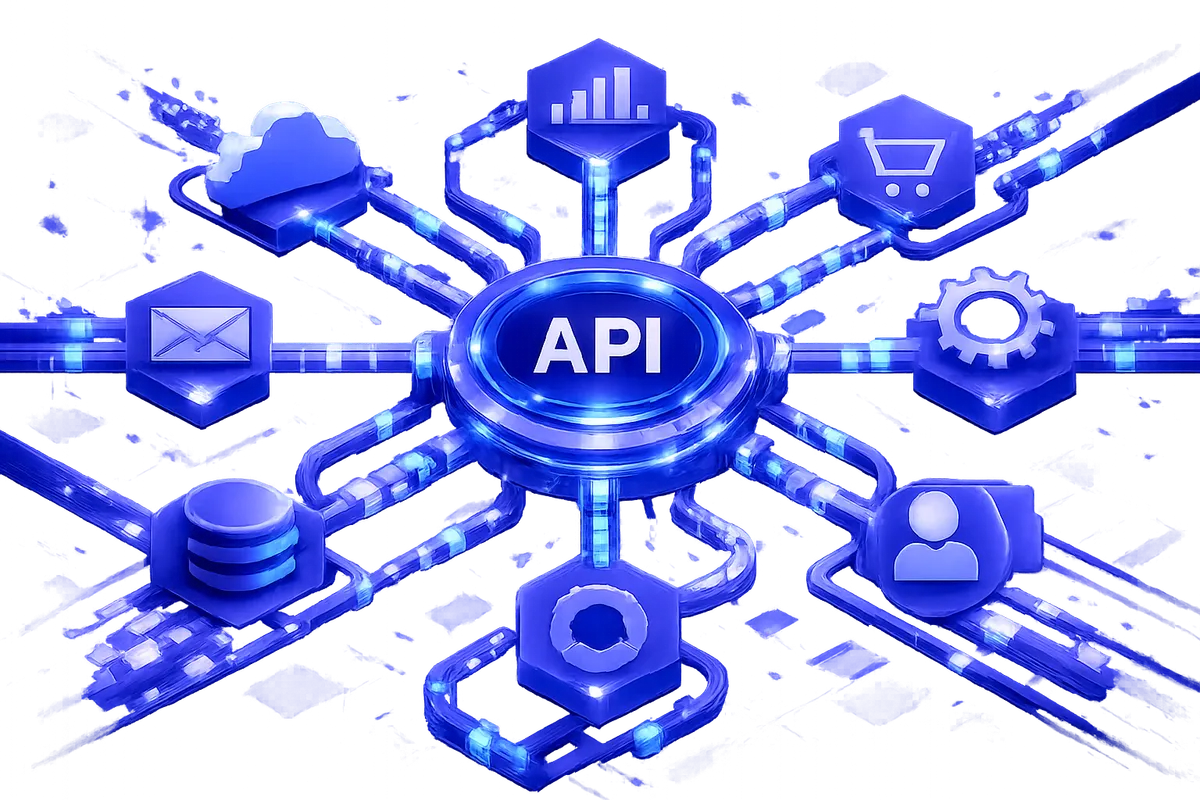
How We Build API Integration for West Town
Discovery starts with a complete inventory of your current systems. Every platform your business uses, every account, every data flow that happens today whether manually or automatically. We document the data that lives in each system, who owns it, and which integrations would eliminate manual work. For a typical West Town retailer, this mapping takes about four hours and produces a document that most owners find genuinely clarifying on its own, independent of any integration work that follows.
From the inventory, we prioritize. We rank integration candidates by estimated monthly hours saved, error risk eliminated, and strategic importance to the business. A Noble Square retailer might rank inventory reconciliation between POS and e-commerce as priority one, wholesale order automation as priority two, and customer data synchronization across email marketing and loyalty as priority three. We sequence builds to deliver the highest-value integration first, usually in a four-to-six-week first phase, with later phases scoped based on observed results.
Architecture choice is driven by your actual systems. For modern SaaS stacks, we often build using a combination of Make, Zapier, or native integrations where they fit, plus custom Node.js or Python connectors for transformations those platforms cannot handle cleanly. For businesses with legacy tools, we build wrapper APIs in front of older systems to expose them to modern connectors. For real-time or high-volume requirements, we build event-driven integrations with queuing and retry logic. The architecture serves the business, not a vendor preference.
We test every integration against your actual data history before launch. If you have a year of wholesale orders in a spreadsheet, we process them through the new integration as a validation pass. This surfaces edge cases that hypothetical testing would miss. Integrations that look clean on paper encounter the reality of a customer whose name is three words with an apostrophe, a product with a zero-padded SKU, a purchase order with a line-item discount that does not appear in the normal data model. These real-world details are where integrations typically fail in production, so we flush them out before anyone relies on the automation.
Monitoring is built into every integration we deploy. Your team gets visibility into data flow health, error rates, and any transactions that failed to process. Alerts fire when something actually breaks, not when a single flaky API call retries successfully. We design for silent success and loud failure, which is the operational posture integrations need in small business environments where no one has time to check a dashboard that always looks green.
Industries We Serve in West Town
Independent retailers along Division Street, Chicago Avenue, and Milwaukee Avenue rely on us to integrate Shopify or BigCommerce with Square, Lightspeed, or Clover POS systems, QuickBooks Online, shipping platforms like ShipStation, and the email marketing tools that turn one-time buyers into repeat customers. Retail integration eliminates the nightly reconciliation work that consumes owner and manager time.
Design agencies and creative studios around Grand Avenue and in the warehouse conversions near the Kennedy Expressway use integrations that connect Harvest or Toggl time tracking to QuickBooks invoicing, Asana or Notion project management to Slack notifications, HubSpot CRM to proposal generation tools, and client portals to status dashboards. The integrations we build for agencies typically reclaim five to fifteen hours a week of operations time across a five to ten person team.
Craft food and beverage producers operating tasting rooms or production facilities in the historic industrial corridors of West Town need integrations that connect production management to wholesale order processing, compliance reporting tools to sales data, and distribution platforms to accounting systems. TTB-compliant reporting from integrated data beats Friday afternoons spent assembling it manually from four different sources.
B2B professional services firms in East Village, Noble Square, and along the Chicago Avenue corridor rely on integrations that connect CRM to billing, time tracking to project profitability dashboards, and client communication tools to matter management systems. Integration turns scattered tools into coordinated infrastructure that lets small firms compete against larger operations on operational quality.
E-commerce brands headquartered in West Town that ship nationally need integrations across their sales channels, fulfillment providers, inventory systems, and customer data platforms. We build the coordination layer that lets a single West Town founder run operations that a decade ago would have required a dedicated operations manager.
Nonprofits based in West Town including organizations serving the Latino community with long neighborhood history integrate donor management platforms with accounting systems, event registration tools with email platforms, and grant reporting systems with program outcome data.
What to Expect Working With Us
1. System inventory and integration audit. We map every system your business uses and identify the integration opportunities. Output is a prioritized integration roadmap you own regardless of whether we build any of it.
2. Scope and architecture for the first integration. Before building, we specify exactly what data moves where, on what trigger, with what transformation. You approve the specification before any code is written.
3. Build and validation. Build runs three to six weeks for a first integration depending on complexity. Validation uses your actual historical data. You have visibility throughout and test the integration against real scenarios before launch.
4. Launch, monitoring, and iteration. We launch with monitoring configured and alerting routed to whoever owns operations on your team. We stay engaged for a month of live operation to address any edge cases. Optional ongoing retainers cover expansions, third-party API changes, and incremental new integration work.