How We Build AI Integration for West Town
Our process begins by understanding your existing technology stack. What systems do you actually use? What data lives in each system? What workflows would benefit most from AI integration? For a design studio, that might be integrating AI brainstorming and content generation into your design tool. For a manufacturer, that might be connecting AI optimization to production scheduling. For an agency, that might be AI writing tools in your CMS and project management.
We then assess technical feasibility. Most modern business software has APIs enabling connection to external services. Some do, some don't. We determine what's possible given your technology choices. If your systems support integration, we design the connections: what data flows where, what triggers AI tools, what happens with results. If systems don't support integration, we sometimes recommend workarounds or alternative architectures.
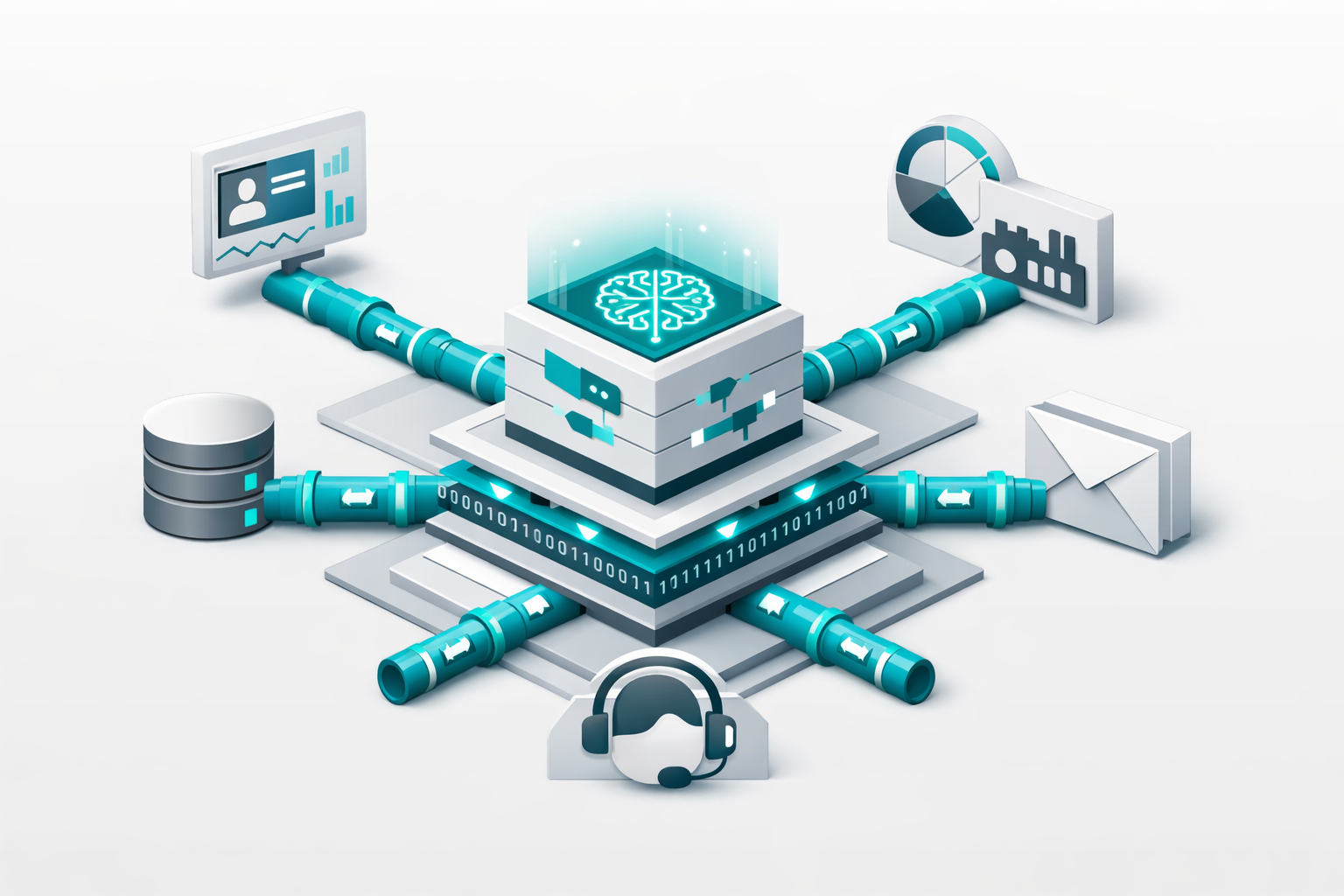
We then build the custom integrations using APIs, webhooks, and middleware. A connector reads data from your CRM, sends it to an AI service, and returns results for the CRM to act on. An automation flow triggers AI writing when new content is needed, then pushes results to your publishing system. A custom script reads manufacturing data, calls optimization AI, and surfaces recommendations in your production system. The work is technical but straightforward when your systems support API access.
Industries We Serve in West Town
Design and creative studios integrate AI brainstorming, design optimization, and content generation into their design tools and project management systems. Designers stay in their familiar tools while AI capabilities accelerate ideation and iteration.
Manufacturing and production facilities connect AI optimization, quality control, and supply chain management to their production systems. Operators see AI recommendations integrated into their workflow without switching applications.
Marketing and creative agencies integrate AI content generation, social media optimization, and campaign automation into their client management and content delivery systems. Teams create and publish content with AI assistance while staying in familiar platforms.
E-commerce and retail platforms integrate AI product recommendations, customer service, and inventory optimization into their backend systems. Customer-facing AI runs invisibly while backend operations get AI-enhanced efficiency.
Software startups and development shops integrate AI code assistance, testing support, and documentation generation into their development environments. Developers access AI capabilities within their IDEs and collaboration platforms.
Consulting firms integrate AI research, data analysis, and client communication into their project management and delivery systems. Consultants deliver client work with AI support without context-switching between tools.
What to Expect Working With Us
1. Technology audit and integration assessment. We review your existing technology stack, understand what you use regularly, identify which integrations would have the most impact. We assess technical feasibility: which of your systems support API access and integration. Assessment takes 2-3 weeks.
2. Integration design and architecture. We design the integrations: what data flows where, what triggers AI tools, what happens with results. We select appropriate AI services and design how they connect to your systems. We plan phased implementation if multiple integrations are needed. Design takes 2-3 weeks.
3. Integration development and testing. We build the custom integrations and test them with your actual systems and workflows. We validate that data flows correctly, that results appear where expected, that user experience is smooth. Development and testing takes 3-6 weeks depending on complexity.
4. Deployment and optimization. We deploy integrations to your production systems. We monitor performance and make adjustments as needed. We provide training so your team understands how to use the AI capabilities now available to them. Ongoing optimization happens for 4-6 weeks after launch.