How We Build Accounting Automation for West Town
West Town's creative business community is particular about tools. Business owners here have strong opinions about the software they use, built from years of working around products that did not fit their workflow. We work with those preferences rather than against them. The automation layer sits on top of whatever accounting software your business already uses, whether that is QuickBooks, FreshBooks, Wave, or a more specialized platform your design firm adopted for project tracking.
Every engagement starts with a process walk-through. We ask your team to show us exactly how month-end close happens, step by step. Not how it is supposed to happen: how it actually happens. For a West Town design firm near St. Stanislaus Kostka Church, that might reveal that the controller's spreadsheet is the actual system of record and QuickBooks is updated once a month from the spreadsheet. That is a common situation and an automation opportunity: the spreadsheet logic becomes the automation rule, and the spreadsheet becomes the exception report rather than the primary accounting record.
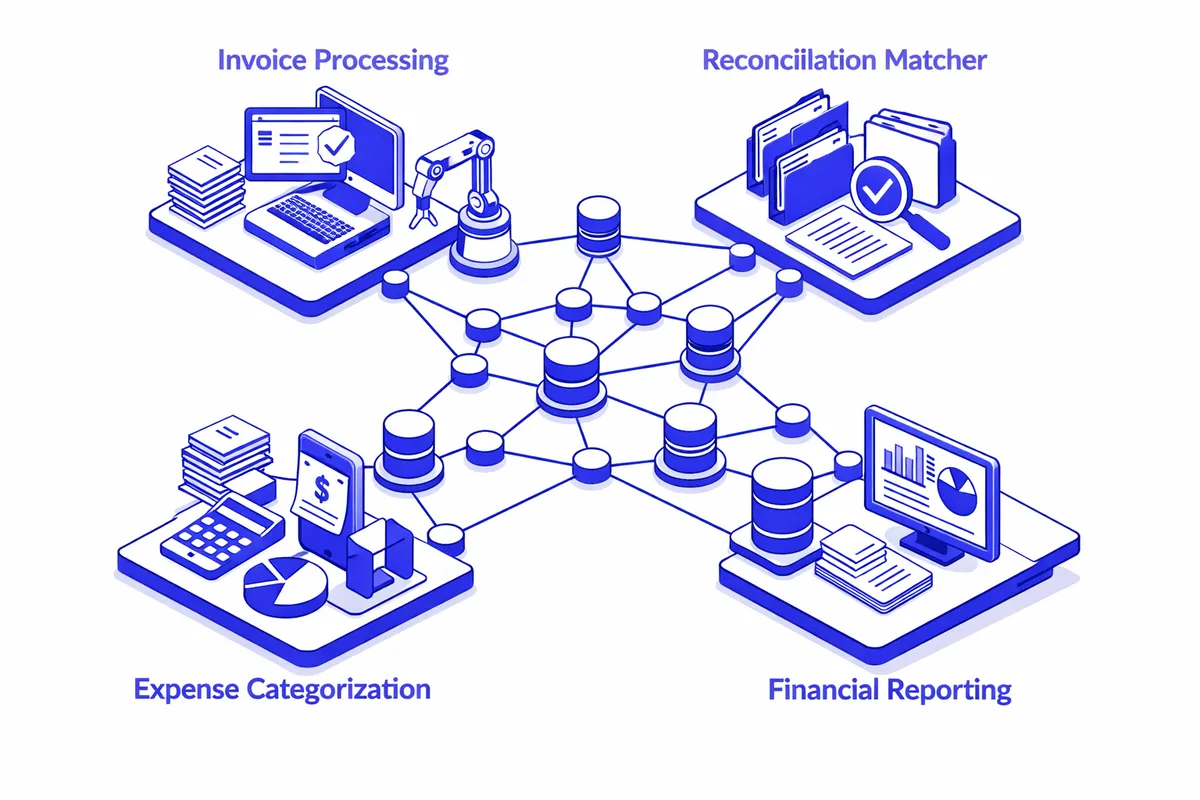
We map the steps that follow deterministic rules, quantify the time each one takes, and sequence the automation build based on where the highest labor concentration sits. For most West Town creative businesses, that means starting with invoice processing and bank reconciliation before moving to project cost allocation and revenue recognition.
Testing happens against real historical data. We run every automation against three months of your actual transactions and compare outputs against your existing records before anything touches current-period financials.
Industries We Serve in West Town
Design and creative firms along the Chicago Avenue and Division Street corridors use accounting automation to manage project billing, time and expense posting, and revenue reconciliation against project milestones. Creative firms often bill in irregular patterns tied to project timelines rather than calendar cycles; automation builds the billing logic into the accounting workflow so that invoices generate when milestones are reached rather than when someone remembers to check.
Independent retailers and boutique shops near Eckhart Park and Pulaski Park on Division Street use accounting automation to handle vendor invoice processing, inventory cost tracking, and daily revenue reconciliation. West Town's boutique retail character requires administrative precision to manage thin margins; automation reduces the overhead without requiring dedicated accounting staff.
Small manufacturers and workshop businesses near Grand Avenue and Ashland Avenue use accounting automation to manage job costing, material tracking, and customer billing cycles. Manufacturing accounting is particularly well-suited to automation because the cost allocation logic, materials plus labor plus overhead by job, follows deterministic rules once the rates are established. Automation applies those rules consistently across every job without requiring manual calculation.
Restaurants and food businesses along Ashland Avenue and Western Avenue automate daily revenue reconciliation, vendor invoice processing, and tip and payroll accounting. Restaurant accounting requires daily discipline across a high volume of small transactions; automation provides the structure without requiring daily manual processing.
Real estate offices and property management firms operating near Commercial Park and Emmett Till Academy on Damen Avenue use accounting automation to handle lease billing, expense allocation, and owner reporting. West Town's rapid real estate development has produced a significant property management sector; automation allows those firms to scale their portfolios without proportionally scaling their administrative overhead.
Cafes and creative co-working businesses along Division Street automate membership billing, event revenue tracking, and vendor reconciliation. West Town's independent cafe and creative space culture produces businesses with recurring billing structures that are well-suited to automated management: the same logic applies to every member renewal and every vendor payment, with exceptions routed for review rather than blocking the standard process.
What to Expect Working With Us
1. Workflow walk-through before any tools. We do not arrive with a solution in mind. We ask your team to show us how month-end actually works, not how it is documented. For West Town creative businesses, the actual workflow often diverges significantly from the documented one; finding that divergence is how we build automation that fits reality rather than theory.
2. Build order based on time, not complexity. We rank every automatable process by the time it currently takes and build in that order. The process that takes the most hours per month gets automated first, regardless of technical complexity. You start saving time as quickly as possible.
3. Historical data validation before go-live. Every automation we build runs against your actual historical transactions and produces outputs you compare against your existing records. You see the accuracy before anything goes live.
4. Training built for your actual team. We train whoever currently manages your accounting, whether that is an internal bookkeeper, an outsourced CPA, or the owner doing it personally. The training is practical: how to read the exception report, how to modify a categorization rule, how to extend the automation to a new vendor or project type.