How We Build UI/UX Design for West Loop
West Loop product teams move quickly. Startups in the Fulton Market corridor are typically on investor timelines that require showing product progress at defined intervals. Restaurant operators building custom tools are often doing so while simultaneously running full dining rooms. We design in phases that deliver usable, testable work at each stage rather than requiring a complete design before development begins. The first phase delivers research findings and an information architecture decision. The second delivers validated wireframes for the highest-priority flows. The third delivers high-fidelity design and prototypes ready for developer handoff. Each phase produces something immediately usable.
For West Loop tech startups, the research phase focuses on the specific user segments the product is designed to serve. If a startup near Google Chicago is building a logistics coordination tool, we conduct research with the dispatchers, drivers, and operations managers who will use it daily, not with proxy users. If a startup on Randolph Street is building a B2B analytics platform, we research with the analysts and managers in the target buyer organizations. West Loop founders often have strong intuitions about their users, but user research consistently surfaces the gap between what operators know and what users actually do when they encounter an interface for the first time.
Design system creation is a standard deliverable for West Loop startup products because most of these teams are building for scale. A component library built in Figma with documented tokens, interaction states, and usage guidelines gives engineering teams the building blocks to implement new features consistently without returning to design for every screen. For West Loop startups with small design teams or no in-house design, a well-structured design system extends the design investment across the product's development lifecycle.
Industries We Serve in West Loop
Technology startups and scale-ups based in the West Loop and Fulton Market corridor are the primary market for product design services. We work with founders at the seed stage defining their first interface architecture, growth-stage companies designing version 2.0 of a platform that has outgrown its initial design, and scaling organizations building out design systems to support larger engineering teams. West Loop's startup density makes it possible to connect with founders, advisors, and users within a single neighborhood.
Restaurant and hospitality groups operating on Fulton Market and Randolph Street are building custom tools because the general-purpose restaurant software market does not serve high-volume, high-complexity dining operations well. Reservation systems, kitchen display interfaces, staff scheduling platforms, and event management tools designed specifically for the operational context of West Loop restaurant groups, tested with front-of-house and back-of-house staff before launch.
Creative agencies and design firms concentrated in West Loop need client delivery platforms, project collaboration tools, and proposal interfaces that reflect the design quality the agency promises clients. A creative firm on Lake Street presenting work through a poorly designed client portal undermines the brand positioning the agency has spent years building. We design client-facing platforms for creative organizations that communicate the quality standard the agency upholds.
Venture capital and professional investment firms working in the West Loop corridor need portfolio management interfaces, deal tracking tools, and investor reporting platforms that handle complex data presentation for sophisticated users. Financial dashboard design, portfolio company tracking interfaces, and LP reporting tools designed for investment professionals who evaluate data quality daily.
Legal services and professional firms supporting West Loop's tech and restaurant economy need client portals, matter management interfaces, and billing and reporting tools designed for a client base that includes startup founders and restaurant operators. The clients of West Loop professional services firms are demanding digital tool users, and the firm's digital experience has to hold up to that standard.
Real estate development and commercial property management operations supporting West Loop's ongoing buildout need tenant management portals, leasing interfaces, and project tracking tools for developments ranging from converted warehouses on Morgan Street to new high-rise residential projects near Bartelme Park. Property management interfaces designed for the complexity of West Loop's mixed commercial and residential portfolio.
What to Expect Working With Us
1. Discovery and scope. We map the product's user population, use contexts, and design objectives before any interface work begins. For West Loop startup products, this includes competitive landscape review and positioning analysis alongside user research. For hospitality and restaurant products, this often includes observational research in the actual service environment to understand the operational context that will govern every design decision.
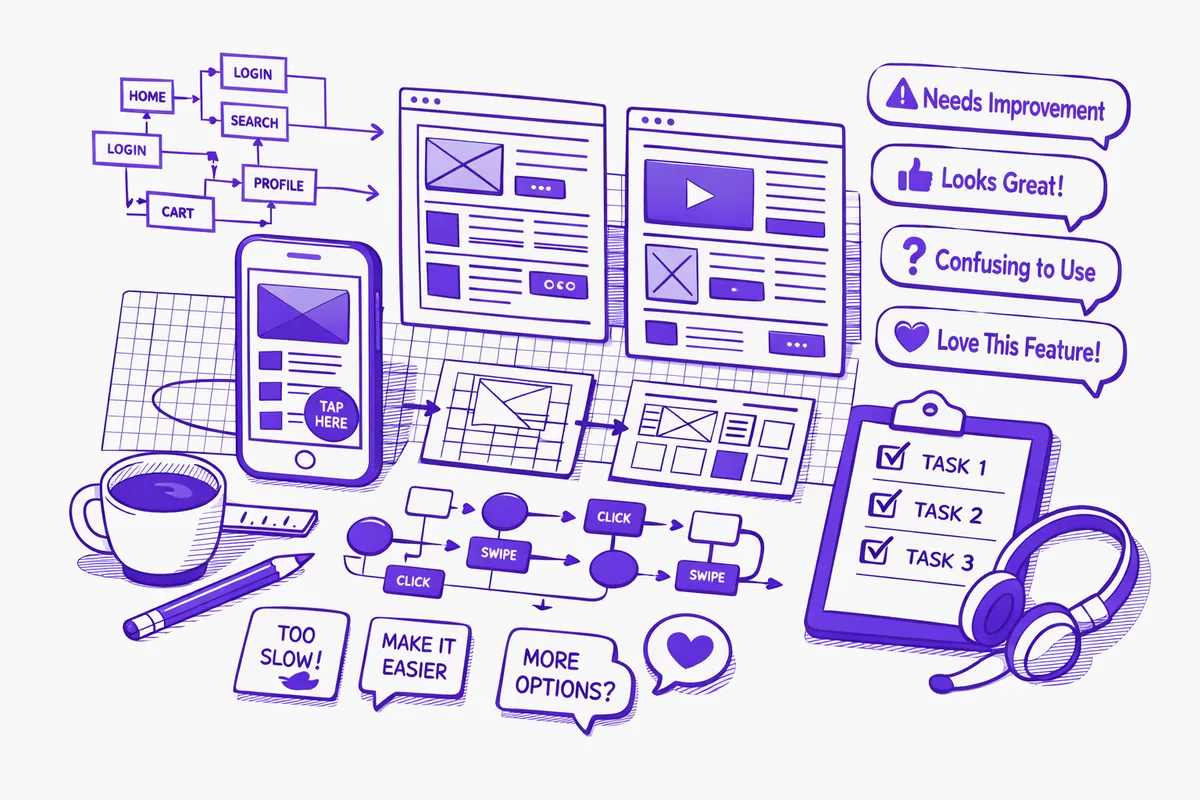
2. Architecture and wireframes. We design information structure and navigation hierarchy before committing to visual design. For West Loop tech products, wireframes are reviewed with the founding team and, where possible, with target users. For hospitality tools, we test wireframe flows with front-of-house staff to validate that the proposed interface structure matches actual service workflow before moving to high-fidelity design.
3. High-fidelity design and interactive prototype. Production-quality interfaces built in Figma, with the interactive prototype that allows West Loop stakeholders and test users to evaluate the product experience before engineering begins. Design systems with documented component libraries for startup teams planning to scale beyond the initial product.
4. Testing, refinement, and handoff. We test with users who match the target population. For West Loop restaurant tools, that means service staff. For startup B2B products, that means professionals from the target buyer category. Findings from testing are incorporated before developer handoff. We remain available during implementation to answer engineering questions and review built interfaces against design specifications.