How We Build Supply Chain Automation for the West Loop
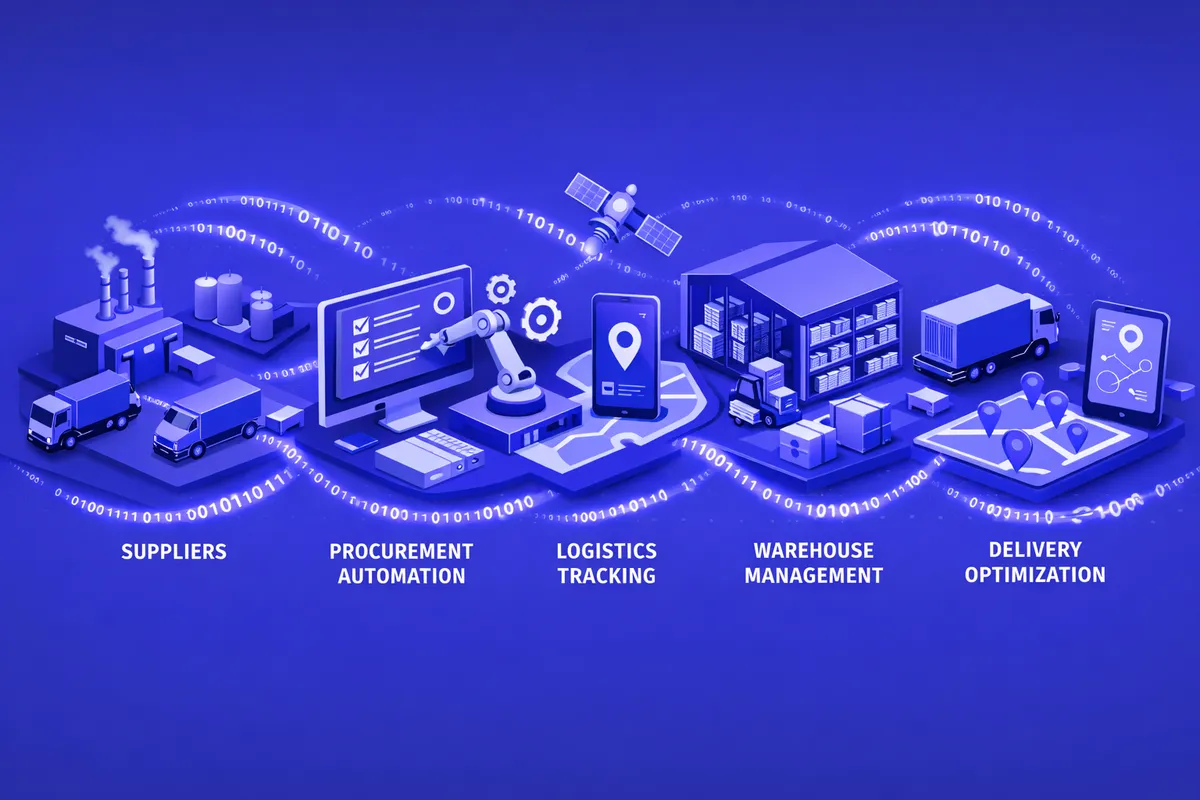
Supply chain automation engagements begin with a current-state mapping session. We document every procurement and inventory workflow: how purchase orders are created and approved, how receipts are matched against orders, how inventory is tracked and reconciled, how vendor relationships and pricing are managed, and where the manual data entry and error correction processes live. For a Randolph Street restaurant group, this session happens in part in the back office and in part in the receiving area where deliveries actually arrive.
System architecture is designed around the specific workflows we have documented rather than a generic supply chain software model. The features that matter to a restaurant group managing perishable food inventory with daily delivery schedules are different from the features that matter to a CPG brand managing warehouse inventory and distributor purchase orders. We build the automation logic for the specific workflows that create the most operational pain and the most cost exposure.
Integration with existing operational systems is non-negotiable. Supply chain automation that does not connect to the financial system, the point-of-sale system, or the ERP creates a new silo rather than eliminating the existing ones. We design the integration architecture before building the automation system so the connections between systems are clean and the data flows in both directions without manual reconciliation.
Industries We Serve in the West Loop
Multi-concept restaurant groups operating along Randolph Street and the Fulton Market corridor use supply chain automation to manage food cost tracking, purchase order workflows, vendor price management, and inventory reconciliation across multiple kitchen operations. The restaurant that knows its food cost by category in real time on a Wednesday afternoon has a management advantage over the one that finds out on Monday morning when the accountant finishes the weekly report.
Food and beverage product brands with roots in the West Loop's culinary ecosystem use supply chain automation to manage their distributor relationships, production purchase orders, warehouse inventory, and the demand forecasting that determines how much product to produce before a retail sell-in or a seasonal demand spike. Brands that have been manually managing these workflows in spreadsheets discover immediately how much decision-quality information they were missing.
Technology companies and software businesses near Google Chicago on West Fulton Market use supply chain automation for software license management, contractor resource allocation, hardware procurement, and vendor contract management. The supply chain of a technology company is primarily digital, but the procurement complexity of managing hundreds of software subscriptions and vendor relationships at scale is a real operational problem that automation solves efficiently.
Specialty food distributors and importers operating out of the West Loop and serving the Fulton Market restaurant corridor use supply chain automation to manage customer orders, vendor purchase orders, cold storage inventory, and delivery routing in a unified system. A distributor managing perishable inventory across multiple temperature zones for dozens of restaurant accounts cannot afford the information gaps that manual tracking creates.
Commercial real estate and property management firms active in the West Loop's development market use supply chain automation for contractor procurement, materials management on construction projects, and the vendor management workflows that property management at scale requires. A firm managing ten or more concurrent development projects along the Fulton Market corridor needs automated procurement and spend tracking to maintain margin on each project.
Professional services and consulting firms on Madison Street use supply chain automation principles to manage contractor and freelance resource procurement, project-based purchasing, and the vendor management workflows that large professional services operations require to track spend accurately against client engagements.
What to Expect Working With Us
1. Current-state workflow documentation. We spend one to two days with your operations team mapping every procurement and inventory workflow from end to end. For restaurant groups, this includes time in receiving and in the back office. For product companies, it includes warehouse operations and the order management process. We leave with enough documentation to design an automation system that addresses the actual operational reality rather than a theoretical process flow.
2. Automation architecture and integration design. We design the system architecture and the integration points with your existing operational software before writing code. The integration design is often the most complex part of this phase, particularly for restaurant groups using hospitality-specific systems or product companies whose existing ERP was not designed to handle the specific supply chain workflows we are automating.
3. Build, testing, and parallel operation. We build the automation system and run it in parallel with your existing processes for a defined period before cutover. Parallel operation validates that the automated system captures everything the manual process captured and that the integrations with your operational systems are functioning correctly. For supply chain operations where errors have direct financial consequences, this validation phase is not optional.
4. Cutover and ongoing optimization. Full cutover to the automated system is preceded by training for every team member who touches the supply chain workflow. Post-cutover, we monitor the system through the first full procurement cycle, identify edge cases the initial build did not anticipate, and build the additional automation logic those edge cases require. Supply chain automation is never complete at launch; it improves continuously as the system encounters the full variety of real operational scenarios.