Your Cart (0)

Your cart is empty

West Loop, Chicago

Lead Generation in West Loop

Lead Generation for businesses in West Loop, Chicago. We know the neighborhood, the customers, and what it takes to compete locally.

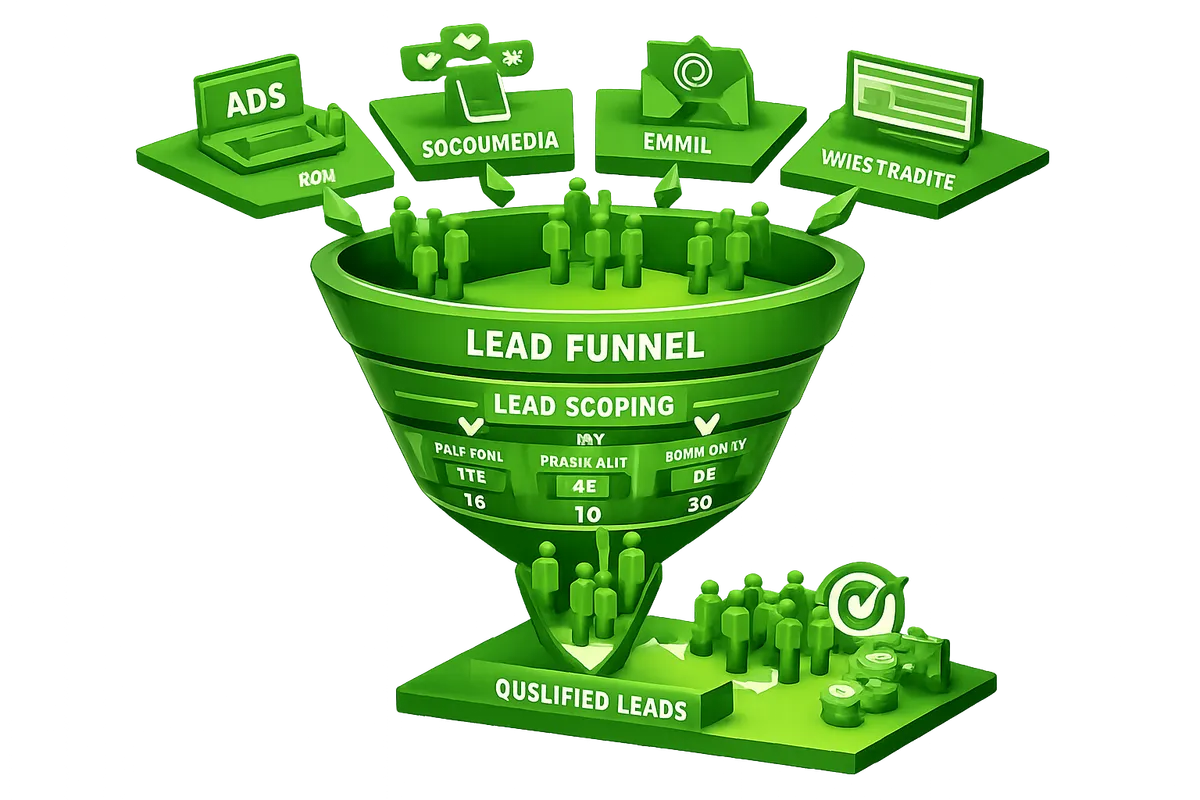
Lead Generation in West Loop service illustration

Inbound Lead Generation for West Loop Tech Companies

Search and Content Strategy

West Loop technology companies sell solutions, not commodities. Their buyers search for problems, not products. A cybersecurity firm does not generate its best leads from "cybersecurity software Chicago." It generates them from "how to pass SOC 2 audit" and "HIPAA compliance requirements for healthtech startups." Problem-focused content that ranks for these informational queries captures buyers early in their research process and positions the firm as the expert before the buyer even knows they need a vendor.

Content strategy for West Loop tech companies should map directly to the buyer's journey. Awareness-stage content addresses the problem: blog posts, guides, and video explainers that describe the challenge and outline potential solutions. Consideration-stage content compares approaches: comparison pages, framework documents, and webinars that help the buyer evaluate options. Decision-stage content builds confidence: case studies, ROI calculators, and product demos that reduce risk and accelerate the purchase decision. Each stage captures leads through gated offers appropriate to the buyer's readiness level.

Landing pages for Fulton Market tech firms should communicate speed, expertise, and results. The West Loop buyer is sophisticated and time-constrained. Pages with long introductions, generic stock photography, and vague value propositions lose these visitors immediately. Effective landing pages lead with a specific result ("reduce compliance prep time by 70%"), provide evidence (case study data, client logos), and offer a clear, low-friction next step (15-minute assessment call, interactive demo, ROI calculator).

Paid Acquisition for West Loop B2B

Google Ads for West Loop B2B companies should focus on bottom-of-funnel keywords where buyer intent is clearest. Broad category terms burn budget on unqualified researchers. Long-tail keywords that include modifiers like "for enterprise," "SOC 2 compliant," "API integration," or industry-specific terminology attract buyers who are further along in their evaluation. Negative keyword management is critical: excluding terms like "free," "tutorial," "template," and "open source" prevents budget waste on non-buyers.

LinkedIn advertising reaches West Loop's tech decision-makers with precision that no other platform matches. Campaign targeting for a Fulton Market data analytics company might focus on VP-level and above titles at mid-market companies in the manufacturing, logistics, or retail sectors. LinkedIn's matched audiences feature allows uploading a target account list and showing ads only to employees at those specific companies. For account-based marketing campaigns targeting the enterprise clients that West Loop tech companies sell to, this precision justifies LinkedIn's higher cost per impression.

Retargeting campaigns catch the West Loop buyer who researched but did not convert. A prospect who visited the pricing page but did not request a demo sees retargeting ads featuring a customer success story relevant to their industry. A prospect who downloaded a whitepaper but did not schedule a call sees retargeting that promotes a webinar or assessment offer. The retargeting sequence matches content to the prospect's demonstrated interest level rather than showing the same generic ad repeatedly.

Lead Generation for West Loop Restaurants and Hospitality

Restaurant lead generation in the West Loop focuses on filling specific revenue gaps rather than general awareness. Randolph Street restaurants do not struggle with Saturday night reservations. They struggle with Tuesday dinner service, corporate event bookings, and private dining revenue. Lead generation for these businesses means building targeted campaigns for the use cases that drive incremental revenue.

Corporate dining and event leads come from B2B channels. LinkedIn ads targeting office managers and executive assistants at Loop and West Loop companies promote private dining packages, team dinner menus, and corporate event capabilities. Google Ads targeting "private dining Chicago" and "corporate dinner venue Fulton Market" capture active searchers. An email sequence targeting companies within walking distance of the restaurant promotes weeknight team dinner specials that are priced to fill tables during slower periods.

Reservation platform optimization is a form of lead generation specific to hospitality. Listings on Resy, OpenTable, and Google Maps function as lead capture pages. Restaurants that optimize their profiles with updated menus, professional photography, accurate descriptions, and active review management capture a higher share of platform-driven reservations. For new West Loop restaurants, these platforms generate the majority of initial trial visits, making platform optimization as important as any paid advertising campaign.

Outbound for West Loop Creative Agencies

The West Loop's concentration of creative agencies, design firms, and marketing studios creates intense competition for the same pool of corporate clients. Outbound prospecting differentiates agencies that build predictable pipeline from agencies that rely on referrals and hope. A branding agency on Fulton Street that waits for inbound inquiries competes passively against every other agency that a prospect might find. The same agency running a targeted outbound campaign that references the prospect's recent rebrand, product launch, or funding round competes actively with a specific, relevant message.

Outbound sequences for West Loop agencies should lead with insight, not credentials. The first email should demonstrate understanding of the prospect's business challenge, reference a specific observation about their current marketing or brand, and offer a concrete deliverable (audit, concept sketch, competitive analysis) rather than a generic meeting request. The creative quality of the outbound sequence itself serves as a portfolio piece. An agency that sends a beautifully designed, sharply written outreach email demonstrates its capabilities before the first meeting. An agency that sends a generic template demonstrates the opposite.

Portfolio-driven lead generation combines outbound with content marketing. When a West Loop agency completes a notable project, the case study becomes a multi-channel lead generation asset. It powers a LinkedIn carousel that reaches the prospect's industry peers. It anchors a targeted email campaign to companies in the same vertical. It populates a landing page optimized for "[industry] branding agency Chicago." Each use of the case study captures leads from a different channel and at a different stage of the buyer's journey.

Lead Qualification in the West Loop

The West Loop's fast-moving business culture rewards speed in lead follow-up but demands rigor in qualification. A startup founder who fills out a demo request expects a response within hours, not days. But not every demo request represents a qualified opportunity. The startup might be pre-revenue, might not have budget, or might be looking for a product category that the company does not actually serve.

Qualification frameworks for West Loop leads should balance speed and rigor. Automated sequences handle immediate acknowledgment and basic qualification. A form submission triggers an instant confirmation email and a brief qualifying questionnaire: company size, use case, timeline, and budget range. Responses to the questionnaire route leads through a scoring model that prioritizes high-fit prospects for immediate sales follow-up and routes lower-fit leads to a nurture sequence.

For enterprise-focused West Loop tech companies, qualification involves multiple stakeholders. The initial lead might be an individual contributor who found the product through a Google search. The economic buyer is their VP. The technical evaluator is their IT team. Lead generation strategy must account for this complexity by capturing the initial lead and then running multi-stakeholder engagement campaigns that bring additional contacts from the same account into the conversation.

Frequently Asked Questions

The West Loop's concentration of technology companies, startups, and creative firms creates a buyer environment that values speed, innovation, and demonstrated results over credentials and longevity. Lead generation campaigns must move quickly (prospects expect same-day follow-up), demonstrate specific expertise (generic positioning fails in a market full of specialists), and leverage the neighborhood's tech-forward culture (digital-first approaches outperform traditional networking). The proximity to Google's Chicago office and the density of tech talent means West Loop buyers are digitally sophisticated and resistant to outdated marketing tactics.

Budget scales with the company's target deal size and growth stage. Early-stage startups with average contract values under $10,000 annually should focus 70% of budget on content and organic channels (SEO, LinkedIn organic, community building) with 30% on targeted paid campaigns. Growth-stage companies targeting enterprise clients with deal sizes above $50,000 should allocate more heavily to ABM, LinkedIn advertising, and outbound, typically $10,000 to $25,000 per month. The key metric is not total spend but cost per qualified pipeline dollar generated.

Restaurant lead generation focuses on filling specific revenue gaps: weeknight reservations, corporate events, private dining, and catering. The "leads" are reservations, event inquiries, and catering requests rather than form fills. Channels include reservation platform optimization (Resy, OpenTable), local SEO and Google Business management, targeted social media advertising for event bookings, and B2B outreach to corporate office managers for regular team dining. Success is measured in covers per campaign dollar rather than traditional lead metrics.

Paid channels (Google Ads, LinkedIn ads) generate initial leads within one to two weeks of launch. Optimization to reach cost-per-lead targets takes 60 to 90 days. Outbound campaigns produce first meetings within 30 days when targeting and messaging are well-calibrated. Content and SEO investments show meaningful pipeline contribution within three to six months. Most West Loop clients see a positive return on their lead generation investment within the first quarter, with compounding returns as organic channels mature and campaign optimization improves efficiency.

Yes. We work with startups at various stages, from seed to Series C. We understand the growth pressures that venture-backed companies face: the need to demonstrate customer acquisition metrics to investors, the challenge of scaling pipeline faster than headcount, and the requirement to show capital-efficient growth. Our lead generation programs are designed to produce measurable pipeline results within compressed timelines that align with board reporting cycles and fundraising milestones.

Many West Loop tech companies serve a national or global market from their Chicago base. We build lead generation programs that leverage the Chicago presence for local credibility while running national campaigns across digital channels. Local positioning strengthens brand perception: a prospect in Dallas perceives a company based near Google's Chicago office and McDonald's headquarters differently than one based in a suburban office park. We use the West Loop address as a signal of credibility in outbound campaigns while running paid and content programs that target the full geographic market. [Learn more about our lead generation services across Chicago](/chicago/lead-generation) [Explore our work in West Loop](/chicago/west-loop)

Ready to get started in West Loop?

Let's talk about lead generation for your West Loop business.