How We Build ERP Integration for West Loop
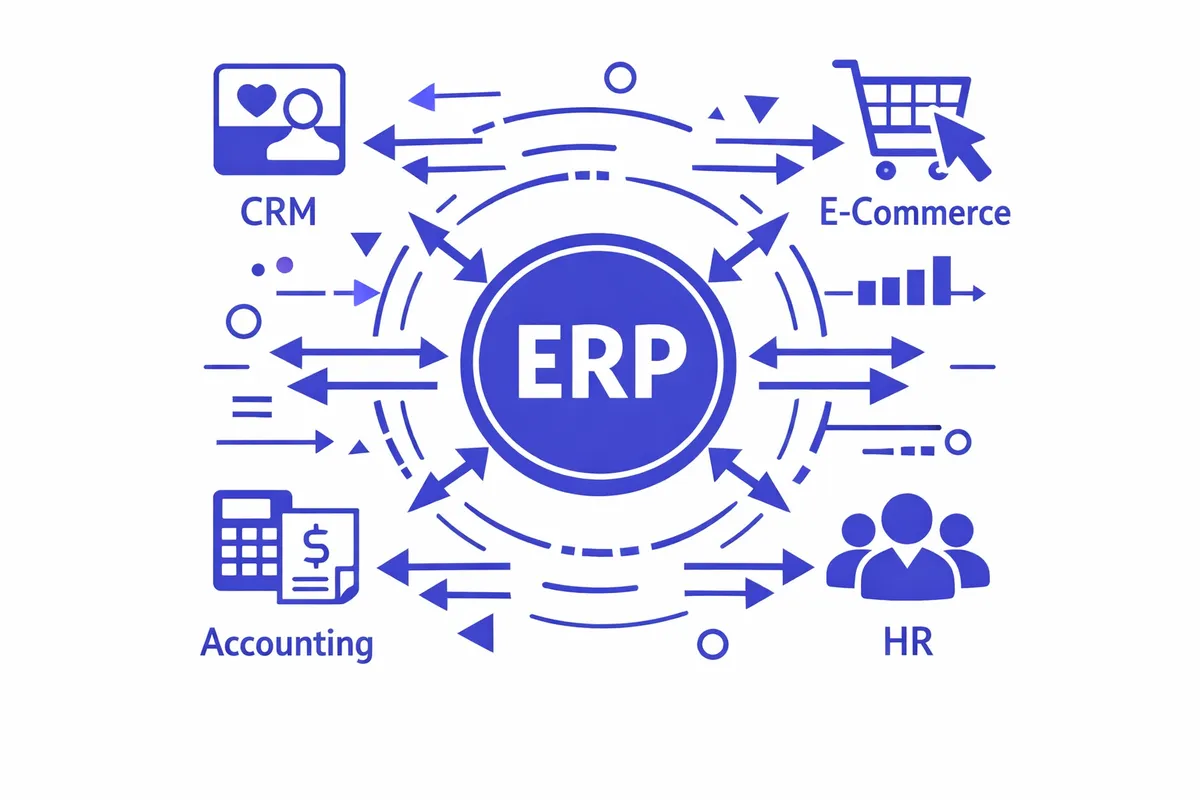
Every West Loop engagement begins with a systems audit: mapping every platform your business runs, the data each system owns, the data flows that currently exist, and the integration gaps that create manual reconciliation or operational risk. For restaurant groups, this maps POS configurations, reservation data, labor scheduling, and accounting across every location. For tech startups, it maps the custom systems, SaaS platforms, and integration scripts that currently connect your operational stack.
From the systems audit, we design the integration architecture: which systems act as source of truth for each data type, which integration patterns match your data volume and latency requirements, and which connections are highest priority based on current operational cost. West Loop's tech-forward businesses often have specific requirements around API rate limits, webhook reliability, and data transformation logic that standard integration platforms handle poorly. We design custom middleware where off-the-shelf connectors fail.
Implementation is phased by business impact. The highest-cost integration gaps go first. For a restaurant group, that is typically the POS-to-accounting connection across all locations, which eliminates the manual reconciliation that currently occupies hours of management time weekly. For a startup, it is typically the product database-to-CRM connection that eliminates the manual customer data entry that creates CRM accuracy problems.
Industries We Serve in West Loop
Restaurant Groups and Multi-Concept Operators: Fulton Market and Randolph Street restaurant groups managing multiple concepts across multiple locations need integration that consolidates POS data across every location and concept, connects labor and scheduling systems to payroll, bridges inventory management to purchasing workflows, and delivers management-level financial reporting without manual compilation.
Tech Startups and SaaS Companies: Startups near Google's Fulton Market campus running custom-built product backends alongside CRM, billing, and support platforms need integration architecture that connects their unique system stack reliably, handles the data volume and API complexity of modern SaaS operations, and replaces fragile one-off scripts with robust, monitored data pipelines.
Real Estate and Property Development Firms: Property developers along Morgan Street and Lake Street managing project financials across Procore, Yardi, accounting platforms, and Excel need integration that produces accurate consolidated financial reporting without manual reconciliation, with audit trails that satisfy investor and lender reporting requirements.
Professional Services and Consulting Firms: Professional services firms running billing and project management in separate systems need integration that ensures every billable item flows automatically from project tracking to invoicing, with CRM data synchronized to client relationship records across both platforms.
Fitness and Wellness Businesses: Fitness studio groups and wellness operators near Union Park running Mindbody, Shopify, and QuickBooks need integration that consolidates class revenue, retail sales, and membership data into a unified financial reporting layer without manual export sessions at the end of every period.
Creative Agencies and Marketing Firms: Creative agencies along Randolph Street running project management, CRM, billing, and analytics platforms need integration that connects client work data to billing, billing to CRM, and campaign performance data to client reporting without the manual data assembly that currently consumes account management time.
What to Expect Working With Us
1. Systems Audit. We map every platform your business runs, the data each system owns, the current data flows, and the integration gaps creating the most operational cost. For West Loop restaurant groups with complex multi-location POS configurations, this audit maps each location's system setup and the consolidation requirements at the group level.
2. Integration Architecture. We design the integration architecture: source-of-truth assignments, data flow patterns, transformation logic, error handling, and monitoring requirements. For tech-forward West Loop startups with specific API requirements, we identify where custom middleware is needed versus where managed integration platforms are sufficient.
3. Phased Implementation. The highest-impact integration gaps are addressed first. Your team sees operational benefit before the full program is complete. Each connection is tested against your actual data volumes and edge cases, not just happy-path scenarios.
4. Monitoring and Maintenance. Post-launch monitoring tracks data flow health, identifies synchronization failures before they create operational problems, and alerts your team to exceptions that require human intervention. Maintenance includes keeping integrations current as the connected platforms update their APIs.