How We Build Email Marketing for West Loop
Email strategy for a West Loop business starts with two questions: who specifically are you trying to reach, and what relationship are you building with them? These are not the same question for every client. A Fulton Market restaurant is building a guest relationship focused on maintaining connection between visits and driving reservations for specific occasions. A Madison Street law firm is building a professional credibility relationship with referral sources and existing clients.
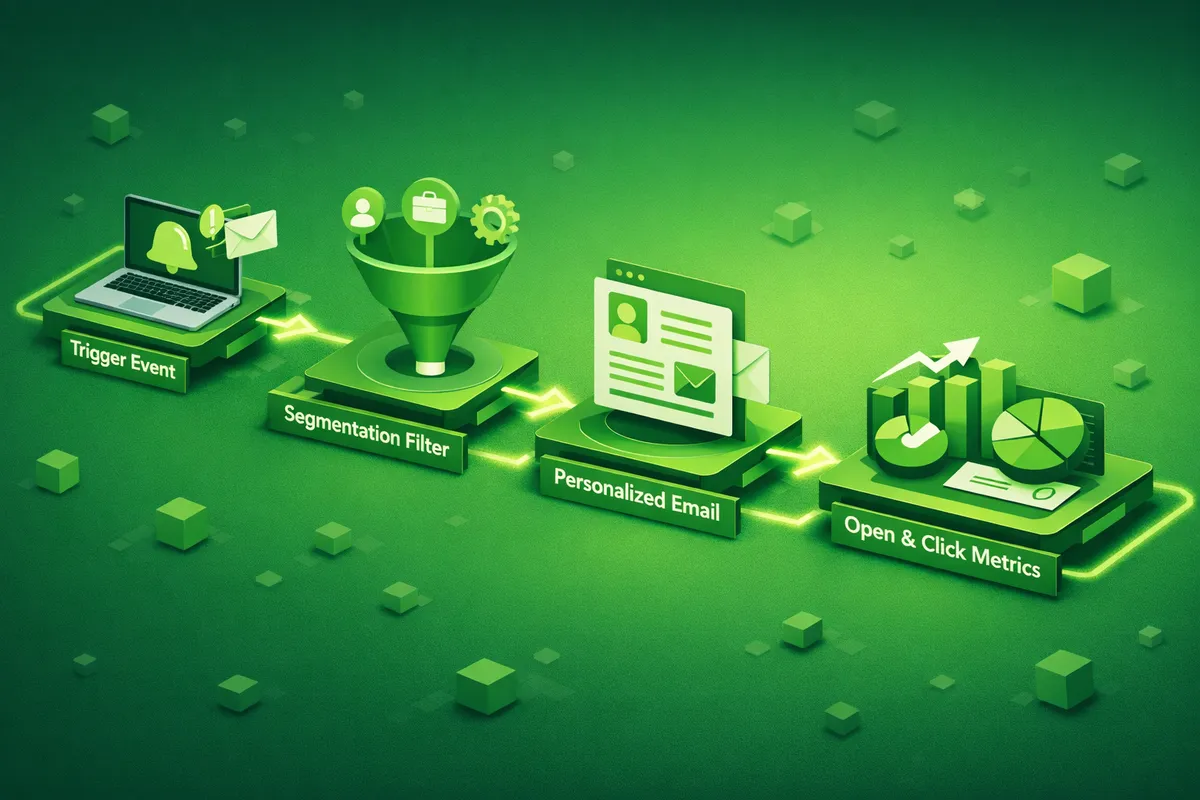
From the strategic framework, we design the program structure. For a West Loop restaurant, that typically means: a segmented list that separates regulars from first-time diners from event inquiry leads, an automated welcome sequence for new subscribers that introduces the restaurant's identity and drives a second visit, a recurring newsletter calibrated to what the chef and team genuinely have to say rather than a generic frequency schedule, and targeted campaign emails tied to specific seasonal menus, private dining availability, and programming events.
For a startup or professional services firm, the structure differs. The newsletter is usually the core product: a regular send built around the specific operational or strategic insight that the firm's prospective buyers find valuable. The automated sequences handle lead magnet delivery and the follow-up nurture that keeps new subscribers engaged through the evaluation period. Campaign emails support specific business development moments: a new service launch, a research publication, an event invitation.
List building is built into the program from day one, not treated as a separate initiative. For restaurants, that means collection at reservation, at the table with a QR opt-in near Morgan Pink Line station walk-ins, and social media conversion of followers to subscribers. For B2B businesses, it means content that earns subscription through genuine value: the research report, the operational guide, the insight series that enterprise buyers bookmark and forward to colleagues.
Industries We Serve in West Loop
High-end restaurants on Randolph Street and Fulton Market. The dining corridor's competitive density makes the guest relationship the real competitive advantage. A Randolph Street restaurant with 4,000 opted-in guests on its email list can fill tables for a special event, launch a private dining program, or drive a slow Tuesday to capacity with a single send.
Technology companies and startups near Google Chicago. Enterprise sales cycles are long. The startup that stays present with useful content during the months a prospect is evaluating but not yet ready to buy wins the conversation when the timing changes. We build newsletter programs for West Loop startups that deliver the genuine operational insight that enterprise buyers in their category find valuable enough to forward to colleagues. We also build the customer email infrastructure that drives activation and expansion in existing accounts, which matters as much as acquisition for subscription businesses.
Boutique hotels and hospitality properties near Morgan Street. Each direct booking that would have gone through a commission-bearing OTA platform is real margin recovered. Email marketing for West Loop hospitality properties drives that shift by building direct guest relationships that make booking directly the easy, familiar choice. Pre-arrival communication, post-stay follow-up, and the recurring newsletter for corporate travel decision-makers who book West Loop area travel for their teams all serve specific, calculable business objectives.
Creative and advertising agencies on Halsted Street. Agency new business is relationship-driven, and email is the channel where relationships with prospective clients develop between the initial conversation and the actual engagement. An agency newsletter that delivers genuine strategic insight to marketing decision-makers builds professional recognition that makes subsequent outreach warmer and referral conversations easier. We also build client relationship email programs that maintain visibility between projects and set up expansion conversations.
Legal and professional services firms along Madison Street. Professional services email marketing is calibrated to maintain relationship without creating inbox noise for people who receive too much email. The best professional services newsletters run on a cadence that matches what the firm genuinely has to say, feature substantive content that demonstrates active expertise, and treat their recipients as the intelligent professionals they are. We build programs for West Loop firms that build referral relationships and client retention without the promotional tone that professional audiences reject.
Real estate development and commercial leasing firms. Commercial leasing decisions in West Loop happen over long evaluation cycles. Prospective tenants researching Fulton Market and Lake Street options spend months before signing. An email marketing program that keeps your available inventory and West Loop market perspective in front of those prospects through the evaluation period is the commercial real estate equivalent of staying top of mind. Development newsletters that report on the neighborhood's trajectory, specific project progress, and market conditions serve both prospect nurture and existing tenant relationship goals.
What to Expect Working With Us
1. Strategy and program architecture. We develop the complete email strategy for your West Loop business: audience segmentation, program architecture, content strategy, list building approach, and the performance metrics that define success. This is not a generic template. It is built from the specifics of your business, your West Loop customer base, and the relationship objectives that email needs to serve.
2. Template design and automation setup. We design email templates that reflect your brand identity and configure the automation sequences that run without manual execution: welcome series for new subscribers, post-visit follow-up for restaurants, lead magnet delivery and nurture for B2B businesses, and the recurring touchpoints that maintain relationship consistency at scale.
3. Content production and deployment. We produce email content through AI-assisted drafting and human editorial review, manage campaign scheduling and deployment, and handle the list hygiene and technical deliverability management that keeps West Loop business emails in engaged inboxes rather than spam folders. Deliverability is not an afterthought. It is the prerequisite for everything else.
4. Performance tracking and ongoing optimization. We report on the metrics that connect email activity to business outcomes: reservation attribution for restaurants, opportunity influence for B2B programs, direct booking lift for hotels. We optimize based on what the data shows, not on generic email marketing benchmarks, and we adjust strategy when the neighborhood's seasonal patterns or competitive environment shifts.