How We Build Data Analytics & AI for West Loop
The analytics engagement starts with a business question inventory for your West Loop organization. We identify the specific decisions that better data analysis would improve, the specific questions that your leadership team cannot currently answer from available data, and the specific operational processes that AI-powered prediction would make more efficient. Business question inventory prevents the common failure mode of analytics projects: building sophisticated data infrastructure that answers questions no one was asking.
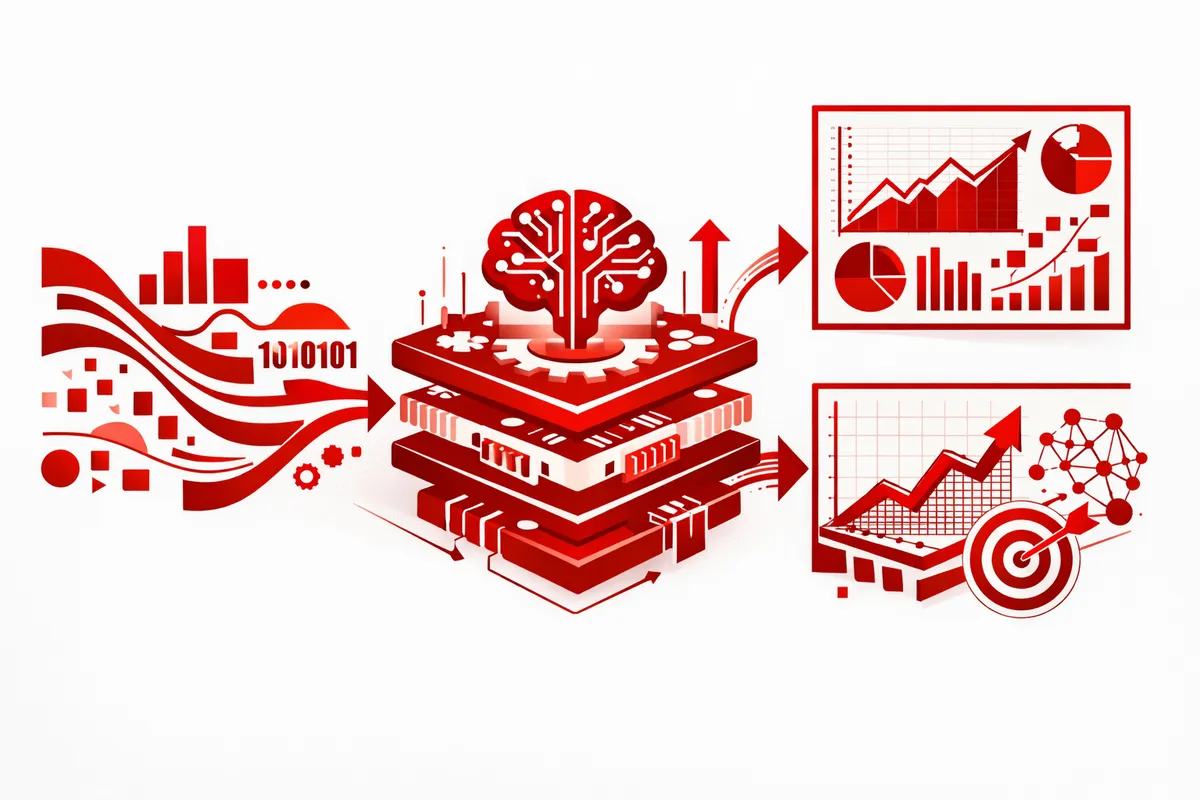
From the business question inventory, we design the analytics architecture that answers those questions. Data source identification covers every system your West Loop business operates that contains relevant data: reservation systems, POS systems, CRM, marketing platforms, operational tools, and the external data sources that add context to internal operations data. Data integration brings these sources together in a unified data layer that enables analysis across systems. Analytics models and dashboards make the integrated data accessible in a format that business users can engage with without technical data analysis skills.
AI models are built on the analytics foundation for the prediction and recommendation tasks that create the most operational value. For a Randolph Street restaurant group, this might be a demand forecasting model that takes reservation pace, historical patterns, and external event data into account to predict weekly covers with enough accuracy to inform purchasing and staffing decisions. For a West Loop startup, it might be a churn prediction model that identifies at-risk accounts before they cancel and triggers intervention workflows.
Dashboards and reporting are designed for the specific decision-making processes of your West Loop organization, not for a generic business audience. A restaurant group's dashboard surfaces the specific operational metrics that drive daily and weekly decisions. A startup's dashboard shows the leading indicators that predict the business outcomes the leadership team manages toward.
Industries We Serve in West Loop
Tech companies and startups on Lake Street and Fulton Market use data analytics and AI to build the business intelligence that growing companies need: product usage analytics that drive product decisions, customer health scoring that drives customer success intervention, revenue analytics that drive pricing and expansion decisions, and the operational analytics that allow leadership to manage a scaling organization without losing visibility into what is driving performance.
Restaurant and hospitality groups on Randolph Street and Fulton Market use data analytics and AI to extract operational intelligence from the reservation, POS, and guest data their operations generate: demand forecasting for staffing and purchasing, menu analysis for pricing and promotion decisions, guest segment analytics for marketing program design, and the operational performance analytics that drive continuous improvement in a high-volume service operation.
Financial technology companies near Halsted Street use data analytics and AI for product analytics that drive feature development priorities, customer analytics that drive acquisition and retention strategy, risk analytics that inform credit and fraud model development, and the operational analytics that support a financial services business operating under regulatory scrutiny.
Legal and professional services firms along Madison Street use data analytics for business development analytics that identify the client relationships and referral sources driving new business, practice area performance analytics that inform resource allocation, and matter analytics that identify the characteristics of profitable versus unprofitable engagements.
Creative and advertising agencies in West Loop use data analytics and AI for campaign performance analytics delivered to clients, agency-wide performance analytics that identify account profitability and team utilization patterns, and the predictive models that help account teams anticipate client needs before they are expressed.
Real estate development and commercial leasing in West Loop uses data analytics for market intelligence that informs leasing pricing and development investment decisions, portfolio performance analytics that track the economics of active projects, and the tenant analytics that inform relationship management for commercial property owners.
What to Expect Working With Us
1. Business question inventory and data assessment. We document the specific decisions better analytics would improve for your West Loop business and assess the data available to support the analytics architecture. The business question inventory ensures that the analytics we build answers questions that matter rather than questions that are technically interesting.
2. Analytics architecture and data integration design. We design the data integration and analytics architecture that brings together the data sources your West Loop business operates and makes them available for unified analysis. Architecture design accounts for your existing systems, your data volume, and the analytical sophistication of the business users who will use the outputs.
3. Analytics model development and dashboard creation. We develop the analytics models and dashboards specific to your West Loop business's decision-making processes. AI-powered models for prediction and recommendation are built on the analytics foundation where they create specific operational value. Dashboards are designed for the decision-making context of the business users who will use them daily.
4. Training, monitoring, and ongoing optimization. We train your West Loop team on the analytics and AI tools we have built, establish monitoring that tracks model performance over time, and optimize the analytics architecture as your business's data environment and analytical needs evolve.