How We Build Customer Portals for the West Loop
Building a portal for a West Loop company starts with understanding what the client experience should feel like, not just what data it needs to surface. Clients of West Loop tech firms often have high software literacy. They have expectations about responsiveness, navigation clarity, and mobile access that were shaped by the products they use daily. A portal that feels like a legacy enterprise extranet will undercut the relationship it is meant to strengthen.
We begin with a discovery phase that maps the complete lifecycle of a client engagement: onboarding through delivery, reporting through renewal. Every point where information moves between the company and the client becomes a candidate for portal automation. We prioritize the high-frequency, low-judgment requests first. Those are the interactions that consume the most account management time relative to the value they create.
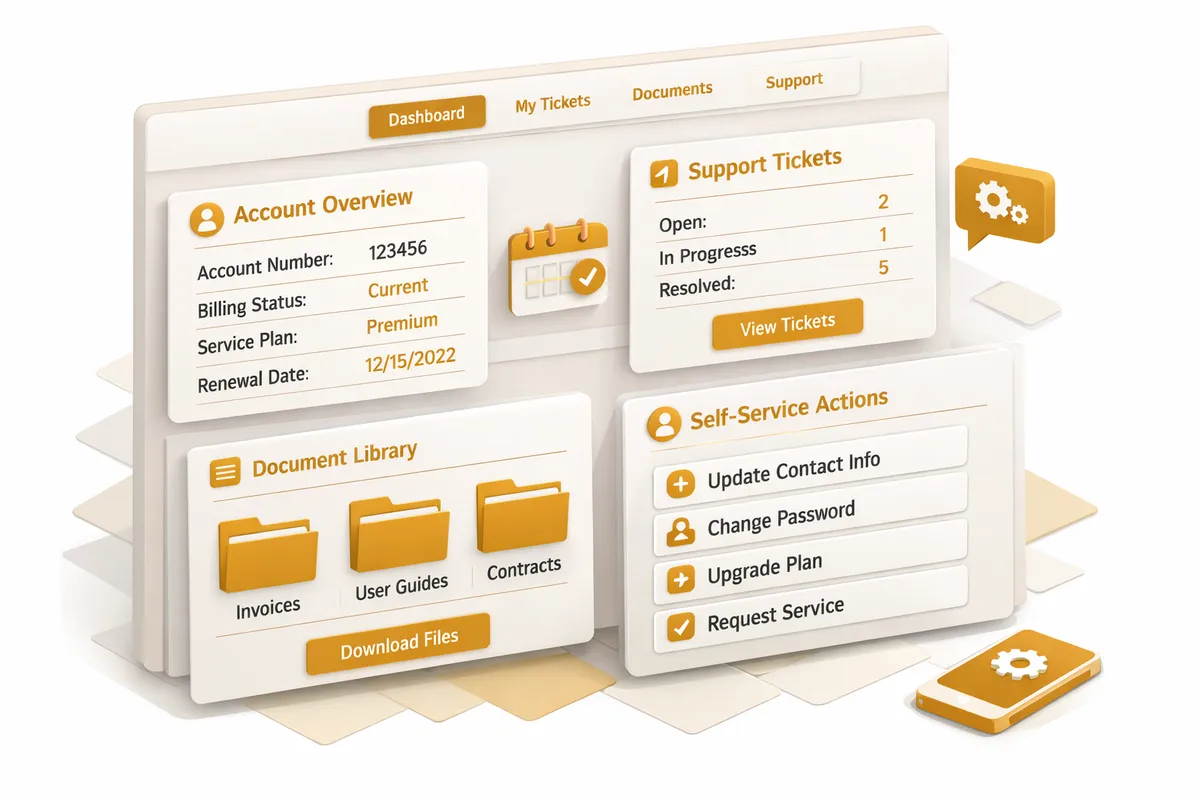
For technology companies on Morgan Street and in the surrounding West Loop district, portals typically include account status dashboards, usage analytics, invoice and billing history, support ticket tracking, and document repositories for contracts and service agreements. For creative agencies on Lake Street, portals cover project timelines, deliverable review and approval, communication logs, and invoice access. For investment funds near Bartelme Park, portals include capital account statements, performance reports, document vaults for LP agreements, and notification systems for capital calls and distributions.
Security architecture is calibrated to the data category. Portals handling financial data, legal agreements, or proprietary client information are built with encryption at rest and in transit, multi-factor authentication, and role-based access controls that limit each user to their own records. Google's Chicago presence in the West Loop means many clients have enterprise-grade security requirements. We build to those standards by default.
Industries We Serve in the West Loop
Technology companies and SaaS firms operating out of Fulton Market and the surrounding West Loop district build customer portals that give enterprise clients real-time access to account health dashboards, usage metrics, billing history, and support case status. For software companies managing large client books, a self-service portal reduces CSM time spent on routine data requests and improves client retention by making the relationship feel more transparent.
Creative and advertising agencies on Lake Street and Randolph Street use client portals to manage the deliverable review and approval process that is otherwise the most chaotic part of any creative engagement. A portal that routes creative for review, captures feedback in context, tracks revision rounds, and records final approvals replaces a tangle of email threads with a structured workflow. Project managers spend less time chasing responses. Clients spend less time searching for the right file.
Venture capital and private equity firms near Union Park build investor portals that give limited partners access to capital account statements, fund-level performance data, distribution histories, and document repositories containing LP agreements and quarterly letters. Investor portals reduce the administrative overhead of LP communication and improve the LP experience by replacing scheduled email distributions with on-demand self-service access.
Legal and professional services firms in West Loop office buildings serve corporate clients who expect their outside service providers to match the operational sophistication of their own internal teams. A client portal for a West Loop legal practice includes matter status access, document retrieval, invoice review and payment, and a structured communication channel separate from general email.
Real estate development and property management companies active in the West Loop use portals for investor reporting, tenant communication, and construction project tracking. The district's ongoing development activity, with new residential and mixed-use projects regularly opening along Madison Street, creates consistent demand for structured communication tools that keep stakeholders informed without requiring manual update distribution.
Consulting and strategy firms advising West Loop tech companies use project portals to share research, track deliverable milestones, and collect client feedback across engagements that often run six to twelve months. A portal that makes every deliverable accessible and every decision documented replaces a fragmented email relationship with a structured collaboration environment.
What to Expect Working With Us
1. Access scope mapping and client journey documentation. We start by mapping every type of information and action your clients should be able to access independently. This step defines the portal's functional scope and prevents building a solution that covers 70 percent of what clients need while still requiring them to contact you for the rest. The goal is a meaningful reduction in routine account management requests.
2. Security architecture design matched to your data sensitivity. West Loop clients range from well-funded startups to enterprise technology buyers with formal vendor security requirements. We design the authentication layer, encryption standards, access controls, and audit logging to match the sensitivity of your data and the requirements of your client base. For portals touching financial or legal data, we review the architecture with your compliance team before writing application code.
3. Interface design calibrated to your client profile. A portal serving enterprise software buyers looks different from one serving creative directors or limited partners. We design the interface based on who will actually use it, what device they will use it on, and what level of software literacy they bring. The portal represents your firm in every client interaction; the design must reflect your standards.
4. System integration and phased rollout. Portal data comes from your internal systems: CRM, project management, accounting, fund administration. We build the integration layer that keeps portal data current automatically and manage the launch in phases: internal testing first, then a pilot group of clients, then full rollout. The phased approach surfaces experience issues before they affect your entire client base.