How We Build Custom ERP for the West Loop
Every ERP engagement starts with an operational process audit, not a software requirements document. We follow the actual work: where does an order originate, what systems touch it, who approves what, where does the financial record get created, and what happens when something goes wrong. For a Fulton Market restaurant group, that means spending time in the back office and in the kitchen. For a Lake Street tech company, it means sitting with the operations manager who currently lives in four different platforms.
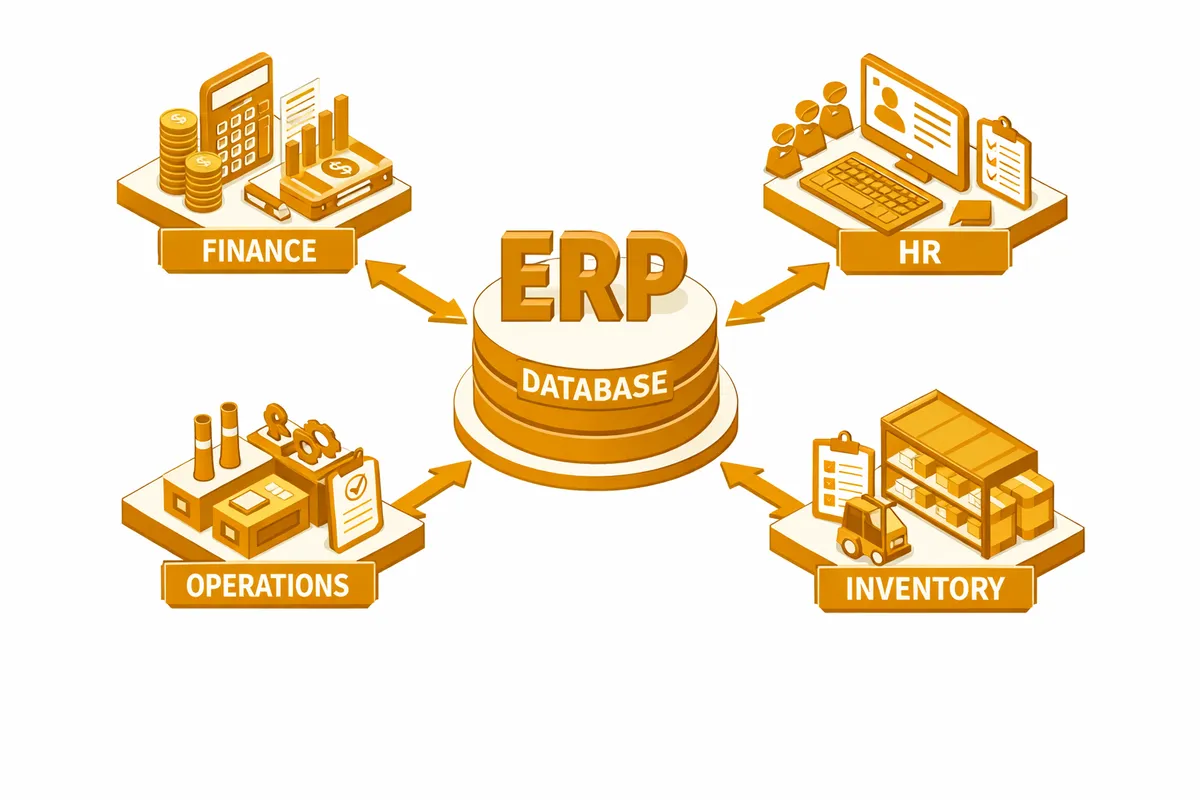
The process audit produces a data flow map that shows every operational workflow, every data handoff between people or systems, and every manual process that exists because no software currently handles it. That map is the design document. We build the ERP to eliminate the manual handoffs and connect the workflows that need to be connected, not to replicate the features of commercial software that your business does not use.
Technical architecture is designed for your scale, not for enterprise Fortune 500 requirements. West Loop businesses rarely need the complexity of enterprise ERP. They need a system that handles their specific workflows reliably, runs fast for the team using it every day, and can be extended when the business changes. We build on modern frameworks that your engineering team or our support team can maintain without specialized ERP expertise.
Industries We Serve in the West Loop
Multi-concept restaurant groups built around the Fulton Market and Randolph Street food corridor use custom ERP to unify food cost management, labor scheduling, vendor purchase orders, and multi-location financial reporting in a single system. The operational complexity of running two or more concepts with separate kitchens, inventory, and P&Ls is exactly the problem commercial restaurant management software addresses poorly at scale.
Technology companies and growth-stage startups near Google Chicago on West Fulton Market use custom ERP to manage the intersection of project delivery, contractor management, software licensing, multi-client billing, and financial reporting that no single SaaS platform covers completely. When the project management tool, the billing system, and the financial reporting platform are three separate systems with manual reconciliation between them, the right solution is usually a purpose-built operational core.
Real estate development and commercial property firms active in the West Loop's continuing transformation from warehouse to mixed-use use custom ERP to track project finances, contractor payments, investor reporting, and property management workflows across multiple concurrent developments. The financial complexity of managing a Fulton Market adaptive reuse project with multiple investors, multiple contractors, and a multi-year timeline is not solved by QuickBooks.
Venture capital and private equity firms operating in the West Loop use custom ERP to manage portfolio company tracking, LP capital call management, distribution workflows, and fund financial reporting in a single system designed for investment operations. Commercial software options exist but require significant configuration and often lack the flexibility that different fund structures require.
Professional services firms along Madison Street with large teams and complex client billing arrangements use custom ERP to connect project management, time tracking, billing, and financial reporting. When billing arrangements include fixed fees, hourly rates, retainers, and performance-based components across dozens of clients, the accounting complexity requires purpose-built software rather than a generic billing platform.
Supply chain and logistics companies serving the West Loop's business base and the broader Near West Side industrial corridor use custom ERP to manage order management, carrier relationships, inventory tracking, and customer billing in a system built around their specific operational model rather than a generic logistics platform.
What to Expect Working With Us
1. Operational audit and process mapping. We spend two to three days with your team documenting every operational workflow, every data handoff, and every manual process in your current operation. The output is a process map that shows exactly what we are building and what it will replace. For West Loop restaurant groups, this typically happens over a full operational day at your Randolph Street location so we see the actual flow of work.
2. Architecture design and scope agreement. We present the proposed ERP architecture, the data model, and a phased build plan before any development begins. We scope the first phase conservatively: the workflows that eliminate the most operational pain and the manual processes that consume the most management time. Subsequent phases extend the system based on what the first phase teaches us about your actual operational needs.
3. Phased build and deployment. We build and deploy in phases rather than as a single launch. Phase one is typically in production within twelve to sixteen weeks. Each subsequent phase adds capability without disrupting the operational workflows already running on the system. Real users working in a live system surface requirements that no amount of pre-build planning captures completely.
4. Ongoing support and evolution. Custom ERP systems evolve with the business. We provide ongoing development support to add modules, adjust workflows, and integrate new tools as your West Loop operation grows. Most clients use our support retainer to make two to four significant system improvements per year as their operational model changes.