How We Build Content Marketing for West Loop
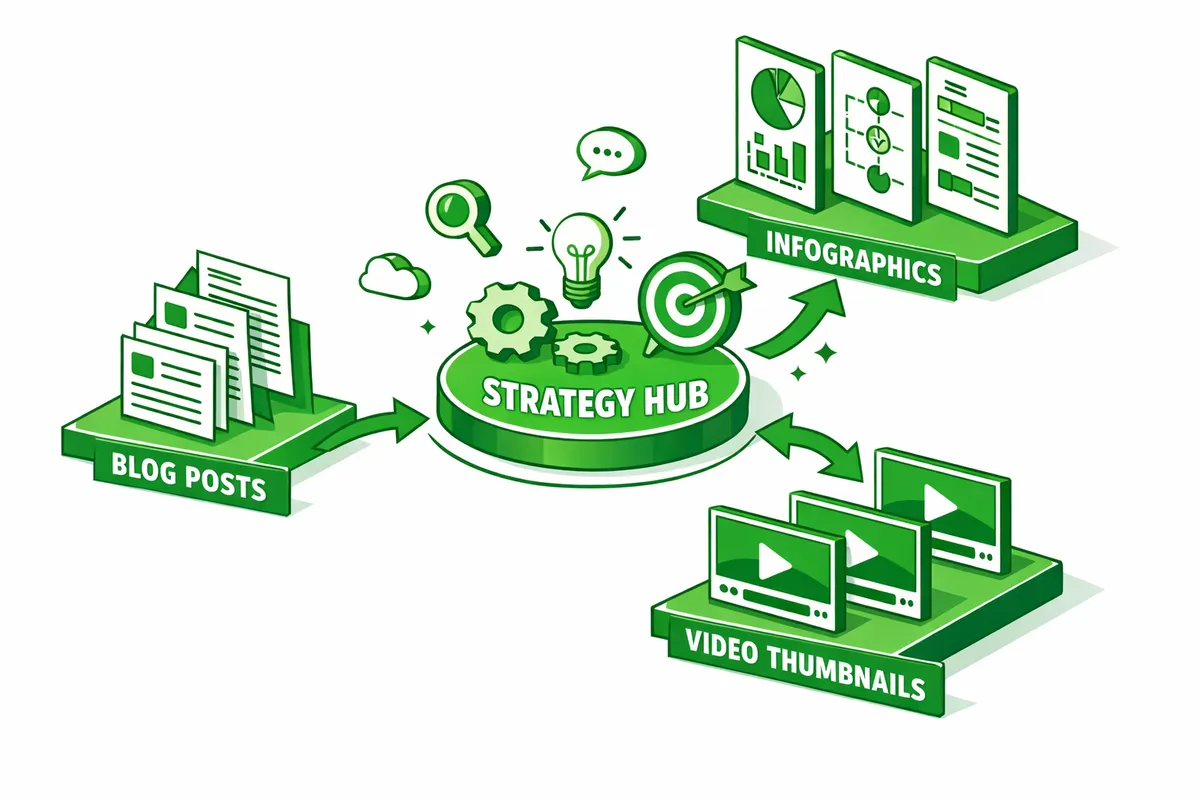
The content marketing strategy for a West Loop business starts with audience definition and information mapping. We identify the specific audience segments the business needs to reach, understand what information those segments are seeking at each stage of their relationship with the category, and map the specific questions and concerns that content should address. For a West Loop law firm, this produces a content map built around the legal questions that prospective commercial clients research before contacting any firm. For a startup near Morgan Street, it produces a content map built around the operational challenges that the specific buyer's job function creates.
From the information map, we develop the content strategy: which formats serve each audience segment best, what publishing cadence is sustainable at the quality level the strategy requires, what owned channels the content should anchor, how content is distributed beyond owned channels, and how success is measured. The content strategy accounts for West Loop's specific competitive environment in each category rather than applying a template built for a different market.
Content production uses AI tools to accelerate research, drafting, and format adaptation while keeping human subject matter expertise at the center of every content decision. AI assists in producing drafts faster and adapting content across formats. Human expertise determines whether each piece contains information that is genuinely useful to the specific audience or whether it is generic enough to have been produced without input from anyone who actually understands the industry. The distinction matters. In West Loop's competitive content environment, generic content is invisible.
Distribution strategy is built into the content plan from the start. West Loop businesses in B2B categories need distribution that reaches the audience where it actually encounters content: LinkedIn for professional audiences, industry-specific publications for category authority, email newsletters for the retention-stage relationship, and the specific channels where their target buyers are active. West Loop restaurants need distribution that serves both the food media ecosystem and the local discovery channels that drive reservation volume. Distribution is not an afterthought. It determines whether the content investment produces results or accumulates in an archive that no one reads.
Industries We Serve in West Loop
Technology companies and startups near Lake Street and Fulton Market use content marketing to build authority in the problem domain their product addresses. Thought leadership content that demonstrates genuine understanding of the operational challenges facing enterprise buyers in the startup's target market moves those buyers from awareness to consideration faster than product marketing does. In a corridor where Google's presence sets the technology credibility standard, content authority is the differentiation lever available to startups competing against vendors with larger name recognition.
Restaurants on Randolph Street and Fulton Market use content marketing to extend the editorial narrative that the corridor's national media profile creates, driving reservation demand and building the regular guest relationship that destination dining depends on. Restaurant content includes chef narrative, menu storytelling, seasonal event programming, and the neighborhood context that makes a Randolph Street address a destination rather than just a location. Effective restaurant content in West Loop earns organic authority from the larger Fulton Market story while remaining specific to the restaurant's own identity.
Law firms and professional services along Madison Street use content marketing to publish practice area content at the depth that demonstrates genuine expertise to prospective commercial clients who are assessing whether a firm understands their specific situation. Content that answers the actual legal questions clients research before selecting counsel builds more credibility than content that describes general firm capabilities. This applies equally to accounting firms, financial advisors, and consulting practices in the Madison Street corridor.
Boutique hotels and hospitality near Morgan Street use content marketing to earn the organic discovery traffic and editorial coverage that drives direct bookings. Neighborhood guide content, Fulton Market restaurant recommendations, and the local knowledge content that serves both leisure and corporate travelers creates search and social traffic that platforms do not intermediate. Direct booking traffic earns on better economics than OTA-sourced traffic, and the content investment that drives it is durable.
Creative and advertising agencies in West Loop use content marketing to demonstrate the strategic thinking and creative capability that clients pay for. Case study content that goes beyond surface-level campaign summaries to the reasoning behind the work earns credibility with sophisticated clients who are evaluating whether an agency understands how to solve their specific problem, not just whether the agency has done work before.
Real estate development and commercial leasing in West Loop uses content marketing to tell the story of the neighborhood's transformation and the specific opportunity in the spaces being developed. Development content that is genuinely informative about West Loop's growth, anchored by data about the tech and restaurant corridor's trajectory, earns the organic traffic and editorial attention that generic property marketing does not. The Fulton Market story is a powerful content frame for commercial real estate that is not available to development projects in other Chicago neighborhoods.
What to Expect Working With Us
1. Audience definition and information mapping. We identify the specific audience segments your West Loop content marketing should serve and map the information gaps that content can fill in each segment's decision process. The information map is the strategic foundation that makes every subsequent content decision coherent rather than reactive.
2. Content strategy development. We develop the content strategy that fits your West Loop business's competitive environment, your audience's information needs, and the resources available for content production. Format priorities, publishing cadence, channel selection, and success metrics are all determined by the strategy, not by generic content marketing defaults.
3. Content production and AI-assisted creation. We produce content using AI tools to accelerate research, drafting, and format adaptation while maintaining the subject matter depth and specificity that earns authority with West Loop's sophisticated audiences. Volume is a strategic outcome, not a starting goal. We produce what the strategy requires at the quality level the audience expects, because in this environment, thin content is worse than no content.
4. Distribution, promotion, and performance measurement. We distribute content across the channels where your West Loop audience encounters it, promote through owned and earned channels, and measure performance against the objectives the strategy established. Performance data informs ongoing content decisions rather than accumulating in a report that does not change what gets produced.