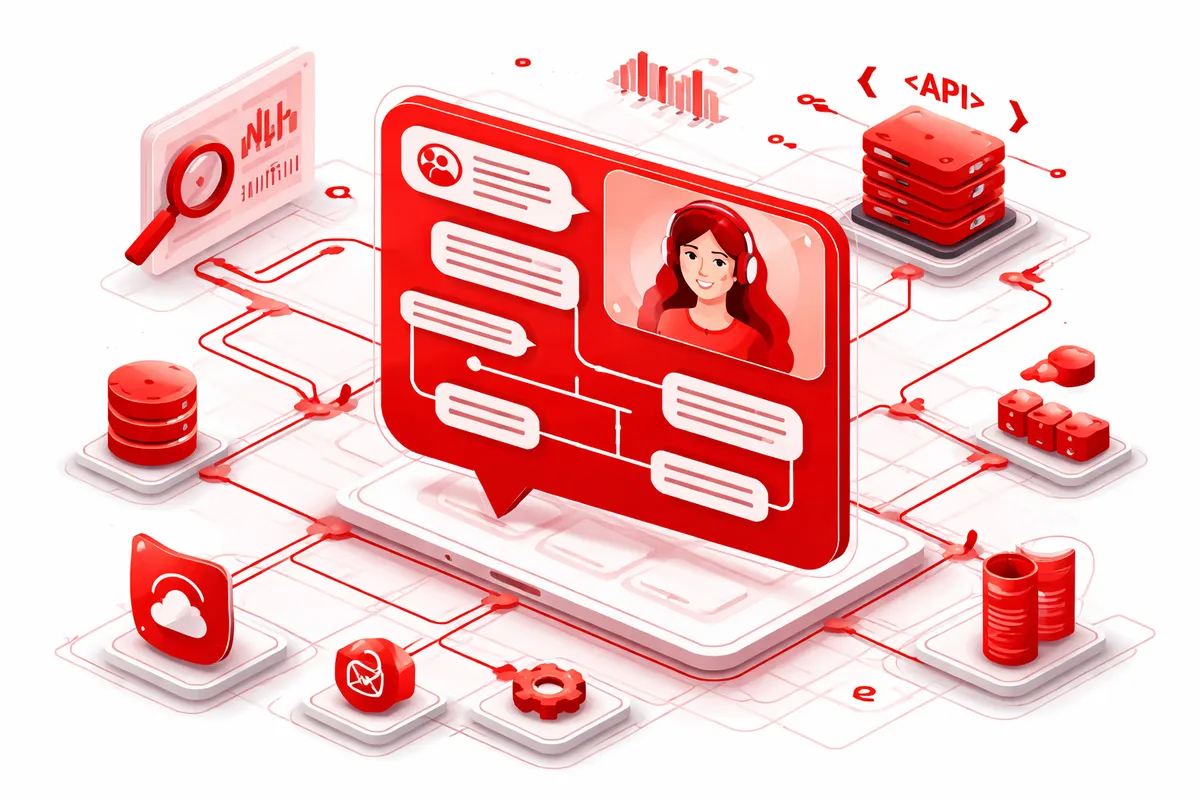
How We Build Chatbots for West Loop
Custom chatbot development for West Loop businesses starts with conversation design rather than technology selection. We map the conversations your chatbot needs to support: what questions your customers ask, what information they need to accomplish their goals, what actions the chatbot needs to take on their behalf, and where the conversation should hand off to a human team member. For a Fulton Market restaurant, this means mapping the conversations that a host or reservationist typically handles. For a Madison Street law firm, it means mapping the intake conversations that a receptionist manages for new prospective clients.
From the conversation design, we build the knowledge base that powers the chatbot: the business information it needs to answer questions accurately, the actions it needs to be able to take, and the decision logic that routes conversations appropriately. A West Loop restaurant chatbot needs current hours, current menu information, reservation platform access, and the policy information that determines when it should handle a request versus escalate to a team member. The knowledge base is the foundation that makes the chatbot useful, and it requires ongoing maintenance as your business changes.
Technology selection follows from the conversation design and knowledge base requirements. We select and configure the chatbot platform appropriate for your West Loop business's technical environment and performance requirements. For businesses with existing CRM, reservation, or customer service systems, chatbot integration with those systems is a core requirement, not an optional feature. A chatbot that cannot check actual reservation availability, that cannot create contact records in your CRM, or that cannot look up customer account information is significantly less useful than one that can.
Testing before deployment is thorough. We test the chatbot against the full range of questions your West Loop customers actually ask, including the questions that are not on the list of anticipated questions, because those are the ones that reveal whether the chatbot handles novel input gracefully or produces confused responses that damage the customer relationship.
Industries We Serve in West Loop
High-end restaurants on Randolph Street and Fulton Market use custom chatbots to handle the full range of guest inquiries that arrive outside host stand hours: reservation questions, menu and allergen inquiries, private dining inquiry intake, event registration, and the general information questions that accompany a destination-level restaurant's public profile. A chatbot that handles these well serves as an always-available extension of the front-of-house team.
Tech companies and startups on Lake Street and Fulton Market use custom chatbots for product support triage, new user onboarding, sales qualification, and the documentation search function that saves support engineers time. For West Loop B2B software companies, a technically sophisticated chatbot that can engage with real product questions builds more confidence in the product than one that deflects everything to a support ticket.
Legal and professional services firms along Madison Street use custom chatbots for prospective client intake, existing client inquiry routing, appointment scheduling, and the general information about the firm's practice areas that prospective clients seek before making contact with an attorney. Legal chatbots require particular attention to the boundary between information the chatbot can provide and legal advice that requires attorney judgment.
Boutique hotels and hospitality properties near Morgan Street use custom chatbots to handle pre-arrival guest inquiries, during-stay service requests, and post-stay feedback and follow-up. A hotel chatbot that can check guests in, answer questions about property amenities, and make local recommendations creates service value at times when the front desk is occupied with other guests.
Creative and advertising agencies in West Loop use custom chatbots for new business inquiry handling, scope-of-work question management, and the client communication touchpoints that do not require account manager involvement. For agencies that serve West Loop's tech-company client base, a well-designed chatbot demonstrates the technology capability clients are evaluating the agency to provide.
Real estate development and commercial leasing in West Loop uses custom chatbots for prospective tenant inquiry handling, property specification questions, showing scheduling, and the qualification questions that help leasing teams prioritize which prospects are ready for agent engagement versus which need additional information before a showing makes sense.
What to Expect Working With Us
1. Conversation design and journey mapping. We map the conversations your West Loop chatbot needs to support, the information it needs to provide, the actions it needs to take, and the escalation paths that maintain customer experience when the chatbot reaches its limits. Conversation design is the work that separates chatbots that genuinely serve customers from chatbots that feel like obstacles.
2. Knowledge base development and technology configuration. We build the knowledge base and configure the chatbot platform with your West Loop business's specific information, your brand voice, and the decision logic that routes conversations appropriately. Knowledge base quality is the primary determinant of chatbot usefulness.
3. System integration and deployment. We integrate the chatbot with the systems your West Loop business operates, including reservation platforms, CRM systems, support ticketing tools, and calendar scheduling. Integrated chatbots are substantially more useful than isolated chatbots that cannot act on behalf of the customer within your operational systems.
4. Testing, launch, and ongoing maintenance. We test the chatbot comprehensively before launch, monitor performance after launch, and maintain the knowledge base as your West Loop business's information changes. Chatbots that are not maintained degrade as business information becomes outdated and as new questions emerge that the initial design did not anticipate.