How We Build Autonomous Workflow Agents for West Loop
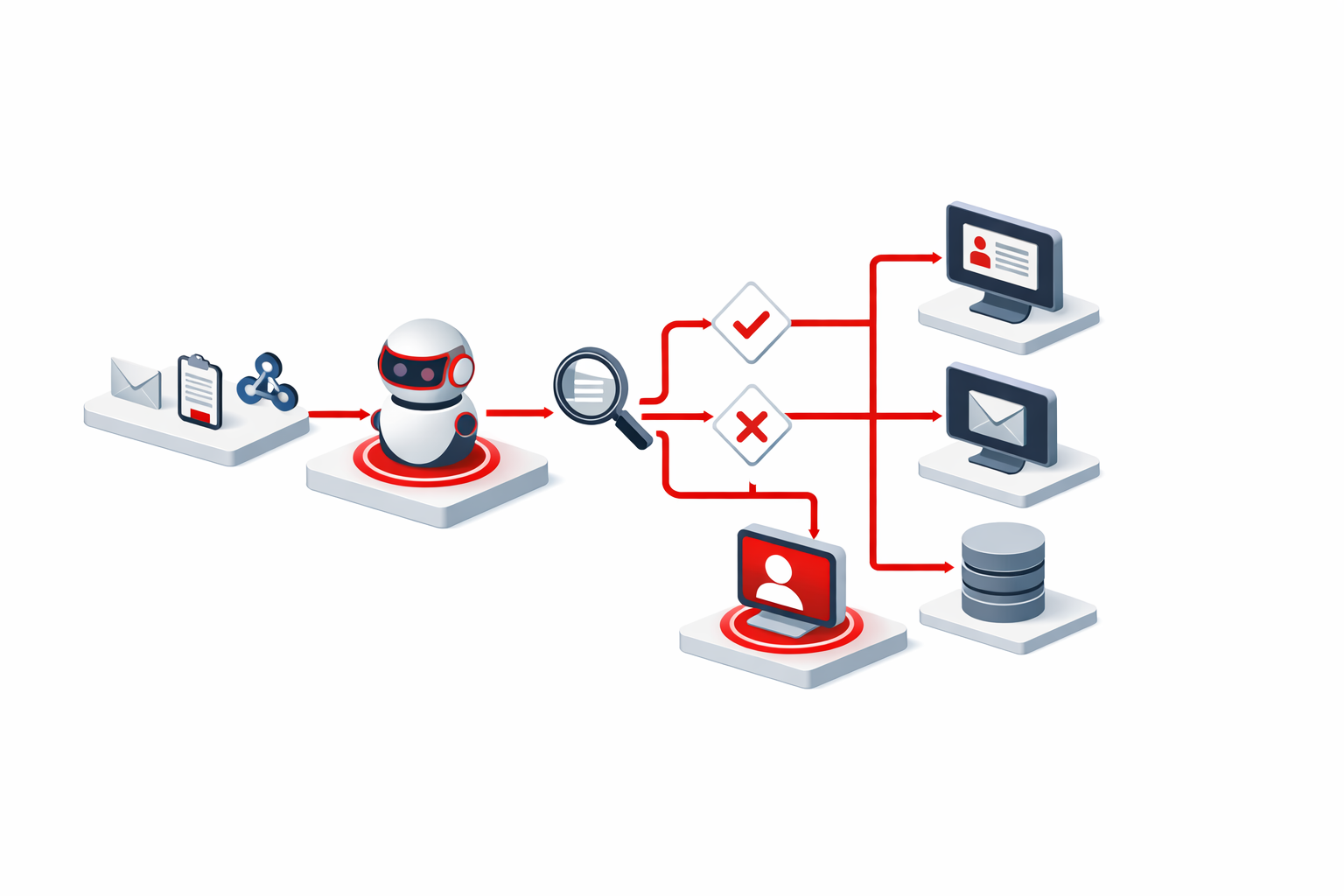
The agent development process begins with workflow selection and decomposition. We work with your West Loop team to identify the workflows that are right for autonomous agent implementation: workflows that are high-frequency, rule-determinable in most cases but variable in ways that rule-based automation handles badly, and where the value of completion without constant human direction is high. For most West Loop organizations, this selection process reveals two to three candidate workflows that are clearly ready for autonomous implementation and several others that require process standardization before agent development begins.
From the workflow selection, we decompose each target workflow into the discrete steps an agent needs to execute, the decisions an agent needs to make at each step, the systems an agent needs to interact with, and the conditions under which an agent should pause and request human review rather than proceeding. The decision boundaries are as important as the automation steps. An autonomous agent for a West Loop law firm's intake process needs to know when a conflict check result requires an attorney's judgment rather than automatic clearance.
Agent development involves configuring the AI model that powers the agent's reasoning, building the tool integrations that allow the agent to interact with your West Loop organization's systems, and constructing the evaluation framework that tests the agent's performance across the full range of scenarios it will encounter in production. We test agents against historical workflow examples and edge cases before production deployment.
Monitoring and oversight infrastructure is built before any autonomous agent goes live. For West Loop organizations in professional settings, the monitoring framework documents every agent decision, flags decisions that exceed the agent's confidence thresholds, and provides the audit trail that professional accountability requires.
Industries We Serve in West Loop
Tech companies and startups on Lake Street and Fulton Market use autonomous agents for lead research and qualification, customer onboarding workflow completion, support ticket triage and routing, and the internal operations tasks that consume engineering and operations time disproportionate to their strategic value. Autonomous agents give West Loop startups the operational leverage to scale without proportional headcount growth.
Legal and professional services firms on Madison Street use autonomous agents for client intake and matter setup, research compilation on standard legal topics, document preparation for routine matter types, billing and time entry reconciliation, and the administrative workflows that consume paralegal and associate time without requiring the professional judgment that attorney billing rates reflect.
High-end restaurants and restaurant groups on Randolph Street and Fulton Market use autonomous agents for vendor communication and ordering workflows, reservation management and optimization, private dining inquiry routing and follow-up, and the operational reporting that managers need without having to compile it manually from multiple systems.
Creative and advertising agencies near Morgan Street use autonomous agents for client reporting compilation, campaign performance monitoring and alerting, new business research, and the project management workflows that keep account teams organized without requiring account coordinators to maintain status manually.
Financial technology companies near Halsted Street use autonomous agents for data processing workflows, compliance monitoring and alerting, customer communication sequences triggered by account events, and the operational workflows that fintech scale requires without fintech-scale headcount.
Real estate development and commercial leasing in West Loop uses autonomous agents for prospect research and qualification, lease document preparation for standard tenant types, market data aggregation and reporting, and the due diligence workflows that development operations require across multiple active projects.
What to Expect Working With Us
1. Workflow selection and decomposition. We identify the workflows that are right for autonomous agent implementation in your West Loop organization, decompose each into the steps and decisions the agent needs to make, and define the boundaries where human oversight is required. This selection and decomposition work is what separates agents that perform reliably in production from agents that fail in edge cases.
2. Agent development and integration. We build the autonomous agent, configure its reasoning model, and develop the tool integrations that allow it to interact with your West Loop organization's systems. Integration development is often the most technically complex phase, particularly for organizations with legacy systems that were not designed for programmatic access.
3. Testing, evaluation, and production deployment. We test the agent against the full range of scenarios it will encounter, evaluate its performance on edge cases and error conditions, and deploy to production with monitoring infrastructure in place. For West Loop organizations in professional settings, we deploy in phases with human oversight at every step before full autonomy is enabled.
4. Monitoring, audit, and ongoing optimization. We maintain the monitoring infrastructure that documents agent decisions, provide regular performance reports, and optimize agent behavior as your West Loop organization's workflows evolve. Autonomous agents require ongoing maintenance as the systems they interact with change and as new workflow variations emerge.