How We Build API Integrations for the West Loop
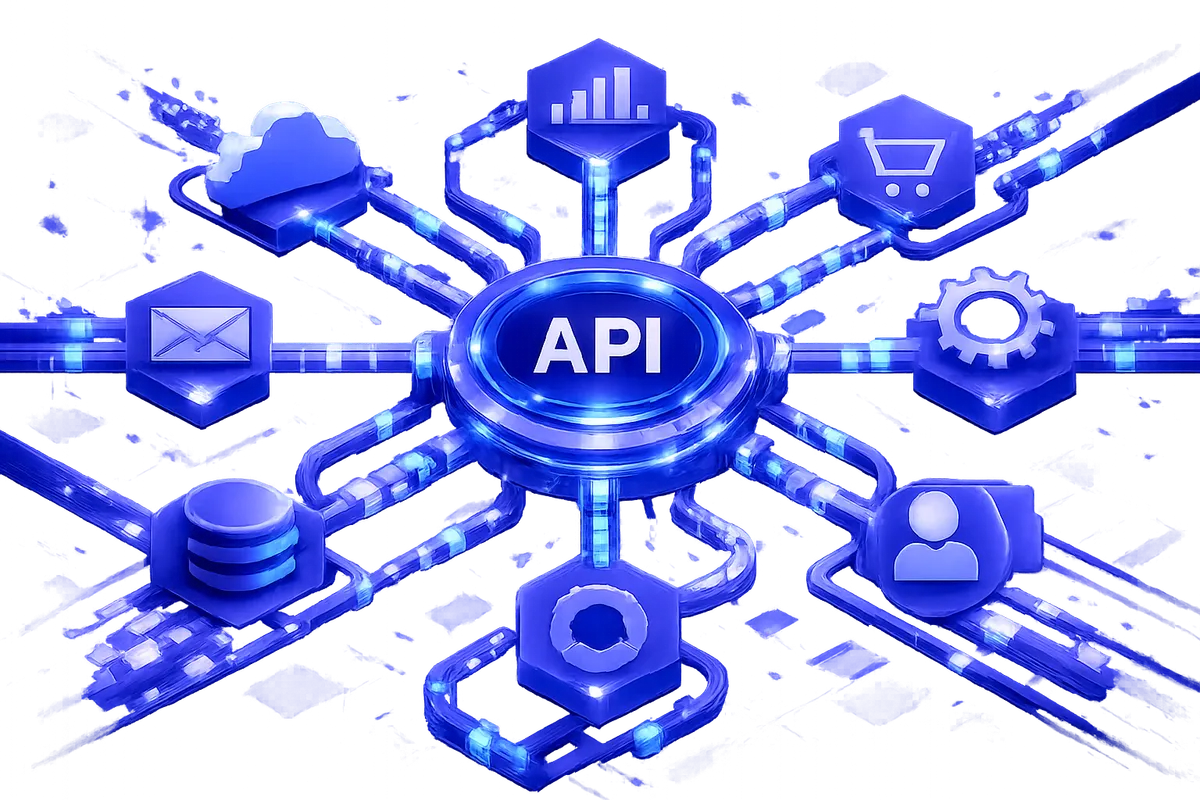
We start by mapping your current software stack. Every tool, every data flow, every manual handoff between systems gets documented in a diagram that shows exactly where information is being created, where it needs to go, and what currently stands between those two points. For a West Loop SaaS company, that map often reveals three or four high-friction handoffs that a well-designed integration can eliminate permanently.
Architecture decisions come next. Not every integration requires a custom build. Some are solved by native connectors. Others need middleware like Zapier or Make for simple event-driven workflows. The integrations worth building custom are the ones where the data transformation is complex, the volume is high, the latency requirement is strict, or the native options lack the reliability a production system demands. We make that call explicitly and document the reasoning so you understand what you are paying for and why.
Development runs in two-week cycles. The first integration from any new engagement is always the highest-leverage one: the connection that eliminates the most manual work, eliminates the most duplicate data, or enables the most important downstream automation. We ship it, test it against production-representative data volumes, and monitor it for a full business cycle before moving to the next priority. West Loop companies that have tried to build twelve integrations simultaneously have found that twelve half-finished integrations deliver less value than two production-stable ones.
Industries We Serve in the West Loop
Technology companies and SaaS startups near Google Chicago's campus on West Fulton Market use API integrations to build the internal tooling their sales and operations teams need without waiting for software vendors to ship native connectors. When your CRM does not talk to your product usage database, sales reps are pitching blind. We build that connection and the analytics layer on top of it.
Restaurant groups and hospitality operators running multiple concepts along Randolph Street and the broader Fulton Market corridor use our integration services to connect their reservation systems, point-of-sale platforms, loyalty programs, and kitchen management tools. A unified data layer makes it possible to identify a customer's spending history, dietary preferences, and visit frequency before they walk in the door.
Venture capital firms and investment offices in the West Loop use API integrations to build deal flow management systems that connect their inbound pipeline, portfolio monitoring dashboards, and LP reporting tools. The alternative is a partner manually exporting data from four systems every quarter. We eliminate that.
Legal services and professional services firms on Madison Street use integrations to connect their matter management systems, billing platforms, client portals, and document management tools. When a client asks about invoice status, the answer should not require three manual lookups. Integrated systems put the answer one click away.
Real estate developers and commercial brokers active across the West Loop and the adjacent Near West Side use API integrations to connect their CRM, property management software, lead generation tools, and marketing automation systems. When a prospect tours a Fulton Market office space and the visit does not automatically trigger a CRM update and a follow-up sequence, that lead is at risk.
Creative agencies and production companies based between Lake Street and Halsted Street use integrations to connect their project management platforms, time tracking tools, billing systems, and client portals. The creative economy runs on margin management. Every hour of billable time that goes untracked because the project management tool and the invoicing platform do not sync is margin the agency will never recover.
What to Expect Working With Us
1. Stack mapping and integration audit. We document every software system in your stack, every data flow, and every manual process that exists because two systems do not connect. The output is a visual map that shows exactly where the friction is and a prioritized list of integrations ranked by impact. For most West Loop companies, three to five high-priority integrations account for the majority of the manual overhead.
2. Integration architecture and build. We design the data model, authentication approach, error handling, and retry logic for each integration before writing a line of code. West Loop companies that have had integrations fail in production because error handling was an afterthought understand why this step matters. We build for reliability from the start, not as a retrofit after the first outage.
3. Testing and production deployment. Every integration is tested against production-representative data volumes before launch. We test edge cases: malformed records, API rate limits, timeout conditions, and the authentication failures that only surface when token refresh cycles hit at the wrong moment. Deployment includes monitoring setup so we see problems before you do.
4. Documentation and handoff. Every integration we build comes with complete technical documentation: the data flow diagram, the field mapping spec, the error conditions and how they are handled, and the monitoring dashboards. If your engineering team needs to modify the integration in the future, they have everything they need. We do not build dependency.