How We Build AI Strategy for West Loop
The engagement begins with business immersion in your West Loop organization's operations. We spend time understanding your workflows, your decision points, your competitive dynamics on Fulton Market or Randolph Street or Madison Street or wherever you operate, and where your current processes create friction, inefficiency, or missed opportunity. For a West Loop restaurant group, this means understanding the operational cycle from reservation to execution to follow-up and identifying where AI could reduce friction without compromising the guest experience that differentiation depends on. For a startup on Lake Street, it means understanding the product development cycle, the sales cycle, and the operational processes that either support or constrain growth.
From that operational picture, we build an AI opportunity map: where AI creates genuine value, what that value would be, and what the realistic adoption path looks like. We distinguish between AI applications that are mature and proven in your specific use case, AI applications that are promising but early, and AI applications that are well-marketed but not well-matched to your West Loop business's operational reality.
The build-versus-buy analysis follows from the opportunity map. Some problems are best addressed with off-the-shelf AI tools. Some require custom development on foundation models. Some are most efficiently solved by a process change that is simpler than any AI tool. We provide the specific recommendation for each opportunity rather than defaulting to a preferred category.
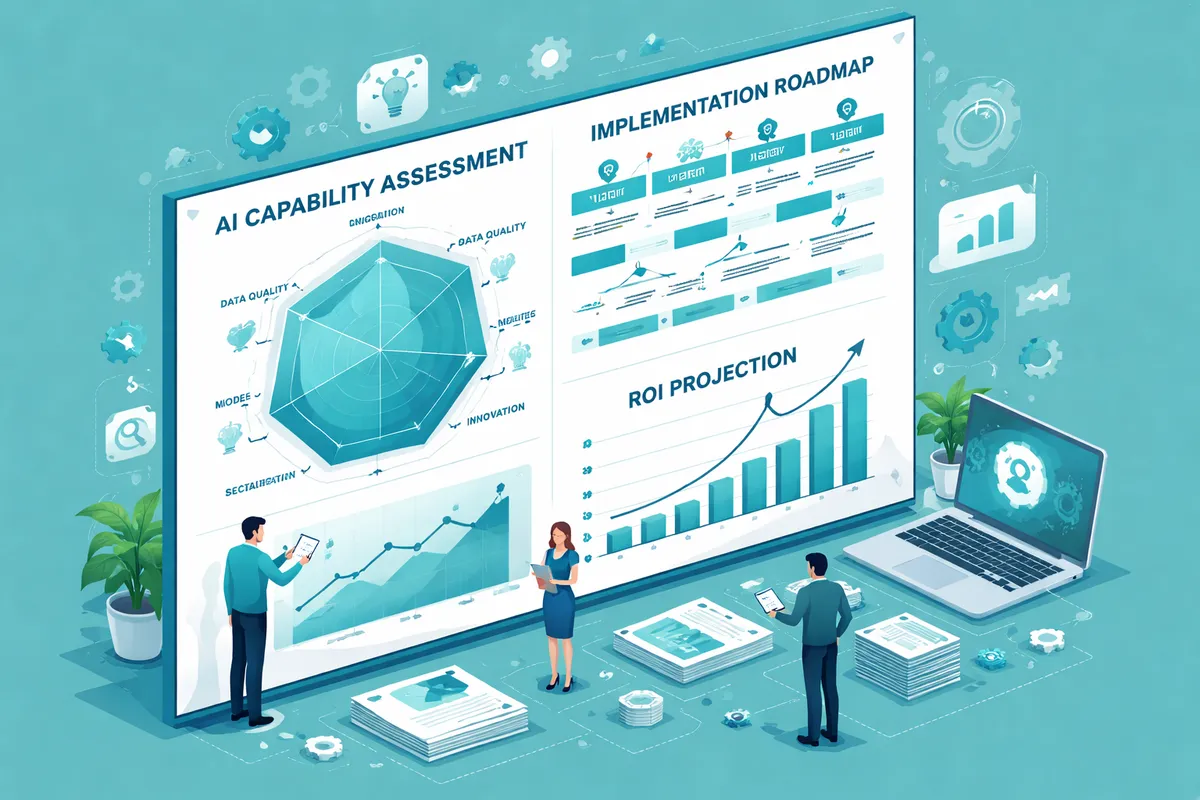
The output is a multi-year adoption roadmap that sequences AI investments in the order that maximizes cumulative value: early investments that create data infrastructure and operational learning that later investments build on. The roadmap accounts for your West Loop organization's capacity to absorb change, not just the technical sequence that would be optimal in isolation.
Industries We Serve in West Loop
Tech companies and startups near Google's Chicago offices at 1000 West Fulton Market and along Lake Street need AI strategy that addresses two distinct domains: internal operations and the AI capability embedded in their products. A startup building an AI-powered product needs a strategy for how AI improves its own efficiency at the same time as it needs a strategy for the AI product itself. We address both and their interaction without conflating them.
High-end restaurants and restaurant groups on Randolph Street and Fulton Market use AI strategy to identify where data-driven tools improve operational efficiency and guest experience without undermining the human-centered hospitality that defines a destination dining operation. The strategy question for West Loop restaurants is not whether AI is interesting. It is which specific applications create measurable value in a restaurant business with the specific economics and operational patterns of Fulton Market dining.
Legal and professional services firms along Madison Street approach AI strategy with professional responsibility obligations that generic AI consulting frameworks do not address. Strategy for law firm AI adoption requires understanding the specific applications that do and do not align with professional responsibility standards, the supervision requirements that govern AI-assisted work product, and the client communication obligations that AI use creates.
Creative and advertising agencies in West Loop need AI strategy that addresses both internal efficiency and the service question: how does the agency's own AI capability shape what it can credibly sell to clients? An agency that has built serious internal AI capabilities has a different service story than one that has not. Strategy that addresses both dimensions produces a more coherent position than strategy that treats them as separate questions.
Financial technology companies near Halsted Street need AI strategy that accounts for the regulatory environment governing their specific financial products. Fintech AI strategy is not just about which tools create operational efficiency. It is about which AI applications fit within the regulatory framework the company operates under and what governance structure those applications require.
Real estate development and commercial leasing operations in West Loop use AI strategy to identify where data-driven tools improve market analysis, leasing decisions, and development economics. Strategy for real estate AI addresses both the technical opportunity and the governance questions that AI use in housing and commercial real estate decisions creates.
What to Expect Working With Us
1. Business immersion and operational assessment. We spend the initial phase of the engagement understanding your West Loop organization from the inside: your workflows, your decision structures, your competitive pressures on Randolph Street or Madison Street or Lake Street, and where your current operations create friction that technology could address. We do not assume the problem you describe initially is the highest-value problem to solve.
2. AI opportunity mapping and prioritization. We build a ranked map of AI opportunities specific to your business, with honest assessments of value, feasibility, cost, and timeline for each. We distinguish between mature applications worth immediate investment and promising applications that require more preparation before they can create value in your West Loop organization.
3. Build-versus-buy analysis and roadmap development. For each priority opportunity, we provide specific recommendations on whether off-the-shelf tools, custom development, or process change is the right answer. We sequence these recommendations into a multi-year roadmap that accounts for your organization's capacity to absorb change and your competitive timing requirements.
4. Implementation guidance and ongoing advisory. We stay engaged through early implementation to identify obstacles, adjust the roadmap when business conditions change, and ensure that the strategy we developed together is translating into the operational outcomes it was designed to produce.