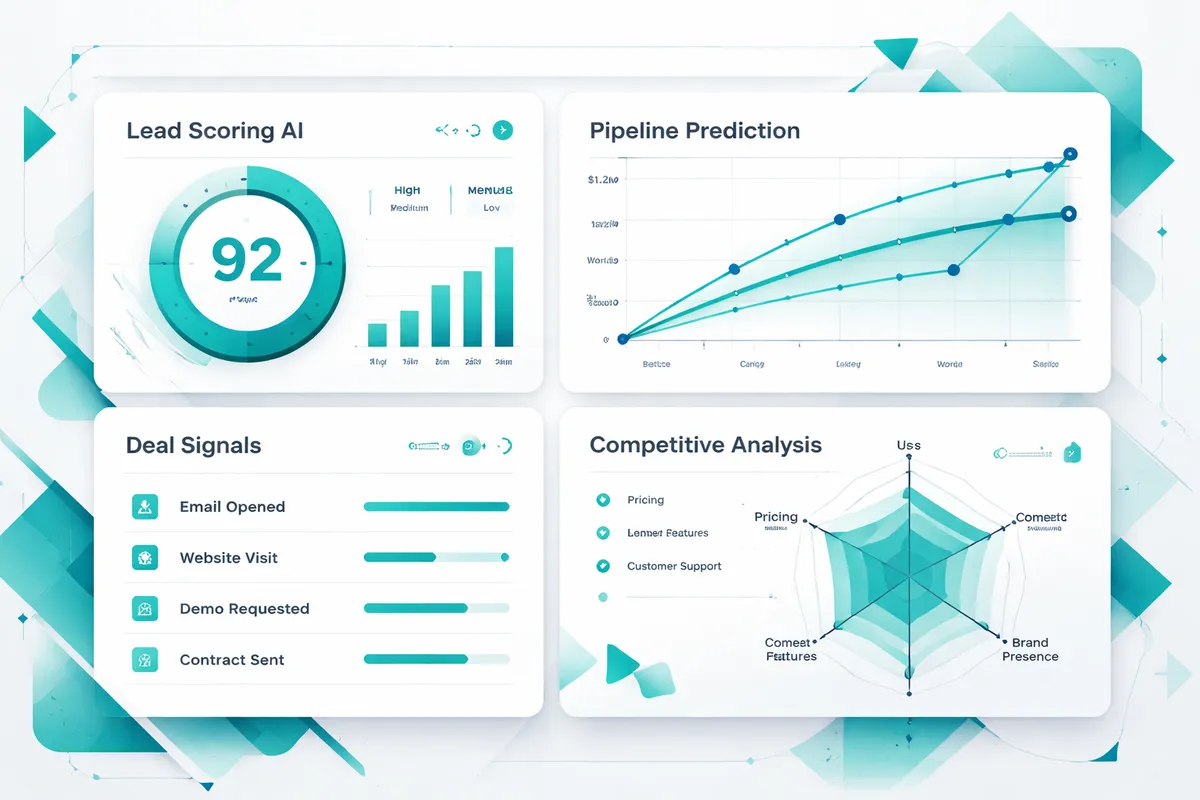
How We Build AI Sales Intelligence for West Loop
The sales intelligence architecture starts with defining what your West Loop sales team actually needs to know about a prospect to sell effectively. This is a discovery process, not an assumption. A Fulton Market startup's enterprise software sales team needs different intelligence than a Madison Street law firm's business development operation. We interview sales team members and review successful past deals to identify the specific information that creates deal momentum versus the information that fills reports without changing behavior.
From that definition, we build the intelligence architecture: the data sources that supply relevant information, the AI processing that extracts and synthesizes the specific signals that matter, the delivery format that gets intelligence in front of the sales team at the moment it is useful, and the integration with your CRM that makes intelligence part of the workflow rather than a separate research step.
Data sources for West Loop sales intelligence span public business information, news and press release monitoring, regulatory and legal filing databases, job posting analysis that reveals organizational priorities and investment areas, executive communications monitoring, and the financial signals that indicate a prospect's capacity and urgency. The specific sources depend on the prospect types your West Loop business targets.
AI processing synthesizes these sources into actionable summaries: what changed at this account since the last contact, what the organizational changes signal about buying authority, what the recent announcements reveal about strategic priorities that align with your offering. The goal is intelligence that tells a West Loop sales team what to say in the next meeting, not a data dump that requires the sales rep to do the synthesis work themselves.
Industries We Serve in West Loop
Tech companies and startups on Lake Street and Fulton Market use AI sales intelligence to compete with larger enterprise software vendors whose sales teams have research capabilities early-stage companies cannot afford to build. AI sales intelligence gives a West Loop startup's sales team the preparation depth that enterprise buyers expect, regardless of the team's size.
Creative and advertising agencies near Morgan Street use AI sales intelligence to understand prospective clients' brand challenges, competitive positions, and marketing investment patterns before the pitch. An agency that can demonstrate in the first meeting that it understands the prospect's specific situation wins more pitches than one that asks the prospect to explain their challenges from scratch.
Legal and professional services firms on Madison Street use AI sales intelligence for business development targeting: identifying companies in sectors where the firm has deep expertise that are facing specific legal or regulatory situations where the firm's capabilities are relevant. Targeted business development based on intelligence about prospect situations is more efficient than broad outreach.
Boutique hotels and hospitality groups near Morgan Pink Line station use AI sales intelligence for corporate account development: identifying companies in West Loop and across Chicago whose employee travel patterns make the property a natural fit, understanding the decision makers who control corporate travel accounts, and monitoring signals that indicate an account is evaluating new hotel relationships.
Financial technology companies near Halsted Street use AI sales intelligence for enterprise fintech sales, identifying prospects whose technology infrastructure, regulatory environment, and strategic priorities align with the specific fintech capability being offered. Fintech sales cycles are long, and intelligence about where a prospect is in their technology evaluation process is particularly valuable for prioritizing effort.
Real estate development and commercial leasing in West Loop uses AI sales intelligence to identify and qualify prospective tenants: companies whose growth trajectory, lease expiration timing, and space requirements align with available properties. Commercial leasing intelligence that monitors job posting volume, office space mentions in news coverage, and lease expiration records helps leasing teams identify prospects at the moment their need is most acute.
What to Expect Working With Us
1. Sales intelligence requirements definition. We work with your West Loop sales team to define what prospect intelligence actually changes deal outcomes versus what is interesting but not actionable. This discovery shapes an intelligence architecture that serves the real sales process, not a generic data enrichment project.
2. Data source architecture and AI processing design. We identify the data sources relevant to your prospect types, design the AI processing that extracts actionable signals, and build the delivery format that integrates intelligence into your sales workflow. For West Loop organizations with CRM systems, intelligence delivery happens inside the existing tool rather than requiring a separate research step.
3. System deployment and sales team enablement. We deploy the intelligence system, integrate with your CRM, and run enablement sessions that help your West Loop sales team understand how to use intelligence effectively in their actual selling situations. Sales intelligence that goes unread because the team does not know how to apply it is not an improvement over no intelligence.
4. Monitoring, optimization, and ongoing development. We monitor what intelligence is being used and what is being ignored, and we optimize the system to focus on what actually changes sales behavior. As your West Loop business's target market evolves, we update the intelligence architecture to match.