How We Build AI Integration Services for West Loop
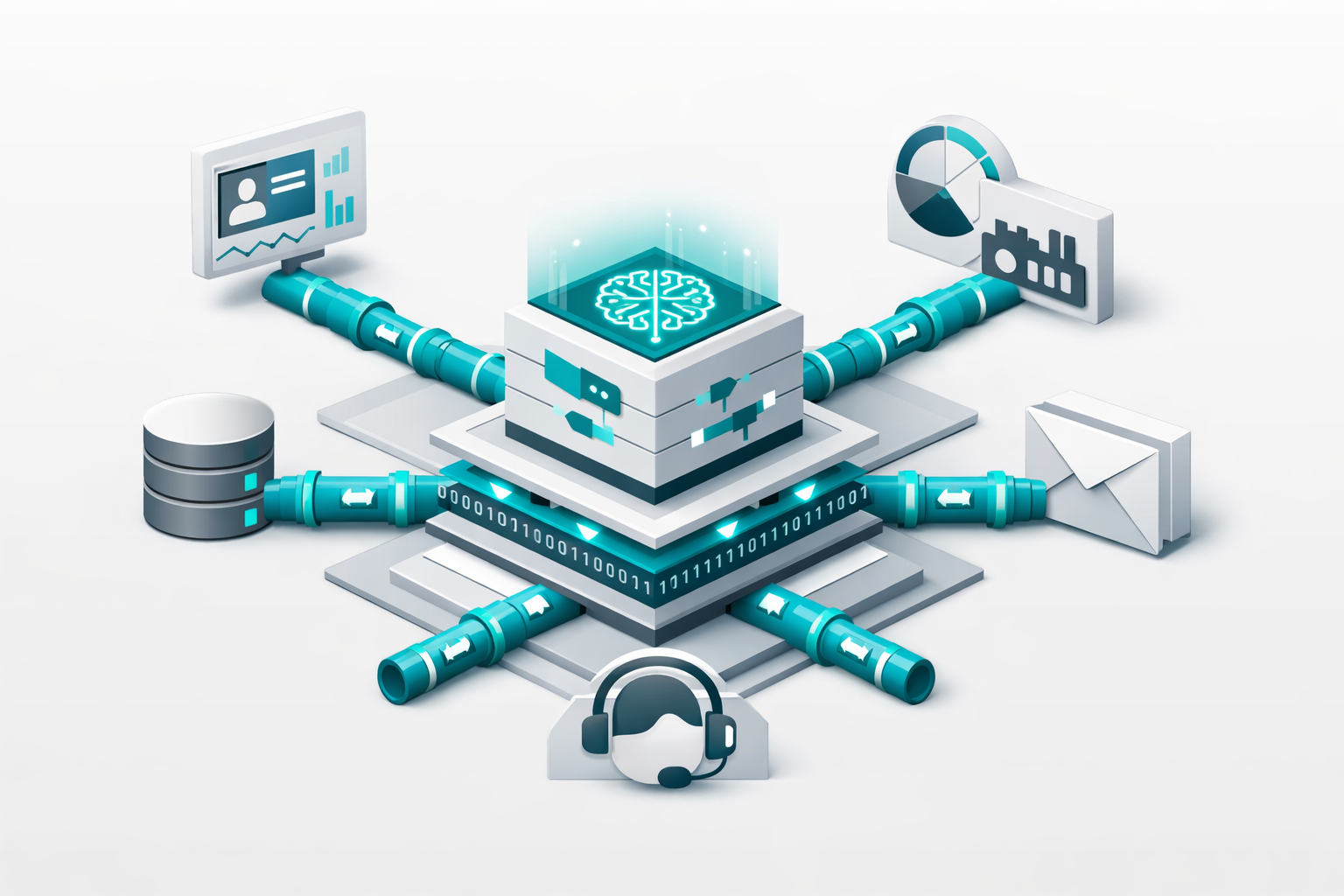
The integration process starts with a system inventory and integration mapping for your West Loop organization. We document every AI tool in use, every core business system, and the data flows that currently exist or need to exist between them. This inventory typically reveals both the obvious integration gaps and the less obvious ones: the AI tool that could be dramatically more useful if it received data from a system three steps away in the workflow that nobody thought to connect.
From the integration map, we prioritize integrations by business value and technical feasibility. Not all integrations are equally valuable. The integration that eliminates daily manual data transfer between an AI tool and a CRM creates more immediate value than the integration that enables a feature used monthly. We sequence integrations so that the first work produces visible operational improvement rather than infrastructure that requires additional development to become useful.
Technical integration takes several forms depending on the systems involved. API integration connects systems through direct data exchange using each system's API. Middleware integration uses a connecting layer that handles transformation between systems with incompatible data formats. Webhook integration enables real-time event-driven data flow where actions in one system trigger immediate updates in another. For West Loop organizations with enterprise systems that have limited API access, we use integration platforms that connect systems that were not designed to communicate directly.
We build integrations with operational monitoring that detects failures before they create business problems. An AI integration that silently fails, delivering no data rather than an error, is more dangerous than one that fails loudly. Monitoring surfaces failures for prompt resolution rather than discovery by a frustrated staff member whose AI tool has been operating on stale data for a week.
Industries We Serve in West Loop
Tech companies and startups on Fulton Market and Lake Street use AI integration services to connect the AI tools in their internal operations and to build the integrations in their products that customers require. For product companies, integrations with customer CRM systems, data platforms, and workflow tools are often what closes enterprise deals. We build both internal operations integrations and customer-facing product integrations for West Loop tech companies.
High-end restaurants and hospitality groups on Randolph Street and Fulton Market use AI integration to connect the fragmented systems of a multi-platform restaurant operation: reservations, point-of-sale, loyalty, delivery, marketing, and the AI tools that need data from all of these to function well. An integrated data layer transforms the operational visibility of a Randolph Street restaurant group.
Legal and professional services firms along Madison Street use AI integration to connect AI research and document review tools with matter management systems, time-tracking platforms, and client communication tools. Legal AI tools that have access to matter context produce better work product than tools operating without that context.
Financial technology companies near Halsted Street use AI integration to build the connections between transaction processing systems, risk models, and reporting platforms that financial AI applications require. Integration for fintech AI must account for latency requirements, security protocols, and audit trail requirements that general-purpose integration does not address.
Creative and advertising agencies in West Loop use AI integration to connect content creation tools, analytics platforms, client reporting systems, and the project management systems that organize agency workflow. An agency's AI tools are most useful when they share context rather than operating independently.
Real estate development and commercial leasing operations in West Loop use AI integration to connect market data feeds, property management systems, financial reporting platforms, and the AI analysis tools that inform leasing and development decisions. Real estate AI operates on richer context when it can draw from integrated data rather than querying isolated systems.
What to Expect Working With Us
1. System inventory and integration mapping. We document every AI tool, every core business system, and the data flows between them that exist or should exist. For West Loop organizations with complex tool environments, this mapping is often the first time anyone has a complete picture of how systems are and are not connected.
2. Integration prioritization and technical design. We prioritize integrations by business value and design the technical approach for each priority integration. The design covers data flow direction, transformation requirements, authentication and security, and the monitoring that ensures the integration stays operational.
3. Integration development and testing. We build, test, and deploy each integration with validation that confirms data is flowing correctly before the integration goes live. For West Loop businesses with existing production operations, integration deployment is managed to avoid disruption to ongoing workflows.
4. Monitoring, maintenance, and ongoing development. Integrations require maintenance as source and target systems evolve. We provide ongoing monitoring and maintenance, and we add new integrations as your West Loop organization's AI tool stack grows or your integration needs develop.