How We Build AI Data Pipelines for West Loop
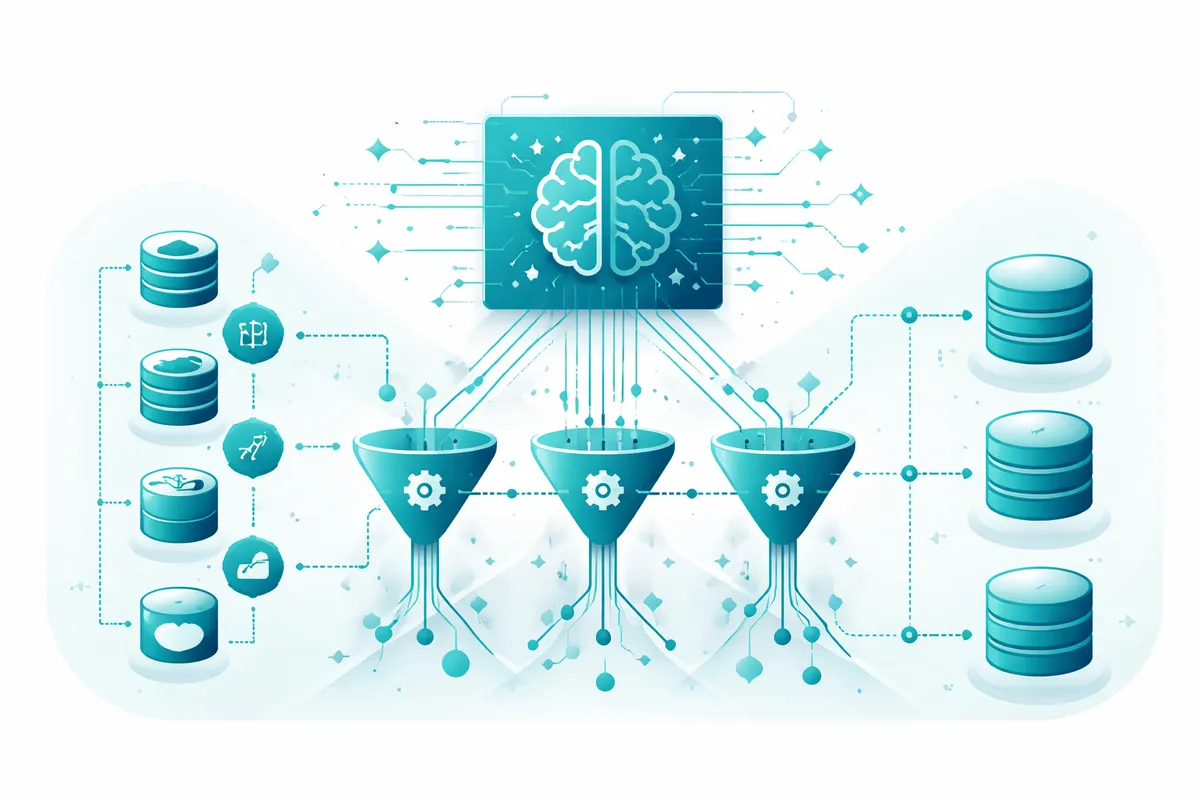
The pipeline architecture starts with a data flow map for your West Loop organization. We document every data source, every downstream system that consumes data, the transformation requirements at each stage, and the latency and reliability requirements that the consuming systems impose. For a Fulton Market tech startup, this map might span five or six systems. For a larger enterprise organization in West Loop, it may span dozens.
From the data flow map, we design the pipeline architecture: the extraction method for each source, the transformation logic that standardizes and validates data as it moves, the loading strategy for each downstream target, and the monitoring and alerting infrastructure that detects failures before they become business-impacting incidents. AI data pipelines have specific design requirements beyond traditional ETL: schema flexibility for unstructured data, embedding generation stages for semantic search and retrieval, and vector storage configuration for AI applications that use similarity search.
We build pipelines using infrastructure appropriate to your West Loop organization's scale and technical environment. For a startup on Lake Street without dedicated infrastructure engineering, that typically means managed cloud services configured and operated by our team. For an enterprise organization with existing infrastructure, it means pipeline work that integrates with established platforms and governance frameworks.
Testing is built into every pipeline before production deployment. Data pipelines that fail silently, delivering malformed or incomplete data without triggering alerts, are more dangerous than pipelines that fail loudly. We build validation and monitoring that catches data quality issues at the source rather than in the downstream AI or analytics system where they are harder to diagnose.
Industries We Serve in West Loop
Tech companies and startups on Fulton Market and Lake Street building AI-powered products need data pipelines that are themselves reliable enough to power production AI features. Customer data pipelines, product telemetry pipelines, and the model training pipelines that update AI systems from production data all have specific design requirements that differ from general-purpose data infrastructure. We build AI-native pipelines for West Loop product companies.
Restaurant groups and hospitality operations on Randolph Street and Fulton Market use data pipelines to unify the fragmented data landscape of a multi-concept restaurant operation. Reservations, point-of-sale, loyalty, delivery, and review data flowing into a unified data layer makes AI-powered personalization, operational analytics, and revenue management possible in a way that isolated systems cannot support.
Financial technology companies operating near Halsted Street in West Loop use data pipelines that meet specific latency, completeness, and audit requirements for financial transaction data. Risk model pipelines, fraud detection feature pipelines, and compliance reporting pipelines require engineering that accounts for the regulatory environment governing financial data, not just the technical requirements of moving data between systems.
Creative and advertising agencies in West Loop that provide analytics services to clients need data pipeline infrastructure that connects client data sources to the reporting and attribution systems that demonstrate campaign performance. Client-facing analytics that update daily rather than weekly are a competitive differentiator. Pipelines built for agency operations need to scale across multiple client environments without requiring individual engineering effort for each new client.
Legal and professional services firms along Madison Street use data pipelines to connect matter management systems, document repositories, time-tracking platforms, and billing systems. For firms adopting AI-assisted research or document review tools, the data pipeline that feeds those tools with indexed matter content is what makes them useful rather than generic.
Real estate development and commercial leasing operations in West Loop use data pipelines to integrate market data, project management data, property management systems, and financial reporting in ways that support the decision-making processes of active development operations. Market intelligence pipelines that aggregate pricing and vacancy data from multiple sources support leasing decisions that benefit from current information.
What to Expect Working With Us
1. Data flow mapping and requirements analysis. We document every data source, every downstream consumer, and the transformation and reliability requirements at each stage. For West Loop organizations with complex data environments, this mapping often reveals gaps and redundancies that create both technical risk and business value opportunities.
2. Pipeline architecture and technology selection. We design the pipeline architecture appropriate for your West Loop organization's scale, technical environment, and compliance requirements. Technology selection covers extraction, transformation, loading, orchestration, monitoring, and the AI-specific stages that distinguish AI data pipelines from general-purpose ETL.
3. Build, test, and deployment. We build, validate, and deploy each pipeline with monitoring configured from day one. Production pipelines for West Loop businesses with real-time AI or analytics applications are tested against failure scenarios before deployment, not after the first production incident.
4. Ongoing operations, monitoring, and optimization. Data pipelines require maintenance as source systems evolve, data volumes grow, and downstream requirements change. We provide ongoing pipeline operations including monitoring, incident response, and optimization as your West Loop business's data infrastructure needs develop.