How We Build AI Customer Service for West Loop
The design process starts with contact pattern analysis. We review your West Loop business's existing customer service history to understand what customers ask about, when they ask it, what the standard resolution looks like, and where the current operation creates friction or delay. For a Fulton Market restaurant, the contact patterns are dominated by reservation modifications, menu questions, and event inquiries. For a tech startup on Madison Street, they center on product questions, onboarding support, and account management issues. For a boutique hotel near Morgan Street, they span booking modifications, local recommendations, and billing questions.
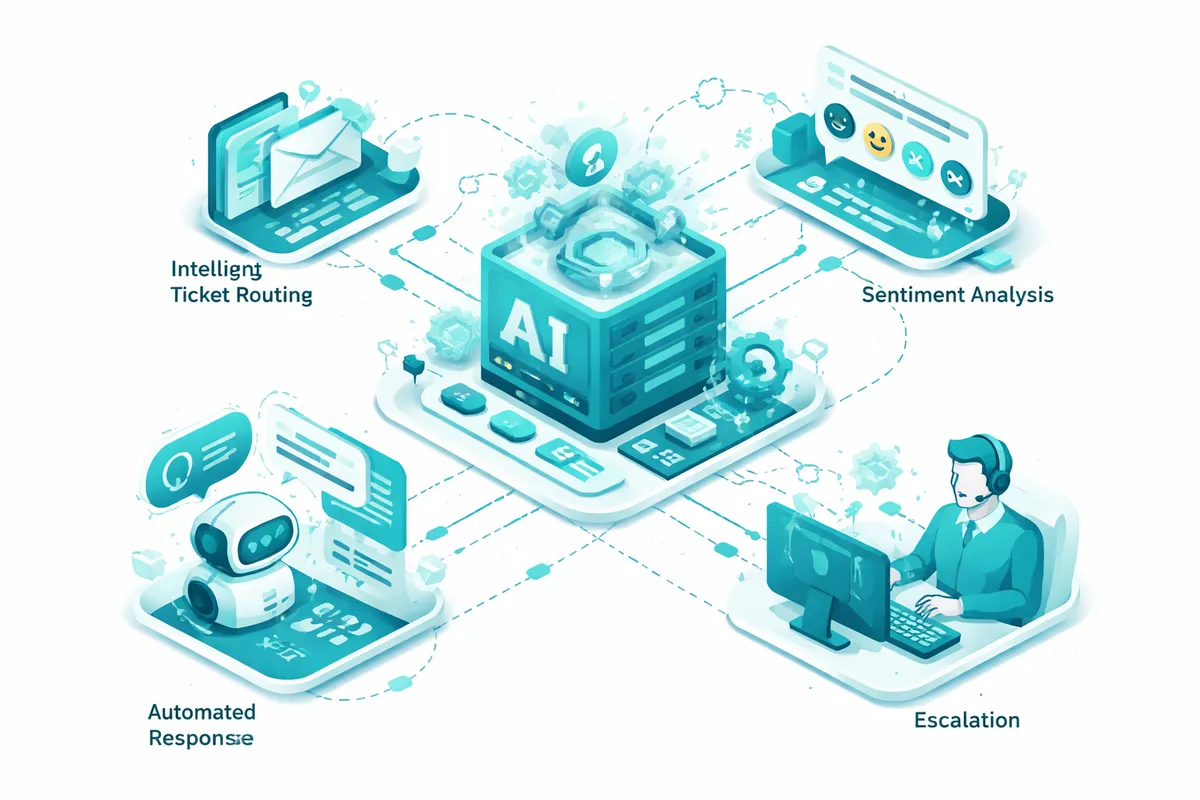
From the contact pattern analysis, we build the AI customer service architecture: what the AI handles end-to-end, what it handles and then escalates, and what goes directly to a human. The handoff logic is critical. West Loop businesses serving sophisticated customers cannot deploy AI customer service that frustrates customers trying to reach a human for complex issues. The system needs to be genuinely helpful on the questions it handles and genuinely clear about directing the customer to human support when that is what the situation requires.
We configure the AI with your specific business information: current hours, current offerings, current pricing, current policies, and the specific language your West Loop brand uses. For a Randolph Street restaurant, that includes menu details, allergen information, reservation policies, and private dining capacity. For a tech startup, it includes product documentation, pricing tiers, and integration specifications. The AI is as useful as the information it has access to.
Ongoing operation includes monitoring, performance tracking, and regular updates to the knowledge base as your business changes. A West Loop restaurant that changes its seasonal menu needs its AI customer service updated at the same time, not two weeks later when a customer asks about a dish that is no longer available.
Industries We Serve in West Loop
High-end restaurants on Fulton Market and Randolph Street use AI customer service to handle the volume of pre-visit inquiries that a destination dining operation generates: reservation confirmations, dietary accommodation questions, parking and transit information, private dining inquiry triage, and after-hours reservation modification requests. AI handles these at the volume destination restaurants experience without requiring a dedicated inquiry management team.
Boutique hotels and hospitality properties near Morgan Street use AI customer service to manage the full inquiry lifecycle: availability questions, rate comparisons, amenity information, local recommendations, and pre-arrival communication. For corporate clients who use the Morgan Pink Line station as a transit hub, responsiveness to travel planning inquiries is often the deciding factor between properties.
Tech companies and startups on Lake Street and Fulton Market use AI customer service for product support triage, onboarding assistance, and the frequently-asked questions that consume disproportionate support team time. AI handles first-level support, routes complex issues to the appropriate team member, and maintains a response standard that reflects the technology capabilities the startup is selling.
Creative and advertising agencies in West Loop use AI customer service to manage new business inquiries, scope-of-work questions, and client communication touchpoints that do not require a senior account manager's direct involvement. Agencies that deploy AI customer service well present a more organized and responsive front to prospects evaluating multiple agencies.
Legal and professional services firms along Madison Street use AI customer service for intake triage, appointment scheduling, document submission guidance, and the initial contact points that create a first impression before a client meets with counsel or an advisor. AI intake that is efficient and professionally calibrated sets the right expectation for the client relationship.
Real estate development and leasing operations in West Loop use AI customer service to manage the volume of availability, pricing, and property specification inquiries that a commercial leasing operation generates. AI customer service handles the information delivery function that consumes significant leasing agent time before a prospect is genuinely ready to tour.
What to Expect Working With Us
1. Contact pattern analysis and system design. We analyze your current customer service contacts to understand what questions are asked, when they arrive, and where the current operation creates friction. From that analysis, we design the AI customer service architecture: what is automated, what is escalated, and how the handoff to human support works.
2. Knowledge base development and AI configuration. We build the knowledge base your West Loop business's AI customer service needs to be genuinely useful: product information, service details, policies, local context, and the specific language that matches your brand voice. For a Fulton Market restaurant, this includes content no generic AI system has access to.
3. System deployment and integration. We deploy the AI customer service system across the channels where your West Loop customers actually reach you: website chat, email response, reservation platform messaging, and wherever else contact patterns show up. Integration with existing booking systems, CRM, or ticketing platforms ensures the AI operates as part of your workflow rather than alongside it.
4. Monitoring, performance reporting, and ongoing optimization. We monitor AI customer service performance, track resolution rates and escalation patterns, and update the system as your business changes. West Loop businesses with evolving offerings need an AI customer service system that evolves with them.