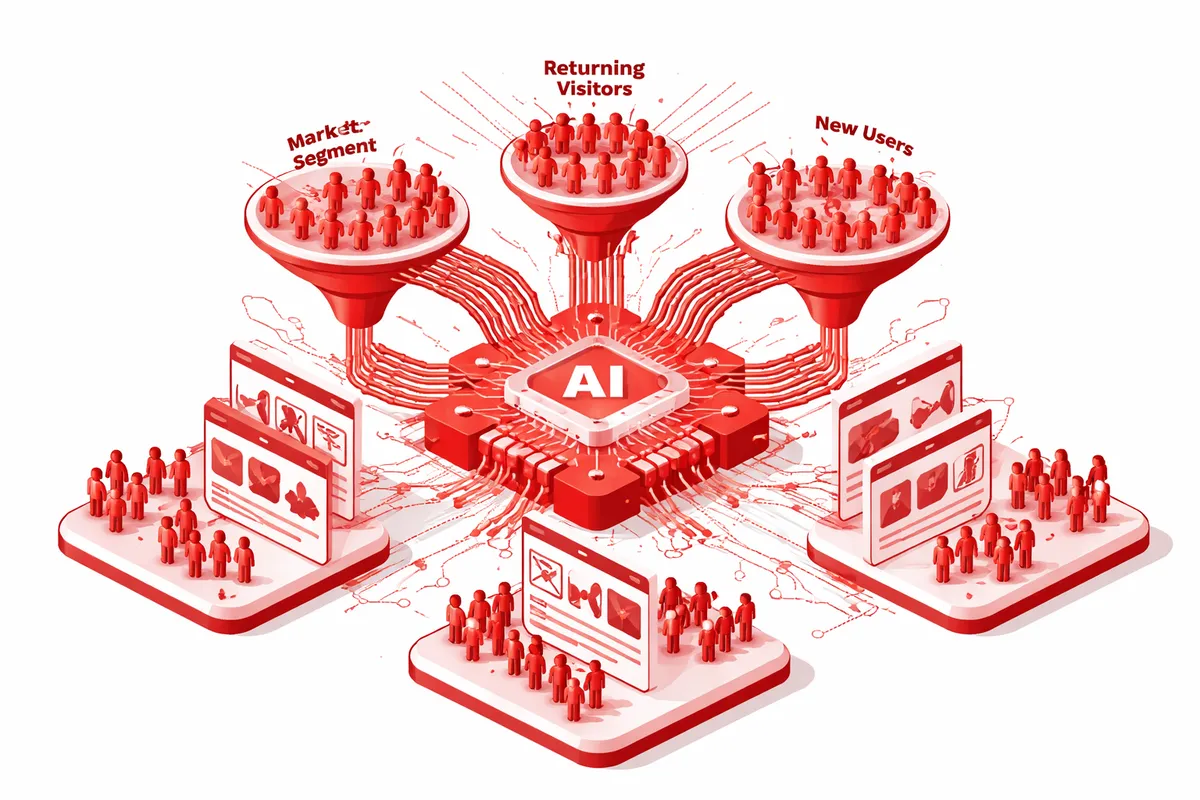
How We Build AI Content Personalization for West Loop
The engagement starts with audience architecture. We map the distinct audience segments your West Loop business serves, document what each segment needs at each stage of their relationship with your brand, and identify the behavioral signals that indicate where an individual is in that journey. For a Randolph Street restaurant, the segments might include first-time visitors driven by food media, regular guests with established preferences, private dining prospects evaluating the space for corporate events, and delivery customers who have never dined in. For a startup on Lake Street, the segments might include enterprise procurement teams, individual practitioner users, investor prospects, and partnership candidates.
From the audience architecture, we build the personalization logic: what content variations are needed, what signals trigger each variation, and what platform or channel infrastructure supports delivery. Personalization logic for a West Loop restaurant operating primarily through email and social channels looks different from personalization logic for a tech company with a product website, a nurture email sequence, and a sales team operating through outbound sequences.
AI tools enter the process at content generation and at personalization delivery. We use AI to generate the content variations that personalization requires at volume, ensuring each variation is calibrated to the specific audience and stage rather than assembled from boilerplate. We configure the personalization delivery infrastructure that routes the right content to the right segment at the right moment.
The system is built for ongoing operation, not for a one-time deployment. West Loop businesses with seasonal patterns, event programming, or product cycles need a personalization system that updates with their content calendar, not one that requires rebuilding every time the context changes.
Industries We Serve in West Loop
Tech companies and startups on Fulton Market and Lake Street use AI content personalization to manage the multiple audience tracks that a B2B technology company runs simultaneously: enterprise buyers at different stages, investor audiences, partnership prospects, and the broader brand-building audience. Personalization ensures each track receives content calibrated to their position and their specific decision criteria.
High-end restaurants on Randolph Street and Fulton Market use AI personalization to segment their audience between first-time visitors, returning guests, and special-occasion prospects, delivering content that serves each group's specific needs. A guest who visited for a birthday receives different follow-up content than a guest who expressed interest in the private dining program. The Fulton Market dining audience is diverse enough that a single content approach consistently underperforms.
Boutique hotels and hospitality properties near Morgan Street use AI personalization to manage the communication gap between leisure and corporate traveler audiences without maintaining two separate marketing operations. The same property story is told differently to the guest booking a weekend escape and the travel manager booking room blocks for a corporate event.
Creative and advertising agencies in West Loop use AI content personalization both for their own business development and as a service they deliver to clients. Agencies that have built internal personalization capability can offer it as a managed service, creating recurring revenue from clients whose content operations benefit from the system.
Legal and professional services firms along Madison Street use AI personalization to segment communications between existing clients, prospective clients in specific practice areas, referral sources, and the broader professional audience. Professional services personalization is more conservative in tone than consumer personalization but equally valuable in ensuring content is relevant to the recipient's specific situation.
Real estate development and commercial leasing operations in West Loop use AI personalization to manage the pipeline of prospects at different stages: awareness-stage audiences learning about a development, evaluation-stage prospects comparing specific spaces, and late-stage prospects in active negotiation. Content calibrated to stage accelerates the pipeline without requiring individual attention from a leasing team at every touchpoint.
What to Expect Working With Us
1. Audience architecture and segmentation mapping. We document the distinct audience segments your West Loop business serves, the behavioral signals that identify each segment, and the content needs that differentiate each group. This mapping is the foundation of effective personalization and the document that makes future system updates coherent rather than ad hoc.
2. Personalization logic and content variation development. We build the logic that routes each audience segment to the appropriate content and generate the content variations that the system needs to operate. For West Loop businesses with multiple channels, we build personalization logic for each channel and the connecting infrastructure that makes behavior on one channel inform content on another.
3. Platform configuration and system deployment. We configure the platform or platforms your West Loop business uses for content delivery to support personalization at scale. This includes email marketing platforms, website personalization tools, and the CRM or data layer that tracks audience signals.
4. Measurement, optimization, and ongoing support. We build measurement into the personalization system from the start, tracking engagement by segment and using performance data to optimize content and logic over time. West Loop businesses in competitive markets need personalization systems that improve with use, not systems that are set and forgotten.