Your Cart (0)

Your cart is empty

Uptown, Chicago

UI/UX Design in Uptown

UI/UX Design for businesses in Uptown, Chicago. We know the neighborhood, the customers, and what it takes to compete locally.

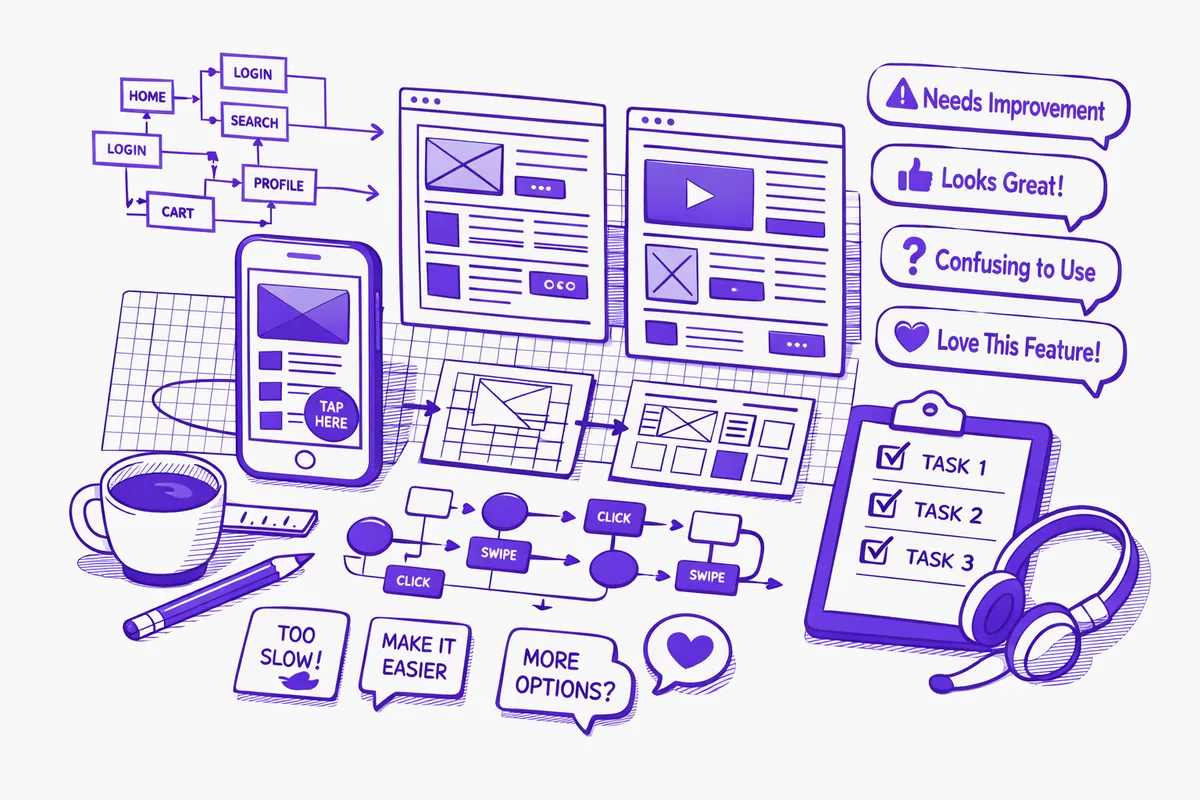
UI/UX Design in Uptown service illustration

Our UI/UX Design Work in Uptown

  • User research with Uptown's diverse population groups: Vietnamese-speaking elderly residents, recent immigrants, social service clients, healthcare patients, and community members across literacy levels and device access
  • Case management tool design for Uptown social service nonprofits with field-use optimization, offline capability design, and multilingual interface architecture
  • Patient portal design for healthcare practices near Weiss Memorial with accessibility design for multilingual patients and users with varying health literacy
  • Community resource navigation tool design for immigrant-serving organizations with multilingual user flows and low-literacy design accommodations
  • Tenant portal design for affordable housing organizations with multilingual communication interfaces and mobile-first navigation
  • Restaurant and food business application design for Argyle Street businesses with ordering, loyalty, and operational tool interfaces designed for real restaurant workflows
  • Design systems and shared component libraries for Uptown nonprofits and organizations with ongoing digital product development
  • Accessibility audits and remediation design for existing digital products serving Uptown's population

Industries We Serve in Uptown

Social service and community nonprofits use research-grounded UX design to build case management, client intake, and program management tools that case managers and outreach workers actually adopt. Tools designed with real field staff input work differently than tools designed from specification documents alone.

Healthcare and behavioral health providers near Weiss Memorial use healthcare-native UX design for patient portals, appointment systems, and clinical staff tools that balance HIPAA compliance constraints with the usability requirements of a diverse patient population.

Organizations serving immigrant communities use multilingual UX design for community resource tools, client portals, and service navigation applications that work genuinely across the language communities Uptown's population represents, not just English with a translate button.

Food businesses and restaurant groups on Argyle Street use UX design for ordering applications, loyalty program interfaces, and operational tools designed around the actual workflows of restaurant operation rather than generic small business assumptions.

Advocacy and legal service organizations use UX design for client intake tools, case tracking interfaces, and community education applications designed for the specific workflows of immigration legal practice and the clients that practice serves.

What to Expect Working With Us

1. Discovery and user research. We begin by understanding your users and your organizational context through interviews with actual users from your population, observation of how existing tools are used in real settings, and analysis of where current interfaces create friction or failure. For Uptown healthcare and social service clients, this phase maps compliance requirements and accessibility constraints that will shape every design decision.

2. Information architecture and wireframing. We design structure before surface: information architecture that organizes features and content appropriately for your user population, wireframes that establish flow and layout without the distraction of visual design. We conduct lightweight usability testing of wireframes with real users before committing to high-fidelity work.

3. High-fidelity design and prototyping. We build pixel-precise interface designs in Figma, including interactive prototypes for usability testing. For multilingual applications, this phase includes language-specific designs that accommodate variable text length and different interface conventions for each language group.

4. Testing and iteration. We test prototypes with real users from your target population, not internal stakeholders who know the system. Testing with Vietnamese-speaking elderly residents, with case managers in field conditions, or with clients who have limited smartphone experience surfaces issues that design reviews miss. We incorporate findings into final designs before developer handoff.

Frequently Asked Questions

User research with immigrant communities requires recruiting participants who are genuinely representative of the target population rather than the most accessible or English-proficient members of that community. We recruit research participants through community organizations, cultural institutions, and the organizations that already serve the population we are designing for. For Vietnamese-speaking users, research sessions are conducted in Vietnamese with appropriate interpreter support or bilingual researchers. We use research methods appropriate to the literacy and technical comfort level of participants, which for many Uptown community members means observation and think-aloud testing rather than written surveys or assumption-heavy interview protocols. The quality of research with these communities depends on trust, which comes from working through the organizations that have already built it.

Accessibility design for Uptown's population goes beyond WCAG 2.1 AA compliance, which establishes a minimum standard for users with defined disabilities. Genuine accessibility for the full range of Uptown's community includes plain language throughout that communicates accurately at a sixth-grade reading level, visual hierarchies that guide task completion without requiring users to read lengthy instructions, prominent and accessible help options that do not require users to already understand the system to find support, multilingual interfaces that are genuinely designed for each language rather than translated from English, and interface designs that work on older and lower-end devices where much of Uptown's population does their digital work. These design choices require research to specify and testing to validate.

Healthcare UX design for multilingual populations requires language architecture built from the beginning, not translation added after English design is complete. Interface text, form labels, error messages, help content, and system notifications all need translation reviewed by medical professionals for clinical accuracy in each language, not consumer-grade translation services. Navigation patterns and iconography need testing with users from each language community because icon interpretation varies significantly across cultural backgrounds. Session timeout and authentication flows need design that respects the real device-sharing conditions that many Uptown immigrant households navigate, where multiple family members may access the same device. These are design problems that require domain expertise in both healthcare UX and multilingual design.

A focused UX engagement for a single feature or user flow, from research through final validated designs, typically runs twelve thousand to thirty thousand dollars. A comprehensive product design engagement covering full application design, multilingual architecture, design system creation, and usability testing with representative Uptown community members typically runs forty-five thousand to ninety thousand dollars. UI/UX design for technology capacity projects is fundable through technology grants from the Chicago Community Trust, the MacArthur Foundation, and state capacity-building programs. We help organizations structure project scope documentation for grant applications.

A focused engagement for a single feature or application section takes four to eight weeks from research through final designs. A comprehensive application design engagement takes three to five months. We structure work so development can begin on the highest-priority sections before the complete design is finished, which is particularly important for Uptown nonprofits with grant-funded deployment timelines. Research phases for multilingual populations sometimes require additional time to recruit appropriate participants and conduct sessions in community languages, which we account for in timeline estimates.

Yes, and multi-role design is one of the most common challenges in social service and healthcare application design. Case managers need efficient task workflows that minimize clicks between intent and action. Clients need simple, clear interfaces that guide task completion without assuming prior digital sophistication. The same application often needs genuinely different interface experiences for each role, not just different permission levels within the same design. We design role-specific experiences within unified systems, with shared design language and consistent visual architecture across roles so the system feels coherent without sacrificing the usability that each distinct user population requires. Learn more about our [UI/UX design services across Chicago](/chicago/ui-ux-design) or explore other [digital services available in Uptown](/chicago/uptown).

Ready to get started in Uptown?

Let's talk about ui/ux design for your Uptown business.