Your Cart (0)

Your cart is empty

Uptown, Chicago

Supply Chain Automation in Uptown

Supply Chain Automation for businesses in Uptown, Chicago. We know the neighborhood, the customers, and what it takes to compete locally.

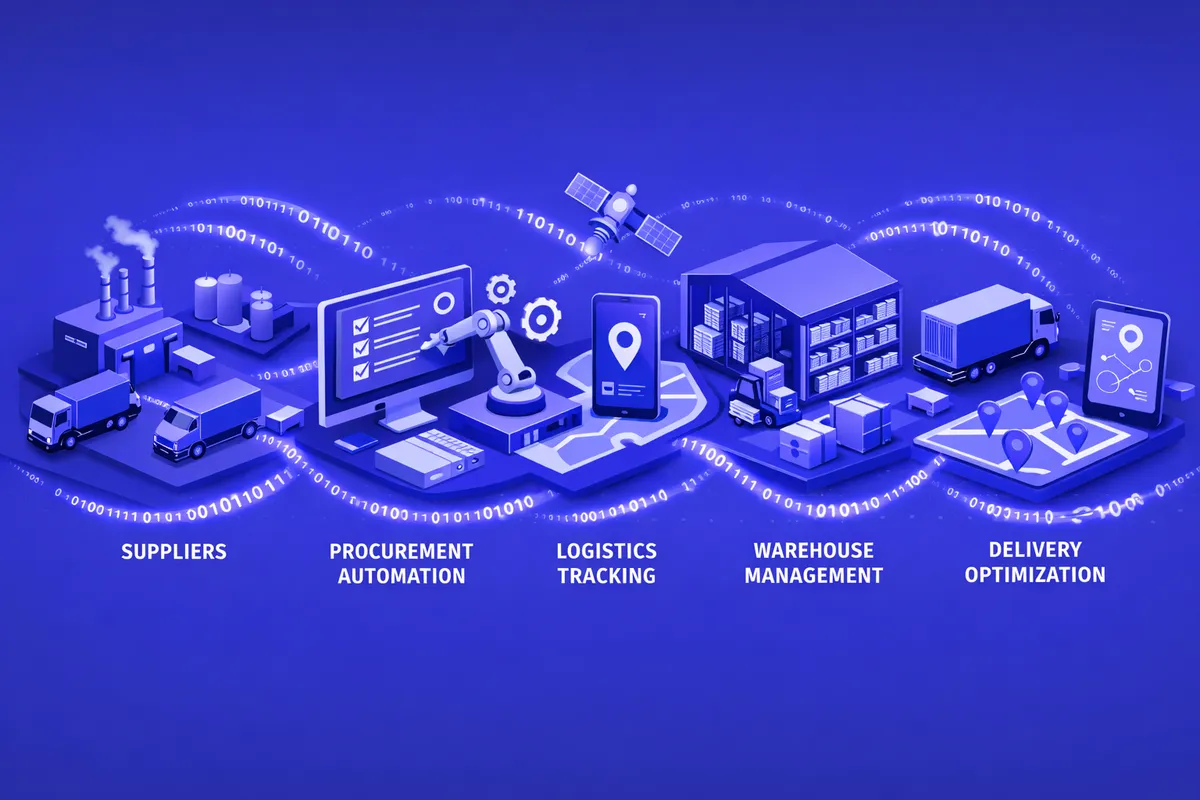
Supply Chain Automation in Uptown service illustration

Our Supply Chain Automation Work in Uptown

  • Procurement automation for Argyle Street restaurant groups with demand-triggered reorder suggestions, supplier communication automation, and delivery scheduling coordination
  • Inventory monitoring systems for Vietnamese, Ethiopian, and specialty food restaurants with real-time stock visibility, automatic reorder triggers, and multi-location synchronization
  • Supplier relationship management automation for specialty food importers coordinating overseas procurement with local distribution to Uptown's ethnic restaurant community
  • Food pantry and program supply chain automation for Uptown nonprofits managing materials procurement, distribution coordination, and inventory tracking for community programs
  • Restaurant group procurement consolidation connecting multiple Uptown locations to shared supplier relationships with automated order aggregation and split delivery coordination
  • Import documentation and customs workflow automation for specialty food importers managing international procurement
  • Invoice reconciliation automation connecting delivery receipts to supplier invoices to payment approval workflows
  • Real-time supply chain visibility dashboards for Uptown food business operators managing multiple supplier relationships

Industries We Serve in Uptown

Vietnamese, Ethiopian, and specialty food restaurants on Argyle Street and throughout Uptown manage supply chains for specialty ingredients that require dedicated supplier relationships and careful inventory management. Automation gives these businesses procurement efficiency and inventory visibility without adding administrative staff.

Specialty food importers and distributors serving Uptown's ethnic restaurant community and Chicago's broader specialty food market manage supply chains spanning international procurement, customs, cold chain logistics, and local distribution. Automation at each stage reduces the coordination overhead that limits scalability.

Restaurant groups and multi-location food businesses coordinate procurement across locations with different volume requirements, menus, and storage constraints. Automation consolidates purchasing decisions, aggregates orders to supplier minimums, and coordinates split deliveries without requiring manual coordination across locations.

Nonprofits managing food distribution and program supplies need procurement automation that connects program demand to purchasing decisions and tracks materials from acquisition through distribution without requiring case managers to perform supply chain coordination alongside direct service work.

Healthcare and medical supply purchasers near Weiss Memorial managing clinical supply procurement need inventory automation that maintains supply levels for clinical operations without the procurement staff overhead that manual management requires.

What to Expect Working With Us

1. Process assessment and automation mapping. We document your current procurement and inventory workflows, identify the bottlenecks where manual coordination creates the most operational friction, and produce a prioritized automation roadmap with practical ROI estimates. For Argyle Street food businesses, this typically begins with inventory monitoring and reorder triggers.

2. Workflow design and integration architecture. We design automated workflows and define how they integrate with your existing systems, whether that is a point-of-sale system, accounting software, or inventory management tools you already use. The design is documented before implementation begins.

3. Implementation and testing. We implement the highest-priority automations first, test against real operational data and scenarios, and deploy with monitoring that ensures reliable performance before moving to additional automation phases.

4. Expansion and optimization. After initial automation is stable, we extend to additional process areas, optimize live workflows based on operational data, and expand visibility into the supply chain areas that the first phase identifies as opportunities.

Frequently Asked Questions

Inventory monitoring with automatic reorder triggers delivers the fastest tangible benefit for most Argyle Street food businesses. When stock levels drop below predefined thresholds, the system generates a reorder suggestion or automatically sends a purchase order to the appropriate supplier. This eliminates the manual inventory check and the phone call or text to the supplier, replacing a daily task with an exception-based workflow where the operator only needs to act when the system flags something outside normal parameters. For restaurants with multiple specialty ingredient suppliers, this alone recovers significant daily time.

Integration with common POS systems including Toast, Square, Clover, and others allows supply chain automation to draw inventory depletion data directly from sales activity rather than requiring manual stock counts to trigger reorders. When a dish sells, the ingredients that dish uses decrement from inventory automatically. When inventory reaches the reorder threshold, the reorder workflow triggers. This real-time connection between sales and procurement is more accurate and more timely than manual inventory management and eliminates the gap between when a shortage develops and when it is discovered.

Yes. The supply chain for specialty Vietnamese food importers involves multiple coordination points where automation reduces manual work: purchase orders to overseas suppliers in standardized formats, customs documentation preparation, delivery scheduling to restaurant clients, and invoice reconciliation when deliveries are completed. Automating the supplier communication workflow, which for overseas suppliers often involves time zone differences and language considerations, ensures that orders are confirmed and production or shipment is initiated on schedule without requiring the importer to manually follow up on every pending order.

A focused automation for a single process, such as inventory monitoring and reorder triggers for a restaurant, typically runs three thousand to eight thousand dollars for implementation, with minimal ongoing cost once the system is configured. More comprehensive automation connecting procurement, inventory, and supplier communications typically runs ten thousand to twenty-five thousand dollars. For restaurant groups or importers with more complex supply chains, implementation costs reflect the complexity of the workflows and integrations involved. We structure implementations to deliver the highest-impact automation first so businesses see measurable operational benefit before the full scope is complete.

International supply chain automation requires attention to time zone communication patterns, language considerations in automated supplier communications, customs documentation requirements, and the longer lead times that international procurement involves. We design procurement automation workflows that account for the actual communication and logistics patterns of your international supplier relationships, including configuring automated follow-up timing appropriate to the supplier's location and the lead time required. For import documentation, we build automation that prepares the standard documents required for customs clearance from your purchase order data, reducing the manual document preparation work that international procurement requires.

Yes. Food pantry and materials distribution supply chains have the same structural automation opportunities as commercial supply chains: inventory monitoring that tracks what is on hand and what is needed, procurement automation that generates orders when stock falls below program requirements, and distribution coordination that matches available inventory to program demand. For Uptown nonprofits managing food distribution or community program materials, automation that monitors inventory against program commitments and triggers procurement when levels are insufficient reduces the coordination burden on staff while improving the reliability of supply availability for the clients and community members the program serves. Learn more about our [supply chain automation across Chicago](/chicago/supply-chain-automation) or explore other [digital services available in Uptown](/chicago/uptown).

Ready to get started in Uptown?

Let's talk about supply chain automation for your Uptown business.