Your Cart (0)

Your cart is empty

Uptown, Chicago

Rag Development in Uptown

Rag Development for businesses in Uptown, Chicago. We know the neighborhood, the customers, and what it takes to compete locally.

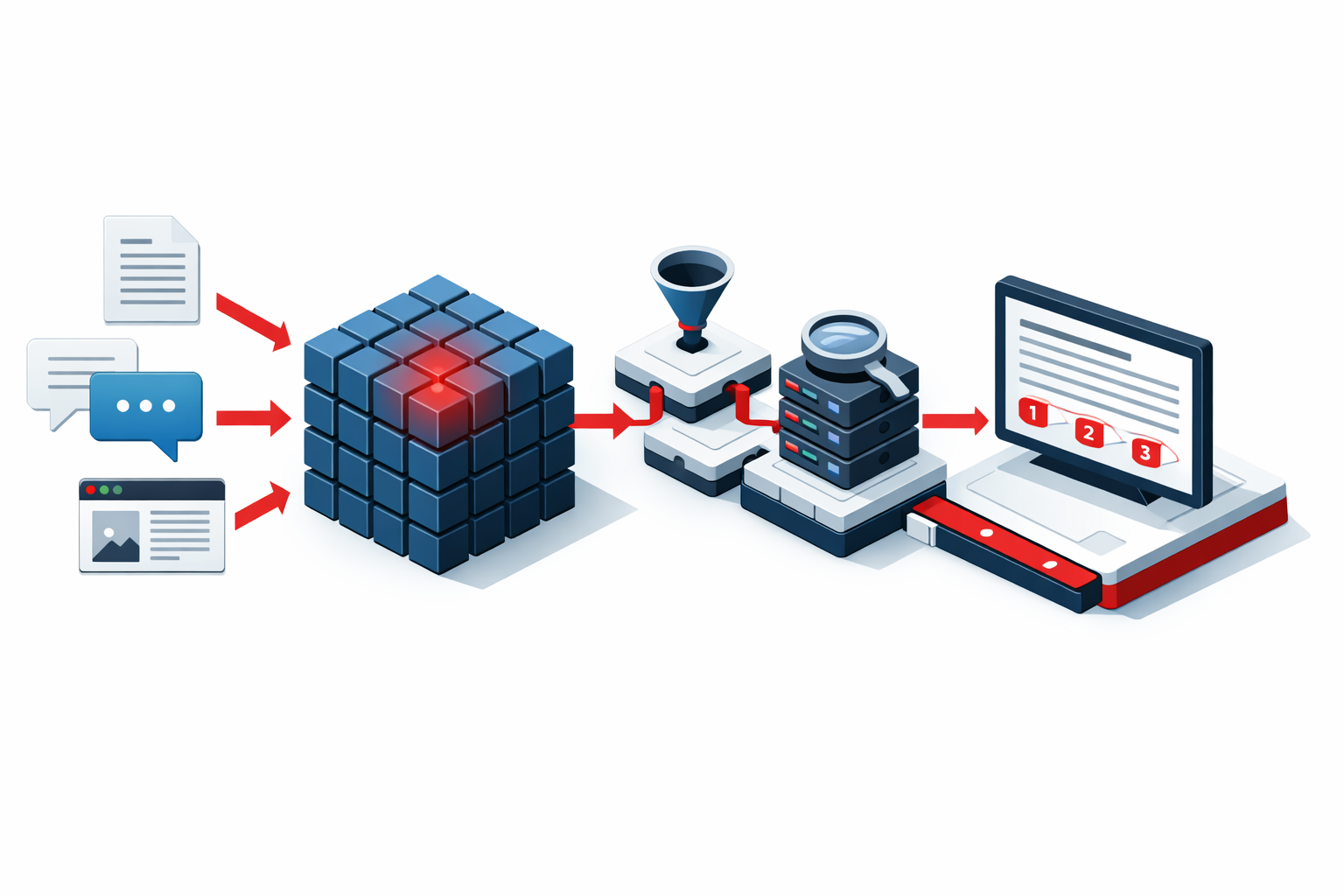
Rag Development in Uptown service illustration

Our RAG and Knowledge Agent Work in Uptown

  • Program policy and eligibility knowledge bases for Uptown social service nonprofits indexing funder guidelines, eligibility criteria, program policies, and Illinois state regulatory requirements with case manager-appropriate interfaces
  • Clinical knowledge bases for healthcare practices near Weiss Memorial indexing payer billing guides, patient education material libraries, referral network directories, and clinical protocol documentation
  • Legal and regulatory knowledge agents for immigration and housing legal service organizations indexing USCIS resources, case law, organizational policy documents, and client intake procedures
  • Staff onboarding knowledge systems for Uptown nonprofits indexing training materials, policy documents, and procedure guides so new case managers find accurate answers independently
  • Tenant resource knowledge bases for affordable housing organizations indexing HUD regulations, tenant rights references, maintenance vendor directories, and lease compliance documentation
  • Grant and funder requirement knowledge bases for nonprofit development teams indexing funder guidelines, reporting format requirements, and eligibility criteria across multiple simultaneous funders
  • Cultural community resource directories for organizations serving Uptown's Vietnamese, Ethiopian, and immigrant communities with multilingual knowledge access
  • Volunteer and community educator knowledge tools for organizations deploying non-staff personnel who need accurate policy answers without direct staff supervision

Industries We Serve in Uptown

Social service and community nonprofits use RAG systems to make their accumulated program knowledge accessible to every staff member, not just the program director who has been there long enough to know where everything is. Eligibility criteria, intake procedures, funder requirements, and regulatory compliance documentation all become instantly searchable with cited answers rather than knowledge that lives only in experienced staff members' heads.

Healthcare and behavioral health providers near Weiss Memorial use RAG systems to give front-desk, care coordination, and clinical staff instant access to billing guides, patient materials, referral networks, and clinical protocols without searching multiple locations under time pressure from patients in the waiting room.

Legal and immigration service organizations use RAG systems to give attorneys, paralegals, and case managers instant access to regulatory references, case law, organizational policies, and client intake procedures with source citations that support the accuracy of the answer.

Affordable housing organizations managing Uptown's housing portfolio use RAG systems to give property managers accurate, cited answers about HUD compliance requirements, tenant rights, maintenance procedures, and lease terms without calling a supervisor or searching regulatory websites.

Cultural and community organizations use RAG systems to make organizational knowledge accessible in multiple languages, ensuring that staff serving Uptown's diverse immigrant communities can find accurate information in the language their clients and community members need.

What to Expect Working With Us

1. Knowledge audit and scoping. We map where your documents live, how frequently they change, who needs access to which knowledge, and what questions your staff asks most often but finds hardest to answer. This audit shapes the system design from ingestion pipeline to interface and access controls.

2. System design and document ingestion. We connect to your document sources, whether SharePoint, Google Drive, Confluence, uploaded PDFs, or other formats, process content into appropriately sized chunks, generate semantic embeddings, and store them in a vector database tuned for your organization's vocabulary and domain. Permission-aware retrieval integrates with your existing access controls so staff only receive answers from documents they are authorized to see.

3. Deployment and interface configuration. The system deploys as a web interface, Slack or Teams integration, or embedded widget within your existing staff tools. Guardrails decline to answer when confidence is insufficient rather than generating plausible but incorrect responses. Every answer includes source citations linking to the specific document and section.

4. Monitoring and continuous improvement. We track retrieval accuracy, log unanswered questions, and improve the system as your knowledge base evolves. Automated pipelines re-index updated documents within hours of changes. Monthly reviews tune retrieval quality based on real usage patterns.

Frequently Asked Questions

A RAG system can ingest PDFs, Word documents, Google Docs, web pages, Confluence pages, Slack archives, email attachments, and CSV files. For Uptown social service organizations, this covers the full range of program documentation: policy manuals in PDF, procedure guides in Word, funder guidelines shared as web pages, and training materials across Google Drive. Illinois state regulatory documents, DCFS and DHS funder guidance, and HUD regulatory references are all standard ingestion targets. For healthcare practices, we also handle clinical protocol documents, insurance payer guides, and multilingual patient education material libraries.

We build automated ingestion pipelines that monitor connected document sources and re-index content within hours of changes. For policy documents that Uptown nonprofits receive from Illinois funding agencies, this means the RAG system reflects the current policy rather than the version that was in place when the system was first set up. We also build document change notifications so administrators know when frequently accessed knowledge has been updated, which allows them to verify that the new version has been correctly ingested and that staff are aware of the policy change.

Access control in RAG systems for social service organizations requires more than simple user authentication. Different programs within an organization may have different funder-specific confidentiality requirements. Case managers may be authorized to see client service history but not other staff's notes. Administrative staff need billing and HR policy access but not program clinical documentation. We implement permission-aware retrieval that integrates with your existing access management, whether that is Active Directory, Google Workspace groups, or application-level role definitions. Users receive answers only from documents they are authorized to see, and the system logs access for audit purposes.

A focused RAG system for a single document corpus, such as a program policy knowledge base or a clinical reference library, typically runs fifteen thousand to thirty-five thousand dollars. A comprehensive organizational knowledge base covering multiple programs, departments, and document types with permission integration typically runs forty thousand to seventy-five thousand dollars. Technology capacity grants from the Chicago Community Trust, the MacArthur Foundation, and state capacity-building programs are legitimate funding sources. Funders are increasingly receptive to knowledge management investments that improve operational accuracy and staff effectiveness. We help organizations frame RAG projects in grant application language aligned with technology capacity grant criteria.

Yes. Multilingual RAG systems can retrieve from documents in multiple languages and generate answers in the language of the query. For organizations serving Uptown's Vietnamese, Chinese, Amharic, and other language communities, this means staff asking a question in Vietnamese receive an answer in Vietnamese drawn from the same indexed document corpus that English-language queries access. We design multilingual systems with language-specific chunking strategies that respect linguistic boundaries rather than arbitrarily splitting content mid-sentence across language boundaries. For organizations with multilingual staff and multilingual document libraries, this is a first-class system requirement rather than a feature added after the English version is complete.

A focused single-corpus system with standard document types takes four to eight weeks from knowledge audit through deployment. A comprehensive organizational knowledge system with multiple document sources, permission integration, multilingual support, and custom staff interfaces takes ten to sixteen weeks. The timeline reflects the knowledge audit, the document processing and ingestion, the integration with your existing systems, and the testing required to validate that retrieval accuracy meets the standards your organization requires. We do not consider a RAG system production-ready until retrieval accuracy testing confirms that the system provides correct, cited answers to the questions your staff will actually ask. Learn more about our [RAG and knowledge agent development across Chicago](/chicago/rag-development) or explore other [digital services available in Uptown](/chicago/uptown).

Ready to get started in Uptown?

Let's talk about rag development for your Uptown business.