Our No-Code Development Services in Uptown
- Referral tracking and case assignment tools for Uptown social service nonprofits built in Airtable with case manager dashboards, status tracking, and outcome documentation
- Program management applications for community organizations coordinating multiple service lines with different eligibility criteria, staff assignments, and funder reporting requirements
- Client intake portals built in Bubble with multilingual form support for organizations serving Uptown's Vietnamese, Ethiopian, and broader immigrant community populations
- Catering request and event coordination tools for Argyle Street food businesses managing off-site service alongside restaurant operations
- Venue operations dashboards for entertainment businesses coordinating booking, staffing, inventory, and artist logistics
- Volunteer management systems for Uptown community organizations tracking availability, skills, assignments, and hours
- Grant tracking and reporting tools for nonprofits managing multiple simultaneous funders with different reporting cycles and requirement formats
- Internal operations tools replacing spreadsheet workflows for professional service businesses along Broadway and Wilson
- Webflow marketing sites and content management systems for Uptown businesses that need non-technical staff to update content independently
Industries We Serve in Uptown
Social service and community nonprofits throughout Uptown use no-code applications to replace the spreadsheet workflows that have become operational bottlenecks as program scale has grown. Referral tracking, case assignment, service documentation, and outcome reporting all work more reliably in a structured no-code application than in a shared Google Sheet that multiple staff members edit simultaneously.
Cultural food businesses on Argyle Street use no-code tools to coordinate the operational complexity of running restaurant, catering, and retail operations simultaneously. Catering inquiry tracking, ingredient inventory management, and delivery platform coordination all benefit from a unified data model that no-code builds without requiring custom development.
Healthcare and wellness practices near Weiss Memorial use no-code for patient coordination, appointment management, and care navigation applications that exist faster than healthcare-specific software procurement allows. We build health applications with appropriate data handling and ensure HIPAA-relevant design decisions are made correctly.
Music venues and entertainment operations around Lawrence use no-code for event coordination, staffing management, and post-event reporting tools that create operational documentation and improve the consistency of event delivery across the team.
Advocacy and legal service organizations use no-code to track case intake, manage client communication, and monitor legislative or regulatory sources, coordinating the complex multi-contact engagements that their work requires in systems that non-developer staff can operate and maintain.
What to Expect Working With Us
1. Discovery and platform recommendation. We spend time understanding your specific business problem and evaluating which no-code platform is the right fit for your use case, your team's technical capacity, and your budget. We will also tell you honestly if no-code is not the right answer and custom development would serve you better. This conversation prevents expensive mistakes.
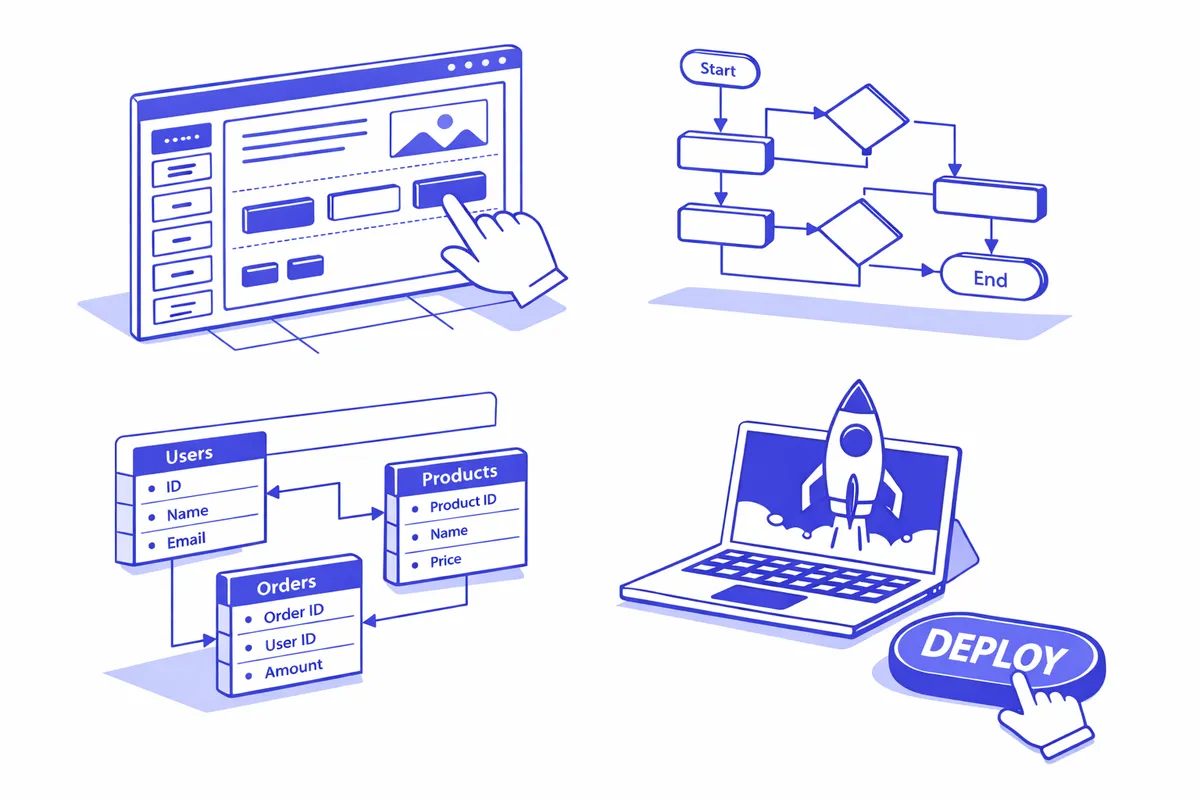
2. Architecture and data model design. Before building anything, we design the data model and create wireframes for the key user flows. Getting the data architecture right before configuration begins prevents the expensive rebuilds that follow a poorly structured start. You review and approve the architecture before we proceed.
3. Build, integration, and configuration. We build the application to the approved specification, setting up integrations with the platforms your organization already uses, automating the workflow steps that do not require human judgment, and configuring user roles so staff access what they need without seeing what they should not.
4. Training and handover. We train your team on operating and maintaining the application, document the data model and workflows, and deliver the application with everything your team needs to manage it independently. Adding fields, adjusting workflows, and generating new report views should not require coming back to us every time.