Your Cart (0)

Your cart is empty

Uptown, Chicago

Legacy System Integration in Uptown

Legacy System Integration for businesses in Uptown, Chicago. We know the neighborhood, the customers, and what it takes to compete locally.

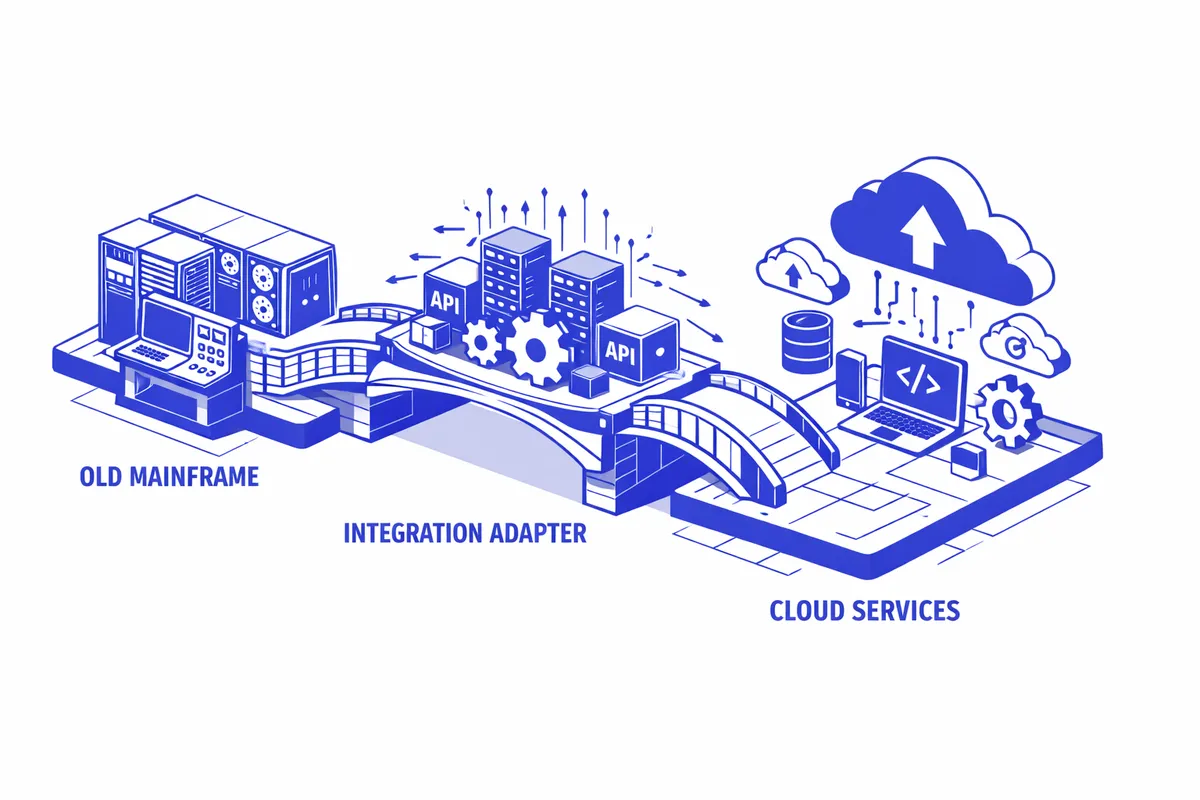
Legacy System Integration in Uptown service illustration

Our Legacy System Integration Services in Uptown

  • Legacy system discovery and capabilities assessment for Uptown's diverse platform landscape
  • Integration architecture design for nonprofit, healthcare, and social service operating environments
  • API wrapper development creating modern API interfaces for legacy systems that lack native API connectivity
  • HMIS integration for housing services organizations connecting legacy case management to federal HMIS reporting requirements
  • HL7 v2 and FHIR integration for medical practices near Weiss Memorial requiring healthcare data exchange connectivity
  • Case management system integration connecting legacy platforms to modern reporting portals, analytics tools, and data exchanges
  • File-based and batch integration for systems that cannot support real-time connection
  • Database-level integration for direct data access on systems with accessible databases
  • Screen scraping and robotic process automation for systems accessible only through their user interface
  • Illinois state agency reporting portal integration for DCFS, DHS, and IDHS-funded Uptown organizations
  • Modern web and mobile interface development on top of legacy system data
  • Data migration planning and execution for organizations planning eventual full system replacement

Industries We Serve in Uptown

Social service and community organizations with legacy case management platforms connect those systems to modern funder reporting portals, analytics tools, and interoperability requirements through integration solutions that do not require replacing the institutional knowledge embedded in years of system configuration.

Medical practices and healthcare adjacent organizations near Weiss Memorial use legacy integration to meet modern healthcare data exchange requirements including FHIR API connectivity, patient portal data feeds, and care coordination platform connections without replacing functioning EHR systems.

Affordable housing and property management organizations connect legacy property management platforms to modern financial reporting tools, tenant communication portals, and HUD reporting requirements through integration that extends the life of established systems while improving operational connectivity.

Immigration and legal services organizations connect older case management or legal practice management systems to modern document management, court date tracking, and government agency portals through integration solutions that preserve case history while adding modern functionality.

Cultural organizations and community institutions with legacy membership management, donor tracking, or program management systems connect those platforms to modern communication tools, analytics systems, and reporting requirements without disrupting the operational continuity those systems support.

What to Expect Working With Us

1. Legacy system discovery. We document the legacy system's actual capabilities: data structures, existing integration points, communication capabilities, and performance characteristics. For undocumented systems, discovery builds the understanding necessary to design reliable integration without assumptions.

2. Integration architecture design. We design the integration approach, selecting from API wrapper, database-level integration, file-based exchange, or RPA automation based on what the legacy system actually supports. Data transformation and error handling are designed explicitly before development begins.

3. Build and testing. We build the integration layer and test against production-representative data. Testing covers normal cases, error conditions, and reconciliation scenarios. For compliance-critical integrations, testing includes compliance scenario coverage.

4. Deployment and ongoing monitoring. We deploy with monitoring active and remain engaged post-launch. Legacy integrations surface unexpected behaviors over time, and sustained monitoring is essential.

Frequently Asked Questions

API-less or poorly documented systems are common in Uptown's social service sector, where platforms purchased during specific funding periods have not received ongoing vendor investment. We approach these systems through multiple avenues. Database direct access allows reading and writing at the database level, bypassing the application layer entirely when the database is accessible. File-based integration uses the export capabilities most legacy systems retain even when their APIs are limited. Screen scraping and RPA automate interactions with the system's user interface. We assess each system's specific capabilities during discovery and select the approach most appropriate to the reliability requirements of the specific integration.

Yes. Connecting legacy case management systems to Illinois DCFS, DHS, and IDHS reporting portals is a common integration pattern for Uptown's funded nonprofit community. The specific approach depends on what reporting format and submission method each portal accepts. Some portals accept structured file uploads that we can automate from legacy system exports. Others have electronic data interchange specifications we can implement as a direct integration. We assess the specific portal requirements during discovery and design the integration approach that meets those requirements given your legacy system's capabilities.

Legacy healthcare integrations must meet the same HIPAA technical safeguard requirements as modern system integrations. Patient data transmitted through integration layers must be encrypted in transit and at rest. Access to patient records through integration points must be logged for audit purposes. Business Associate Agreements must cover every system or service involved in patient data transmission. We design these requirements into the integration architecture as foundational constraints and involve your HIPAA compliance officer in the design review before development begins.

Integration preserves your existing system and builds connectivity between it and modern tools. Your legacy system continues performing its core functions, its historical data remains intact, and the organizational knowledge embedded in its configuration and workflows is preserved. Replacement removes the legacy system and migrates operations to a new platform, which addresses root limitations but carries higher risk, higher cost, and longer timeline. Integration is typically the right starting point because it delivers modern connectivity quickly while providing time to plan a more orderly replacement if and when that becomes appropriate. We help you make this assessment honestly based on your specific system's limitations and the business case for each approach.

Timeline depends heavily on the complexity of the legacy system and the nature of the integration. A straightforward integration connecting a legacy database to a modern reporting portal through a custom connector typically takes six to twelve weeks. More complex integrations involving undocumented legacy systems, multiple integration points, or healthcare compliance requirements take fourteen to twenty-four weeks. Legacy systems contain surprises, and we scope conservatively to account for discoveries that only emerge during implementation.

Yes. This is one of the most valuable and frequently implemented patterns for Uptown organizations. The legacy system continues running unchanged. We build an integration layer that exposes the legacy system's data and functions through a modern API. A web or mobile application connects to that API layer and provides a current user interface. Staff interact with the modern interface, which transparently reads from and writes to the legacy system. The legacy system requires no modification. This approach is particularly effective for organizations where system modification carries high risk but where the user interface has become a significant operational pain point. Learn more about our [legacy system integration services across Chicago](/chicago/legacy-system-integration) or explore other [digital services available in Uptown](/chicago/uptown).

Ready to get started in Uptown?

Let's talk about legacy system integration for your Uptown business.