How We Build Field Service Management for Uptown
Our process starts with an operational audit that maps every step of how your current jobs move from initial call through completion. We interview dispatchers, field technicians, and clients if appropriate. We catalog every point where information gets lost, every category of job that goes wrong more often than others, and every workflow that people have built around the gaps in your current system.
From that audit, we design a platform that reflects how your operation actually works, not how a generic software vendor imagined field service management should work. For Uptown businesses with significant building access requirements, we build work order systems that capture building contact names, access codes, freight elevator schedules, and permitted service hours at the property level, so that information is available before the job is assigned and visible to the technician before they leave.
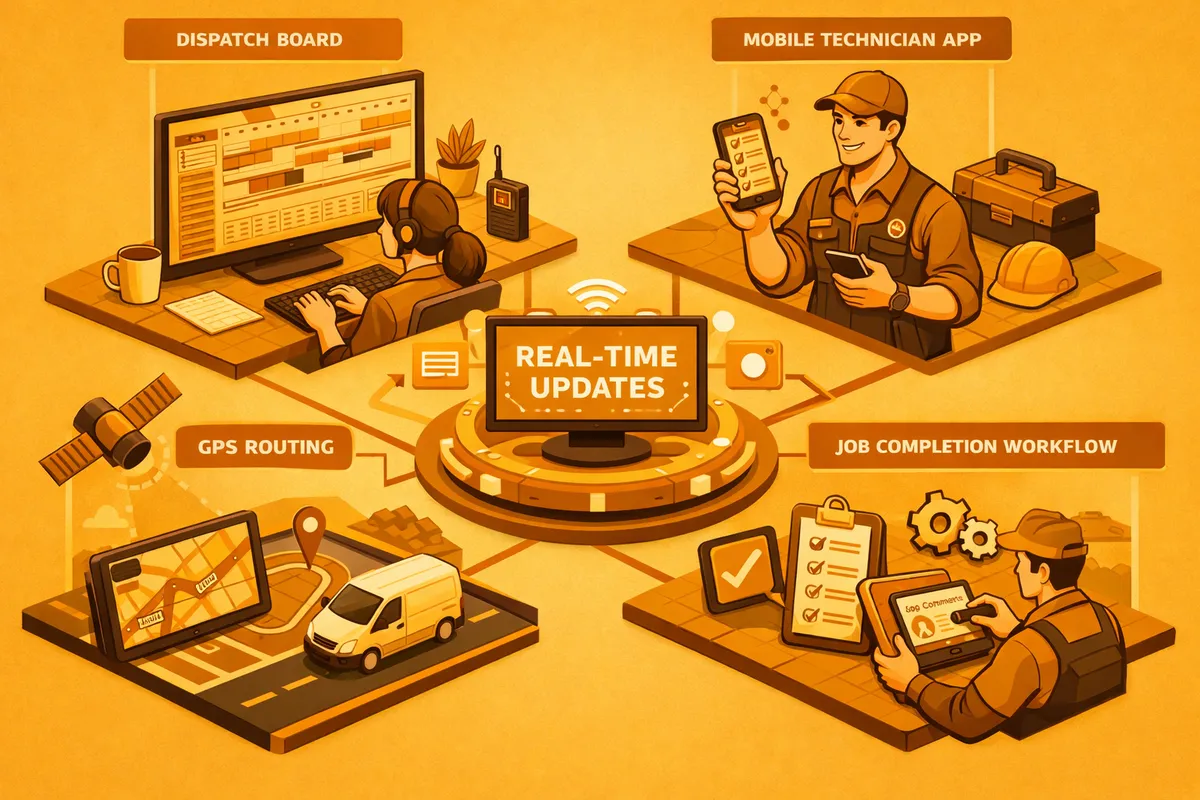
Dispatch and scheduling. We build scheduling tools that account for Chicago traffic reality at Uptown's specific coordinates. A job on Sheridan Road near Montrose Harbor is a different routing problem in the morning versus late afternoon. Dynamic routing that factors in time of day, current conditions on Lake Shore Drive and Broadway, and technician location in real time reduces transit time and gets more jobs done per day without burning out your field team.
Mobile tools for the field. Your technicians access everything they need from a mobile device: job details, equipment history, access instructions, photo and signature capture, parts availability, and the ability to create follow-on service requests on the spot. Offline functionality means the app works in basement utility rooms where cellular signal disappears. Work orders close digitally, feeding invoicing and job history automatically.
Customer communication. Uptown clients receive automated booking confirmations, day-of reminders, and technician-en-route notifications that respect the diversity of the neighborhood. We can configure multilingual notification templates for businesses whose client base includes the Vietnamese, Chinese, Laotian, and East African communities along Argyle Street and through the surrounding blocks.
Industries We Serve in Uptown
Medical equipment and healthcare maintenance providers serving Weiss Memorial Hospital, the medical office corridor on Wilson Avenue, and affiliated clinical practices need FSM systems with preventive maintenance scheduling, equipment asset tracking, and technician certification management.
Property management companies overseeing the residential and commercial portfolio along Sheridan Road, Broadway, and Lawrence Avenue use FSM to manage work orders, coordinate vendor dispatch, and track building maintenance history across dozens or hundreds of units.
Commercial kitchen equipment service companies working the Argyle Street restaurant corridor and the broader Uptown dining community need service records by equipment type, technician routing through the neighborhood, and client communication that works across language differences.
Cleaning and facilities maintenance contractors serving the nonprofit offices, arts venues, and commercial properties throughout Uptown use FSM to manage recurring schedules, verify job completion, and document service for clients with specific reporting requirements.
Nonprofit and social service facilities organizations managing Heartland Alliance and similar properties need vendor coordination tools that track service history, manage warranties, and generate documentation for operational and grant reporting purposes.
What to Expect Working With Us
1. Operational audit and territory mapping. We document your current dispatch and scheduling workflows, map your service territory across Uptown and surrounding neighborhoods, and identify the specific operational problems costing you jobs and customer relationships. Uptown's building access complexity, traffic patterns, and client diversity are all factored into the audit.
2. System design and mobile application. We design the FSM platform around your specific service model, build the mobile application your field technicians will actually use in the field, and configure the customer communication workflows that keep your clients informed without requiring staff time to manage.
3. Testing with real Uptown conditions. Field technicians test the mobile app on actual Uptown jobs before companywide rollout. Dispatch tests scheduling and routing across your service territory with realistic scenarios including peak traffic on Broadway and access situations at building types you encounter regularly.
4. Launch and sustained support. We launch with your team on the working system, provide hands-on training, and monitor the first operational cycle to catch any adjustments needed. Ongoing support continues as your service area or service mix evolves.