Your Cart (0)

Your cart is empty

Uptown, Chicago

Employee Portals in Uptown

Employee Portals for businesses in Uptown, Chicago. We know the neighborhood, the customers, and what it takes to compete locally.

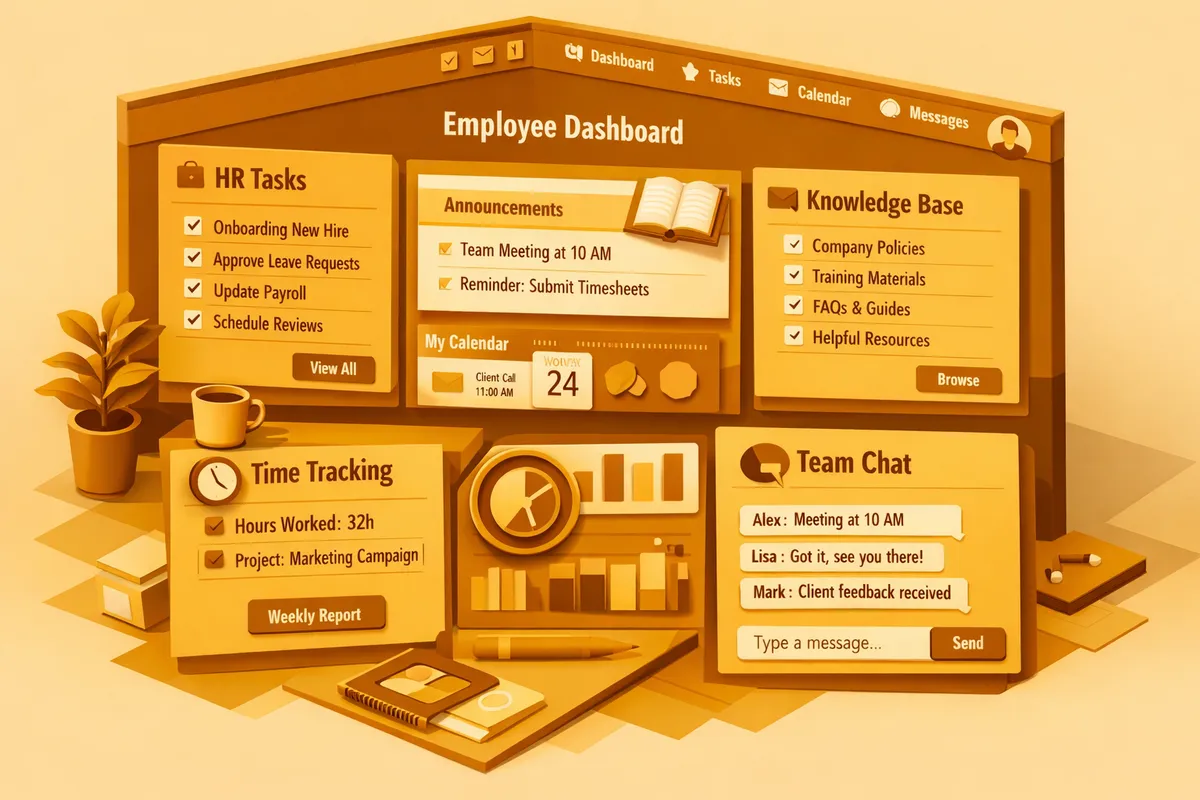
Employee Portals in Uptown service illustration

Our Employee Portal Work in Uptown

  • Custom portal architecture designed around your specific organizational structure and workforce types
  • HR self-service modules including PTO requests and approvals, benefits enrollment, pay stub access, and direct deposit management
  • Credential and certification tracking for medical practices and healthcare adjacent organizations, including expiration alerts and renewal workflow
  • Shift scheduling and availability management for event staff, restaurant workers, and hourly healthcare support roles
  • Field staff interfaces for case managers, outreach workers, and program staff who need mobile access while working away from the office
  • Onboarding and pre-boarding workflows with digital document collection and policy acknowledgment tracking
  • Performance review cycles and supervision documentation for organizations with structured supervisory requirements
  • Internal communications and announcement management for organizations with staff across multiple sites or community locations
  • Illinois and Chicago employment law compliance tracking including paid sick leave accrual and I-9 management
  • Multi-language support for organizations with staff working in Vietnamese, Chinese, Spanish, Amharic, and other languages
  • Integration with ADP, Paychex, BambooHR, and other payroll and HRIS platforms common among Uptown employers
  • Mobile-responsive and field-accessible design for staff who are rarely at a desk

Industries We Serve in Uptown

Nonprofits and social service organizations give staff centralized access to HR functions, caseload information, training requirements, and internal communications in a portal that works from the field as well as the office. Staff retention in social services is improved when employees feel operationally supported, and a well-designed portal is part of that support infrastructure.

Medical and behavioral health practices near Weiss Memorial use portals to coordinate credentialing, scheduling, compliance training, and standard HR functions across clinical and administrative staff roles with different requirements and different workflow patterns.

Music venues and event operations along Broadway manage complex event staff rosters with portals that handle shift assignment, availability confirmation, timesheet submission, and staff communication around the event calendar at the Aragon Ballroom, Riviera Theatre, and Green Mill.

Restaurants and food service businesses on Argyle Street and the Wilson Avenue corridor use portals for shift scheduling, availability management, time tracking, and the compliance documentation that Illinois and Chicago employment law requires for hourly workers.

Affordable housing and property management organizations coordinate maintenance staff, property managers, and administrative roles across multiple Uptown locations with portals that track work orders, maintenance schedules, and workforce logistics.

What to Expect Working With Us

1. Discovery and workflow mapping. We interview HR managers, supervisors, and staff across roles and locations to map every HR workflow currently executed manually. We identify automation opportunities, compliance gaps, and user experience priorities before any design begins.

2. Design and architecture. We produce wireframes, workflow diagrams, and role-based access structures reviewed by your HR and leadership teams before development begins.

3. Phased build and testing. Core HR self-service functionality launches first. User acceptance testing involves staff from each role type. Feedback is incorporated before each phase goes live.

4. Launch, training, and ongoing support. We train HR and administrative staff on managing the portal, including content updates and common configuration changes. Post-launch monitoring runs for sixty days to address adoption gaps and technical issues.

Frequently Asked Questions

For organizations with staff who work primarily in languages other than English, we build multi-language portal interfaces that allow the same system to be used effectively by staff across language groups. This includes translated navigation, form labels, policy documents, and system messages, not just translation of static content but of the functional interface that staff use daily. For organizations with Vietnamese, Chinese, Spanish, Amharic, or other language-dominant staff groups, this capability is a meaningful factor in portal adoption and daily usability.

Yes. Credentialing and certification management is a specific portal capability we build for medical practices and healthcare adjacent organizations. The portal tracks each staff member's credentials, certifications, and required continuing education, generates alerts before expiration deadlines, initiates renewal documentation workflows, and maintains audit-ready records of credential history. For a medical practice near Weiss Memorial with clinical staff whose credentials must be maintained for billing and regulatory compliance, this capability eliminates the spreadsheet tracking that currently creates compliance risk.

Illinois and Chicago employment law creates specific tracking obligations that we build into portal workflows. Chicago's paid sick leave ordinance requires accurate tracking of accrual, carryover, and usage. The Illinois Human Rights Act creates documentation requirements around performance management and termination processes. I-9 re-verification tracking ensures timely action on expiring work authorization. New hire reporting requirements for Illinois employers can be automated through payroll system integration. We review applicable requirements with your HR team during the discovery phase and design compliance workflows before the portal is built.

Event staff at Uptown's music venues work variable hours tied to the event calendar, often as part-time or gig-structured employment relationships. A portal for these workers handles availability submission, shift assignment notification, schedule visibility, timesheet submission, and pay access in a mobile-friendly interface accessible from the devices these workers actually use. For venue managers, the portal provides crew availability visibility for scheduling, shift confirmation tracking, and hours aggregation for payroll processing without requiring manual compilation from email and text messages.

Yes. Integration with your existing payroll platform is a standard component of employee portal development for Uptown organizations. We integrate with ADP Workforce Now, Paychex, Gusto, BambooHR, Rippling, and most platforms with API connectivity. Integration ensures that approved time records, PTO balances, and HR data flow accurately to payroll without requiring dual-entry. For organizations with legacy or nonprofit-specific HR systems, we assess integration options during discovery and design the appropriate connectivity approach.

A focused portal covering core HR self-service for a mid-sized organization typically takes eight to twelve weeks from kickoff to launch. Portals with complex role structures, multi-language support, credential tracking, and shift scheduling modules for diverse workforce types take fourteen to twenty weeks. We phase implementation to deliver usable functionality early. Learn more about our [employee portal development across Chicago](/chicago/employee-portals) or explore other [digital services available in Uptown](/chicago/uptown).

Ready to get started in Uptown?

Let's talk about employee portals for your Uptown business.