Our Document Management Work in Uptown
- Document workflow analysis and taxonomy design for Uptown's organizational types: client file organization for social service agencies, matter-centric structures for legal aid organizations, patient record classification for healthcare providers, and property file organization for housing managers
- Custom DMS platform development or configuration of appropriate enterprise solutions for Uptown's scale and budget
- Document capture and digitization from paper files and shared drives, with reorganization into the new taxonomy during migration
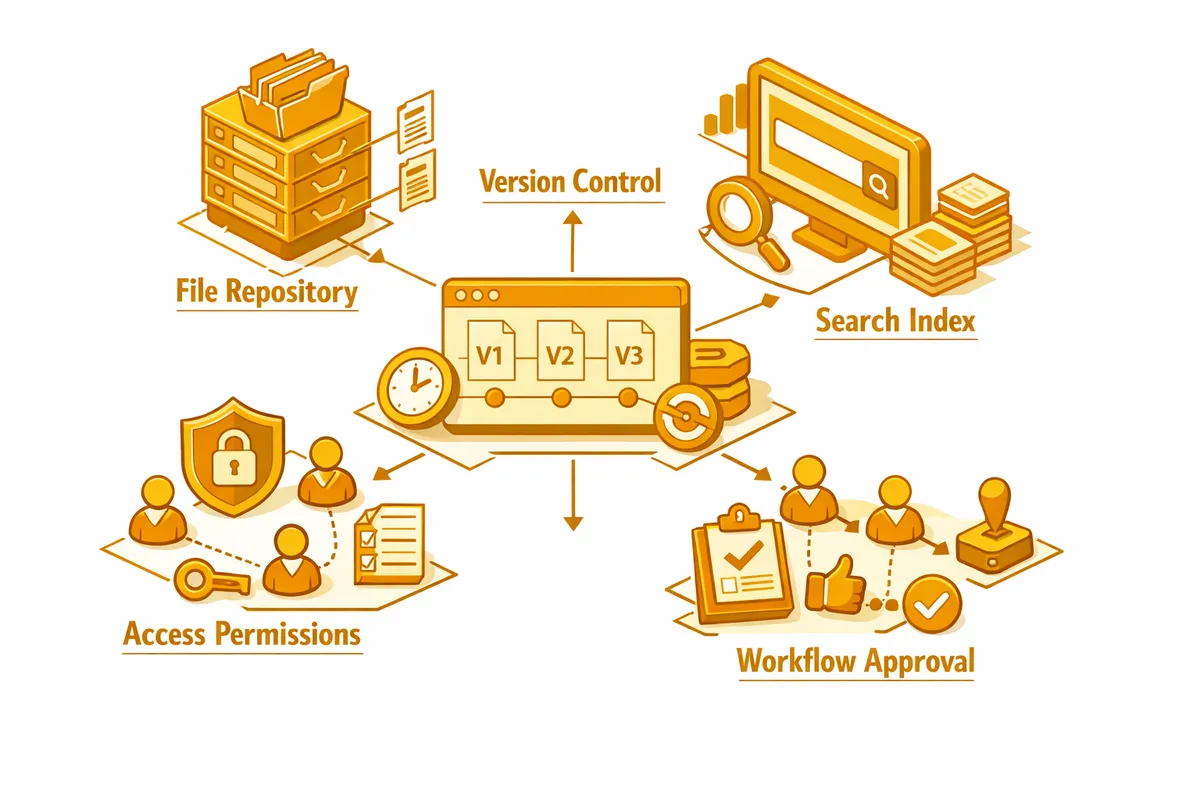
- Full-text search with metadata tagging and attribute-based filtering for rapid document retrieval across large file collections
- Version control with complete history for frequently updated documents like case plans, lease agreements, and treatment plans
- Role-based access controls for organizations with complex confidentiality requirements, including ethical wall implementation for legal organizations
- Retention policy enforcement aligned with Illinois and federal regulatory requirements, automated to prevent both premature destruction and excessive accumulation
- HIPAA-compliant document architecture for Weiss Memorial-adjacent medical practices and behavioral health providers
- Multi-language document organization for organizations serving Uptown's Vietnamese, Chinese, Ethiopian, and other language communities
- Integration with case management, EHR, and property management platforms common among Uptown organizations
Industries We Serve in Uptown
Social service and community organizations use document management to organize client files across program areas, enforce access controls appropriate to each program type, and maintain the funder compliance documentation trails that grant audits require. For large nonprofits managing hundreds of active client cases, searchable document repositories eliminate the time staff spend hunting for records.
Medical and behavioral health practices near Weiss Memorial use HIPAA-compliant document management for patient records, referral documentation, clinical notes, and insurance correspondence. Proper document management in healthcare is not optional; it is a compliance requirement with specific standards for access, audit, and retention.
Legal aid and immigration services organizations along the Argyle corridor and throughout Uptown use document management to organize case files, enforce client confidentiality at the document level, and maintain the chain of custody for immigration documents and legal correspondence that cannot be misplaced without serious consequences.
Affordable housing and property management organizations use document management to maintain unit files, lease documentation, inspection records, maintenance histories, and tenant correspondence in a searchable, version-controlled system accessible to property management staff while maintaining appropriate tenant privacy.
Cultural and advocacy organizations use document management to maintain organizational records, grant documentation, program records, and institutional history in a way that survives staff turnover and remains accessible for ongoing operations and organizational memory.
What to Expect Working With Us
1. Document audit and taxonomy design. We audit your existing document environment, catalog document types and volumes, map compliance requirements, and design the organizational taxonomy that will structure the new system. For regulated organizations in Uptown, compliance mapping happens here.
2. System design and architecture. We design access control structures, retention policies, workflow automation, and integration architecture. Compliance requirements are built into the system before development or configuration begins.
3. Migration and implementation. We migrate existing documents into the new taxonomy during the transition, reorganizing rather than simply copying. Core implementations with the most compliance-critical document types are typically live within eight to sixteen weeks.
4. Training and ongoing management. Staff training, adoption support, and a post-launch period for refinement. We document the taxonomy, access control logic, and retention policies so your organization can maintain the system as its document needs evolve.