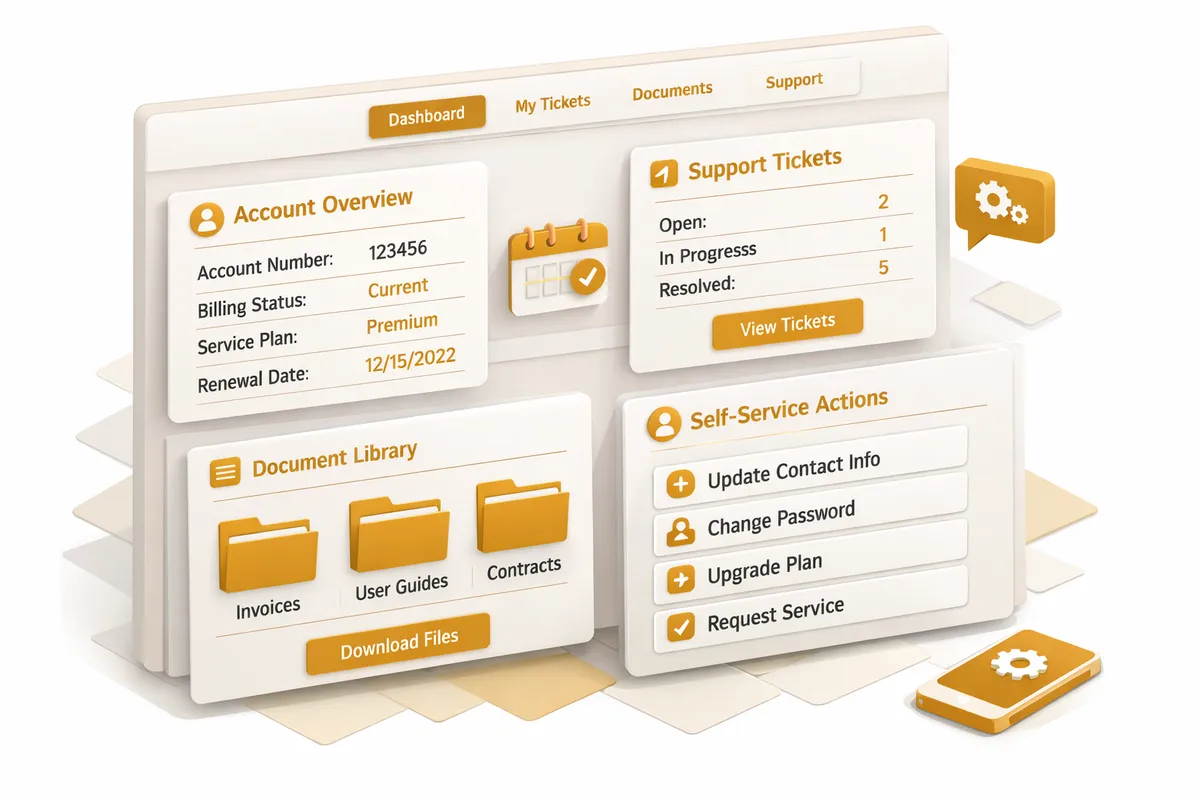
Our Customer Portal Work in Uptown
- Client journey mapping identifying the self-service interactions your Uptown clients and program participants need most
- Portal architecture designed for Uptown's sector mix: social services, healthcare, property management, and professional services
- Secure authentication with multi-factor options and SSO integration for organizational systems
- Multi-language portal support for organizations serving Uptown's Vietnamese, Chinese, Laotian, Ethiopian, and other language communities
- Document access, upload, and management with role-based visibility appropriate to each client's program enrollment
- Appointment scheduling and confirmation for medical practices and service organizations
- Maintenance request submission and status tracking for Uptown property management organizations
- Outcome and progress tracking portals for program participants enrolled in employment, housing, or behavioral health services
- Rent and billing payment processing for housing and professional service organizations
- Communication tools enabling secure messaging between clients and staff
- Integration with Yardi, AppFolio, and property management platforms for Uptown real estate organizations
- HIPAA-compliant architecture for medical and behavioral health providers
- Accessibility design meeting WCAG standards for populations with varying digital literacy
Industries We Serve in Uptown
Social service and community organizations provide clients with portals that offer program enrollment status, appointment calendars, document access, and action plan tracking. Portals reduce office visit volume for routine interactions while keeping clients connected to their services between appointments.
Medical and behavioral health practices give patients access to appointment scheduling, intake forms, clinical results, billing, and secure communication with providers. Practices near Weiss Memorial serving Uptown's residential population benefit from portals that reach patients across language and technology access differences.
Affordable housing and property management organizations provide tenants with portals for maintenance requests, lease documents, rent payment history, and management communication. For organizations managing large affordable housing portfolios in Uptown, the operational efficiency of tenant self-service is directly proportional to portfolio size.
Employment and workforce service organizations provide program participants with portals showing their job placement status, scheduled appointments, required documents, and action items. Portals keep participants engaged between service contacts and reduce the administrative burden of routine status inquiries.
Legal aid and advocacy organizations serving Uptown's immigrant communities provide clients with portals for case status, required documentation, appointment scheduling, and attorney communication. Secure document exchange through a portal reduces the logistical burden on both clients and legal staff.
What to Expect Working With Us
1. Discovery and journey mapping. We map the client journeys your portal needs to support, identify the highest-value self-service interactions, and define integration requirements with your existing systems. For healthcare and social service organizations, we map compliance requirements at this stage.
2. Architecture and design. Portal structure, data model, authentication approach, and integration architecture are designed and reviewed before development begins. For organizations serving non-English-speaking populations, language support requirements are defined at this stage.
3. Implementation. Phased delivery with highest-value features first. Core portals with authentication, document access, and account management are typically live within ten to fourteen weeks.
4. Launch and optimization. Post-launch adoption tracking, user feedback collection, and ongoing refinement. We build usage analytics into the portal so you can identify which features drive engagement and which need improvement.