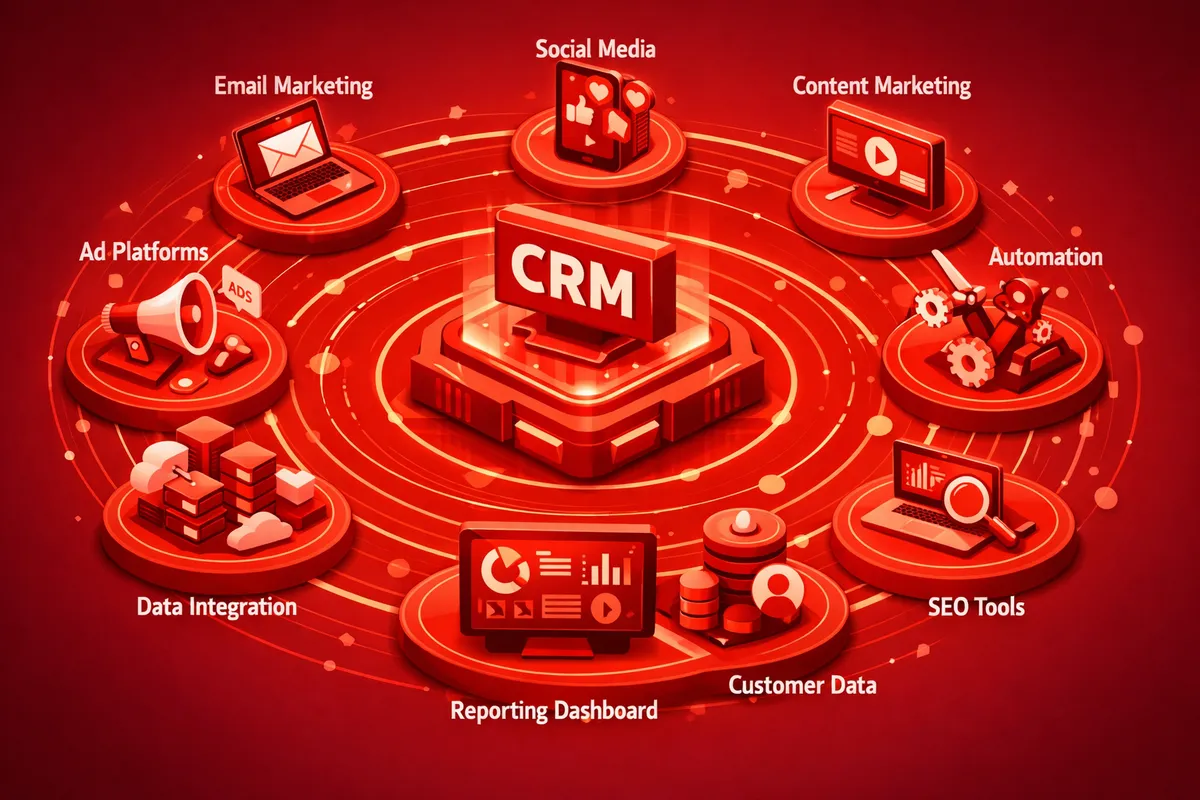
Platform Recommendations for Uptown Businesses
The platform selection for Uptown businesses prioritizes ease of use, low administrative overhead, and affordability. Many Uptown business owners manage every aspect of their operation personally. The CRM cannot add complexity that consumes hours of time the owner does not have.
Mailchimp for restaurants and food businesses with simple communication needs. Easy email template creation, basic automation, and affordable pricing for list sizes under 5,000. Integrates with most POS systems for basic customer data sync.
Klaviyo for retail and e-commerce businesses with Shopify integration. Stronger segmentation and automation capabilities than Mailchimp, particularly for behavioral triggers based on purchase history. The cost is higher but justified for businesses generating online revenue that the automation can measurably increase.
HubSpot Starter for service businesses that need CRM and marketing automation in a single platform. Contact management, deal tracking, email automation, and basic reporting in one interface. Appropriate for wellness studios, professional services, and multi-location operations.
Toast Marketing or Square Marketing for restaurants already using these POS platforms. The built-in marketing features leverage existing transaction data without requiring a separate CRM integration. The automation capabilities are simpler than dedicated platforms but sufficient for restaurants that need basic loyalty, re-engagement, and promotional campaigns.
We discourage enterprise platforms for Uptown businesses. The administrative overhead exceeds the benefit for businesses at this scale, and adoption failure rates for enterprise CRM among small businesses exceed 60 percent. Right-sizing the platform to the business ensures the investment produces returns.
Automation Architecture
Customer Lifecycle Automations
Every Uptown business benefits from three core lifecycle automations that run continuously once configured.
Welcome sequence: triggered when a new contact enters the system. Three to five messages over two weeks introducing the business, highlighting what makes it unique, and presenting an offer that encourages a second visit or purchase. For an Argyle Street restaurant, the welcome sequence might include the restaurant's origin story, the chef's favorite dishes, and a 10 percent discount on a return visit.
Re-engagement sequence: triggered when a customer has not interacted within a defined period. For restaurants, this period is typically four to six weeks. For retail, six to eight weeks. For service businesses, based on the typical booking interval. The re-engagement message acknowledges the gap without being pushy and presents a specific reason to return: a new menu item, a seasonal product, or a limited-time offer.
Loyalty milestone: triggered when a customer reaches a spending or visit threshold. Automatic recognition with a thank-you message and a reward creates positive reinforcement that encourages continued patronage.
Event-Triggered Automations
Uptown businesses near entertainment venues benefit from event-triggered automations that activate based on external calendars. When a concert or event is confirmed at a nearby venue, the automation sends targeted promotions to customers who have previously visited on event nights. The timing, content, and offer are pre-configured. The only manual step is confirming the event trigger.
What to Expect Working With Us
1. Discovery. We assess current customer data, communication tools, and business goals. For Uptown businesses, we pay special attention to the traffic patterns, customer segments, and competitive dynamics specific to each corridor.
2. Strategy. Platform recommendation, automation architecture, data integration plan, and implementation timeline. The strategy is sized to the business and budget.
3. Implementation. Three to six weeks from strategy approval to live automation, depending on platform complexity and data integration requirements.
4. Training and support. Hands-on training for the business owner or manager on the selected platform. Documentation for ongoing management. Ninety days of monitoring and optimization.