Your Cart (0)

Your cart is empty

Uptown, Chicago

Autonomous Workflow Agents in Uptown

Autonomous Workflow Agents for businesses in Uptown, Chicago. We know the neighborhood, the customers, and what it takes to compete locally.

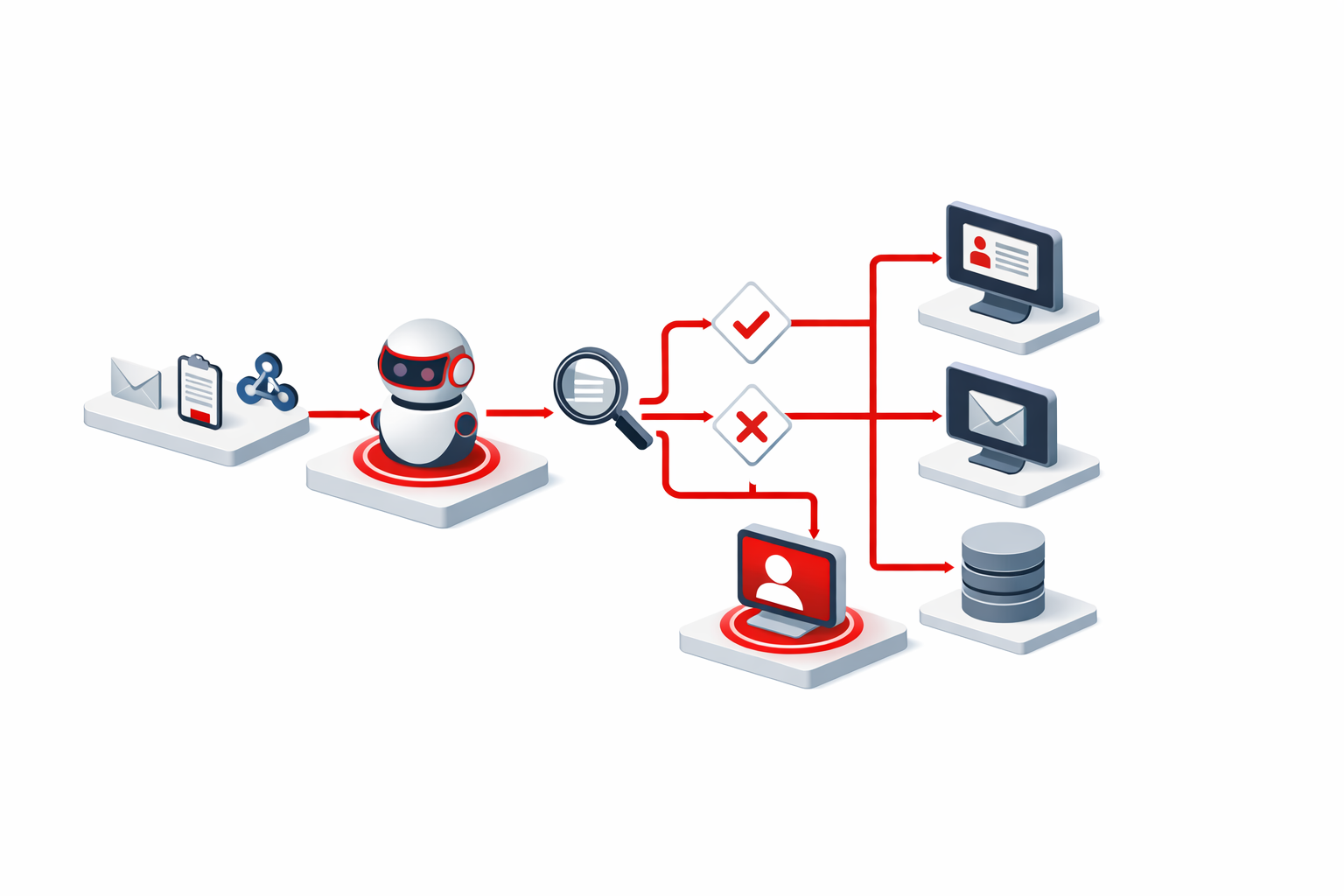
Autonomous Workflow Agents in Uptown service illustration

Our Autonomous Workflow Agent Work in Uptown

  • Client intake and service routing for Uptown nonprofits: agents that receive inquiries, classify them by service type and urgency, gather necessary information, and route to the right case worker with a briefing prepared
  • Insurance prior authorization workflows for medical offices near Weiss Memorial Hospital: agents that identify pending authorizations, assemble required documentation, submit to payers, and escalate denials with appeal documentation pre-drafted
  • Appointment scheduling and follow-up automation for Uptown healthcare practices: confirmation, reminder, and post-visit follow-up sequences that run without manual triggers
  • Delivery order coordination and conflict detection for Argyle Street and Broadway corridor restaurant operators
  • Event operations coordination for Aragon Ballroom, Riviera Theatre, and other Uptown venues: artist advance communications, staff scheduling confirmation, and box office status monitoring
  • Grant application tracking for Uptown nonprofits: deadline monitoring, document checklist management, and reporting reminder sequences
  • Donor follow-up sequences for Uptown nonprofits: automated acknowledgment, pledge follow-up, and lapsed donor re-engagement workflows
  • Volunteer coordination for community organizations: shift confirmation, reminder, and no-show escalation workflows

Industries We Serve in Uptown

Nonprofits and social service organizations along Lawrence, Wilson, and throughout the Uptown corridor automate client intake, case routing, grant tracking, donor follow-up, and volunteer coordination. Agents handle the predictable administrative work so case workers and program staff focus on direct service delivery.

Healthcare and medical practices near Weiss Memorial Hospital and along Sheridan Road automate prior authorization, appointment management, patient follow-up, and insurance documentation workflows. Clinical staff focus on patients rather than insurance paperwork.

Restaurants and food service operators on Argyle Street and Broadway automate order coordination, reservation confirmation, and inventory alert workflows. Owner-operators running lean teams get operational coverage they could not otherwise afford.

Music venues and event operators at the Aragon Ballroom, Riviera Theatre, and Green Mill automate artist advance communications, staff scheduling confirmation, and event logistics coordination.

Immigrant services organizations serving Uptown's Vietnamese, Cambodian, Ethiopian, and other communities automate intake, service routing, and follow-up in multi-language contexts, with escalation rules that surface cases requiring bilingual staff to appropriate team members.

What to Expect Working With Us

1. Process mapping and automation assessment. We walk through your highest-volume repetitive workflows step by step, documenting every decision point, data source, and exception path. For each step we determine what can be fully automated, what benefits from AI judgment, and what genuinely requires human review. You see exactly what the agent will and will not handle before anything is built.

2. Agent design and system integration. We build the agent with access to your existing platforms: your CRM, your scheduling system, your email, your case management software. The agent works inside the tools your team already uses rather than requiring parallel workflows.

3. Incremental deployment with human oversight. We deploy the agent handling routine cases first with your team monitoring its decisions. As the system proves reliable, we expand its autonomy progressively. This approach reduces risk and builds trust before the agent operates fully independently.

4. Monitoring, audit logs, and performance review. Every action the agent takes is logged with its reasoning documented. Monthly reviews identify new automation candidates and tune decision thresholds based on real operational data from your Uptown context.

Frequently Asked Questions

The best candidates share three characteristics: they occur frequently, they follow consistent patterns most of the time, and the cost of handling them manually is disproportionate to their complexity. Client intake routing, grant deadline tracking, donor acknowledgment, and volunteer shift confirmation all qualify. If your team handles the same workflow more than twenty times per week and the process has definable rules for most cases, it is a strong automation candidate. We assess your specific workflows during the discovery phase and rank opportunities by time saved per dollar invested.

Data security and appropriate access controls are built into the agent architecture from the start. The agent accesses only the systems and data it needs for each specific workflow, with access credentials scoped to the minimum required. For healthcare workflows near Weiss Memorial Hospital, we design with HIPAA requirements as foundational constraints. For nonprofit case management involving vulnerable populations, we implement data handling practices consistent with your confidentiality policies. Every agent action is logged with complete audit trails that document what data was accessed and what decisions were made.

The agent pauses the workflow, logs the full context of what happened and why it could not proceed, and escalates to the appropriate team member. The team member receives a clear summary: what the inquiry or case is about, what the agent attempted, and specifically what requires human judgment. Your clients or customers are not left in limbo. The next step is always clear, and the escalation includes everything the human needs to resolve it without starting over.

A single workflow automation covering one complete process typically takes six to ten weeks from kickoff to production deployment. We deploy incrementally: the agent handles its first live cases with your team monitoring closely, then we expand its autonomy as it demonstrates reliable performance. Most Uptown organizations see the agent handling real cases in production within the first four to six weeks, with full autonomy established by week ten. The timeline reflects your specific process complexity and the number of systems the agent needs to access.

This concern comes up consistently, and it is worth addressing directly. Autonomous agents handle the repetitive administrative work that consumes staff time without requiring their expertise. For a case worker at a social service organization on Lawrence Avenue, that means less time on data entry and scheduling follow-ups and more time on the direct client interactions that are actually why they took the job. For a medical receptionist near Weiss, it means less time chasing prior authorizations and more time supporting patients who need help navigating the clinic. Agents do not replace staff. They remove the work that was least valuable to the staff members doing it.

Yes. Uptown's service organizations work in English, Vietnamese, Khmer, Thai, Amharic, Tigrinya, and other languages depending on their client populations. Agents can be configured to handle multi-language intake, route to bilingual staff based on language identified in the inquiry, and generate communications in the appropriate language for standard workflows. We design the language routing logic during the process mapping phase based on your organization's specific language capabilities and the languages your clients use. Learn more about our [autonomous workflow agents across Chicago](/chicago/autonomous-workflow-agents) or explore other [digital services available in Uptown](/chicago/uptown).

Ready to get started in Uptown?

Let's talk about autonomous workflow agents for your Uptown business.