How We Build Accounting Automation for Uptown
Discovery and process mapping. We spend the first one to two weeks with your team understanding how your books actually get done today. For a restaurant, that includes sitting with the person who closes the POS nightly, reviewing the reconciliation workbook, and mapping every manual touch. For a nonprofit, it includes reviewing current grant tracking, fund allocation spreadsheets, and the year-end close workflow. We do not make recommendations until we understand the actual state, not the theoretical one.
Platform selection. We work across QuickBooks Online, QuickBooks Desktop, Xero, NetSuite, and Sage Intacct. For smaller Uptown restaurants, QuickBooks Online with the right integrations is usually the right answer. For nonprofits with complex grant reporting, Sage Intacct is often worth the jump. For growing hospitality groups with multiple locations, NetSuite starts to make sense. We recommend based on your actual operation, not on platform loyalties.
Integration build. We connect your accounting system to the other platforms that produce financial events: Toast, Square, Clover, Lightspeed for restaurants; rent rolls and property management software for real estate; Epic or Athena for medical practices; grant management platforms for nonprofits. Each integration includes error handling, reconciliation rules, and exception alerts.
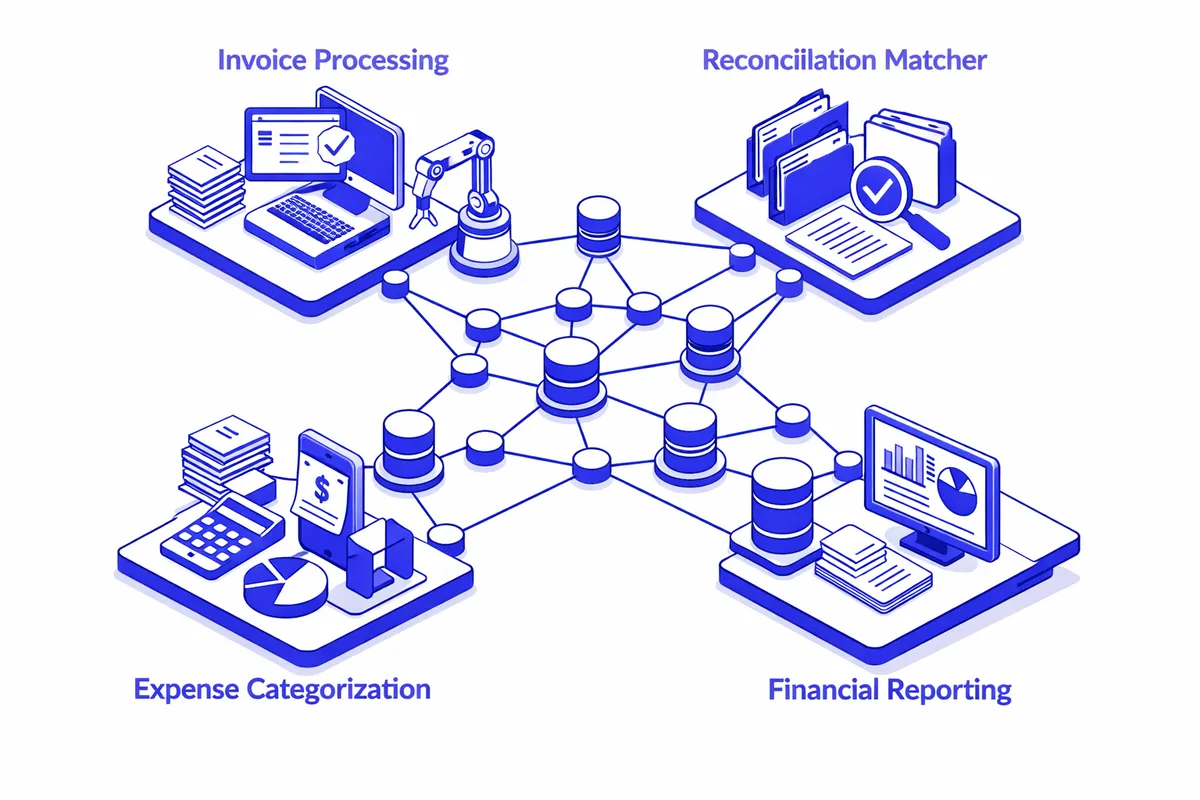
Automated reconciliation and reporting. Bank feed reconciliation runs nightly. Sales reconciliation runs at close. Grant-by-grant reporting generates on demand. Financial dashboards update in real time. Month-end close goes from a multi-day ordeal to a review process that confirms what is already correct instead of assembling it from scratch.
Training and handoff. We train your team on the new workflow before go-live and stay engaged through the first full accounting period so any issues with live data get resolved immediately. You end up with automation your team understands and can operate independently.
Industries We Serve in Uptown
Argyle Street restaurants and food businesses. Phở counters, banh mi bakeries, and Thai, Lao, and Cambodian kitchens in the corridor use automation for daily sales reconciliation across POS, delivery platforms, and cash. Sun Wah BBQ-scale operations and smaller family-run businesses both benefit from automated tip pool calculation, daily deposit reconciliation, and inventory-driven COGS tracking.
Music venues and entertainment operators. The Aragon Ballroom, the Riviera Theatre, and the Green Mill need automated ticket revenue reconciliation across platforms like Ticketmaster, DICE, and Eventbrite, along with Chicago amusement tax calculation and settlement, artist guarantee tracking, and rider expense allocation. Legacy venues have complex revenue streams that manual processes routinely miscalculate.
Nonprofits and social service agencies. Heartland Alliance, Asian Americans Advancing Justice Chicago, and smaller community nonprofits serving Uptown's diverse immigrant populations need automated grant tracking, fund accounting, functional expense allocation, and audit trail documentation. Nonprofit automation is specifically designed to reduce administrative burden so more program time goes to program work.
Multi-family real estate in the Sheridan and Broadway corridors. Building owners and property managers operating along Sheridan Road lakefront high-rises, Buena Park courtyard buildings, and Uptown's vintage apartment stock use automation for rent roll reconciliation, maintenance cost allocation, expense categorization by property, and owner statement generation.
Medical practices near Weiss Memorial Hospital. Clinics, specialty practices, and multi-provider groups in the corridor use automation for insurance billing reconciliation, patient AR management, referral tracking, and provider compensation calculation. Healthcare accounting is uniquely complex and automation pays back quickly.
Legacy hospitality and small hotels. Operators like the Abbott Hotel and smaller Uptown hospitality properties use automation for night audit reconciliation, OTA commission tracking across booking channels, and housekeeping labor cost allocation.
Small manufacturing and creative trades. The businesses operating west of Broadway in the small manufacturing and warehousing corridor use automation for AP workflow, three-way PO matching, and job costing across projects.
What to Expect Working With Us
1. Discovery and audit. We spend one to two weeks understanding your current process, software stack, transaction volumes, and pain points. We review your chart of accounts, current software configuration, and the specific workflows that consume the most time. We give you a clear picture of where automation creates the most value.
2. Roadmap and ROI. We deliver a prioritized automation plan with specific time savings and ROI estimates for each initiative. We sequence work to deliver measurable wins within 60 days while building toward comprehensive automation. Options are presented at multiple investment levels so you can make an informed starting decision.
3. Implementation. We configure integrations, build reconciliation rules, set up automated reporting, and configure tax automation. All work happens in your existing accounting environment with real test cases drawn from your transaction history. Training for your team happens before go-live.
4. Ongoing support. Once you are running, we stay available for the first full accounting period to address any issues that emerge with live data. Longer-term support arrangements keep your automation current as tax rules change, new software is added, and new business lines come online.