How We Build UI/UX Design for Ukrainian Village
Our design process for Ukrainian Village projects starts with the neighborhood itself. That means recruiting research participants from the actual customer and staff communities of Ukrainian Village businesses, not from a general Chicago user panel. A yoga studio near Smith Park serves a residential customer base with specific habits and schedules that differ from a Lincoln Park member base. Understanding those specifics requires research conducted with the right participants, not a generic user pool.
Discovery begins with an audit of existing digital touchpoints, from booking systems to e-commerce to internal staff tools. We review available analytics, interview operators and staff about where digital friction creates real problems, and map the current user journey from the customer's perspective. For Ukrainian Village businesses with physical locations on Chicago Avenue, Damen Avenue, or Division Street, we often conduct observational research on site, understanding how customers move from the street into the store and how their digital interactions connect to that experience.
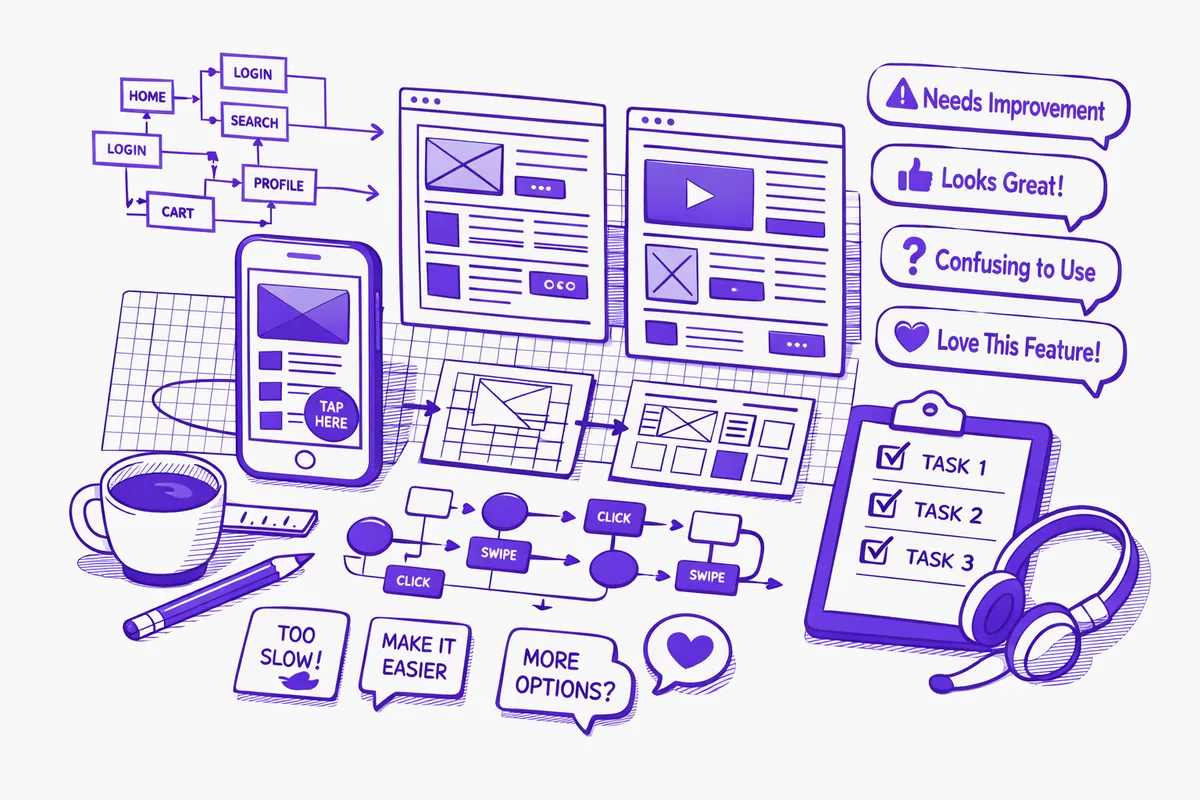
From discovery we move to information architecture, establishing how the product is organized before any visual design begins. Wireframes follow, allowing Ukrainian Village operators to review structure and flow before the expensive high-fidelity work starts. We test wireframes with real participants from the neighborhood to catch structural problems early. High-fidelity design and interactive Figma prototypes then allow a final validation round before development begins.
Industries We Serve in Ukrainian Village
Independent coffee shops and cafes on Chicago Avenue and Damen Avenue need digital products that match the care they put into their physical space. We design ordering interfaces, loyalty program experiences, and catering inquiry flows for Ukrainian Village coffee operators whose customers make daily decisions between them and the next option down the block. The design work addresses the gap between a beautifully built physical space and a generic-feeling digital interaction.
Restaurants and bars on Division Street and the surrounding blocks operate on slim margins and high volume, where a friction point in an online reservation or a delivery platform integration costs real revenue across hundreds of weekly interactions. We design reservation flows, menu interfaces, and event booking experiences for Ukrainian Village hospitality operators who need digital tools that perform reliably during the evening service rush on a Damen Avenue Friday.
Boutique retail in Ukrainian Village competes on curation, relationship, and neighborhood identity. We design e-commerce and in-store digital experiences for retailers whose value proposition is exactly what distinguishes them from national chains, and who need a digital presence that communicates that distinction rather than defaulting to a template that looks identical to every other small retailer's Shopify install.
Design studios and creative firms operating in Ukrainian Village are simultaneously building client-facing work and managing their own digital presence and internal tools. We design client portal experiences, project communication interfaces, and proposal workflows for Ukrainian Village creative businesses that understand good design from the inside and need a design partner who can meet that standard for their own operations.
Yoga, fitness, and wellness studios near Eckhart Park and Smith Park serve a residential customer base building weekly routines. We design class booking systems, membership management interfaces, and instructor-facing tools for Ukrainian Village wellness operators whose retention depends on removing friction from the recurring decision to come back. A booking flow that takes 90 seconds instead of four minutes makes a measurable difference in class fill rates.
Salons and personal care businesses in Ukrainian Village book through a combination of phone, text, and whatever platform the owner set up when they opened. We design appointment booking interfaces, client communication tools, and staff scheduling systems for Ukrainian Village salons whose current digital setup creates unnecessary coordination work and whose customers expect the same ease of booking they get from larger chains.
What to Expect Working With Us
1. Discovery and research. We begin by understanding your business, your customers, and the specific Ukrainian Village context in which they interact with your digital product. This means reviewing whatever analytics exist, interviewing you and your staff about real operational problems, and recruiting research participants from your actual customer population. For Ukrainian Village businesses with physical locations, we often spend time in the space to understand how the digital experience connects to the physical one. Discovery produces a research summary and a documented current-state user journey that frames every subsequent design decision.
2. Information architecture and wireframes. Before any visual design, we establish structure. What does the navigation support? Where do the key user tasks live? How does a new customer find what they need without already knowing how the system works? Wireframes make these structural decisions reviewable and testable before the expensive high-fidelity work begins. We share wireframes with you and, where feasible, test them with Ukrainian Village customers to catch structural problems while changes are still inexpensive.
3. High-fidelity design and prototyping. Pixel-precise interfaces built in Figma, reflecting the visual identity and operational context of your Ukrainian Village business. Interactive prototypes allow stakeholders and test participants to experience the product before development begins. Design systems ensure that every component is consistent, documented, and ready for the development team to build from without ambiguity.
4. Testing, handoff, and implementation support. We test prototypes with real users matching your target customer population. Findings are incorporated before handoff. Developer handoff documentation in Figma includes annotated components, spacing specifications, and interaction notes that reduce the gap between the design and the built product. We remain available during implementation to answer developer questions and review built interfaces against design intent, preventing the drift that erodes UX quality between design and launch.