How We Build RAG Systems for Ukrainian Village
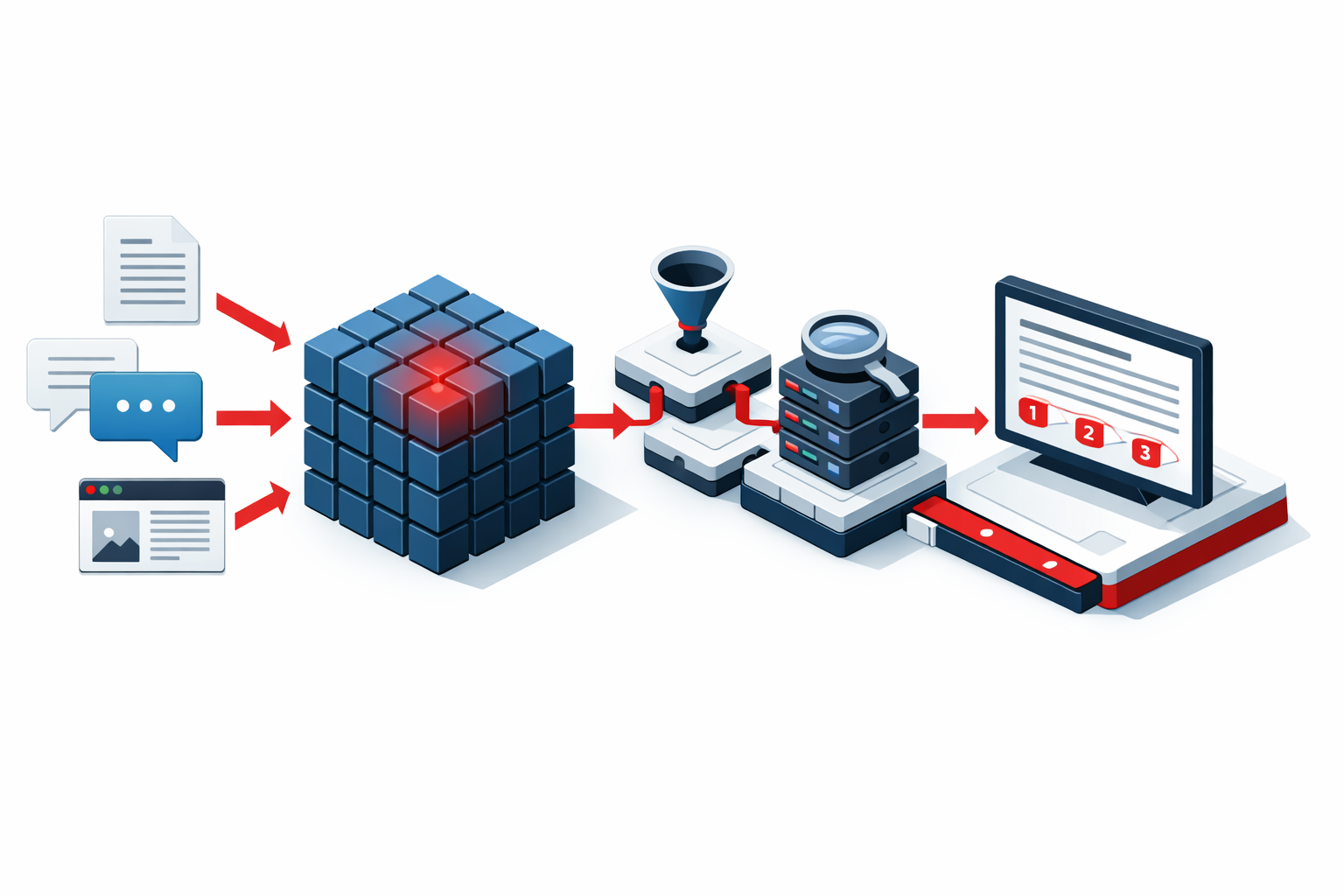
We start with a comprehensive knowledge audit. We interview the owner and key team members about where institutional knowledge currently lives: which folders contain the important documents, which email threads hold the relationship history, which spreadsheets track the operational data, and which knowledge exists only in people's heads. Most Ukrainian Village businesses discover during this audit that they have more documented knowledge than they thought, and more critical knowledge that is only in someone's head than they are comfortable with.
From the audit, we build the indexing architecture. We connect to your existing tools: Google Drive, Slack, email, Notion, Airtable, your project management platform, your point-of-sale system, and any other source where relevant knowledge lives. We configure the indexing to capture documents, email threads, messages, and structured data records in a unified, searchable index.
We define the query logic specific to your business type. A coffee shop needs queries that surface customer preference history and supplier performance records. A design studio needs queries that surface client aesthetic history, past deliverable examples, and relationship context. A boutique needs queries that surface customer purchase history, sourcing relationship history, and product performance records. Each business type has a different set of high-value queries that we test and refine before delivery.
Training new team members on the system is built into the deployment. A new barista who can access the RAG system from their first shift onboards faster and provides better customer continuity from day one. A new designer who can query client history before their first meeting arrives at that meeting with context that would otherwise take months to accumulate.
Industries We Serve in Ukrainian Village
Independent coffee shops and specialty cafes along Division Street and Damen Avenue use RAG to capture regular customer preferences and interaction history, document supplier relationships and seasonal sourcing decisions, preserve training knowledge for staff consistency, and maintain the operational knowledge that makes a small-batch specialty coffee shop run at its best.
Boutique retail shops in Ukrainian Village and across the nearby West Town corridor use RAG to track customer purchase history and preferences, document sourcing relationships and product performance, preserve buyer knowledge across inventory cycles, and build the institutional knowledge that differentiates a curated independent boutique from a generic retail operation.
Design studios and creative services along Damen Avenue use RAG to store client aesthetic preferences and project history, index past deliverable examples and creative directions, preserve relationship context across team members, and enable new designers to serve existing clients with the continuity of relationship the client expects.
Yoga studios and fitness businesses in Ukrainian Village use RAG to document instructor knowledge, student progress and preferences, programming history, and the community relationship context that makes a neighborhood fitness studio different from a chain gym.
Salons and personal care businesses near Chicago Avenue and Damen Avenue use RAG to capture client history, service preferences, product sensitivities, and the relationship context that drives the repeat business a salon depends on.
Independent restaurants and cafes throughout Ukrainian Village use RAG to document recipe development history, sourcing relationships, menu experiment outcomes, and operational knowledge that should survive chef turnover and enable consistent quality as the business grows.
What to Expect Working With Us
1. Knowledge audit and source mapping. We conduct structured interviews with you and key team members, document where institutional knowledge currently lives, and identify the highest-priority knowledge categories to capture first. You receive a written audit summary with specific recommendations on which knowledge sources to index. This phase takes one to two weeks.
2. System build and indexing. We connect to your existing tools, configure the indexing pipeline, and build the query logic for your specific business type. We test the system against real queries your team would actually ask before we deliver. This phase takes two to four weeks depending on the number and complexity of knowledge sources.
3. Deployment and team training. We deploy the system and run a practical training session with your team. The session focuses on how to ask effective queries rather than on how the system works technically. We want your baristas and designers using the system confidently from day one. We deliver a quick reference guide for new team members to use during onboarding.
4. Ongoing refinement and expansion. We schedule quarterly reviews to assess what is working and what query patterns are emerging that the system should be better at answering. As your business generates new knowledge, the indexing pipeline captures it automatically. We add new knowledge sources as your tool stack evolves.