How We Build POS Systems for Ukrainian Village
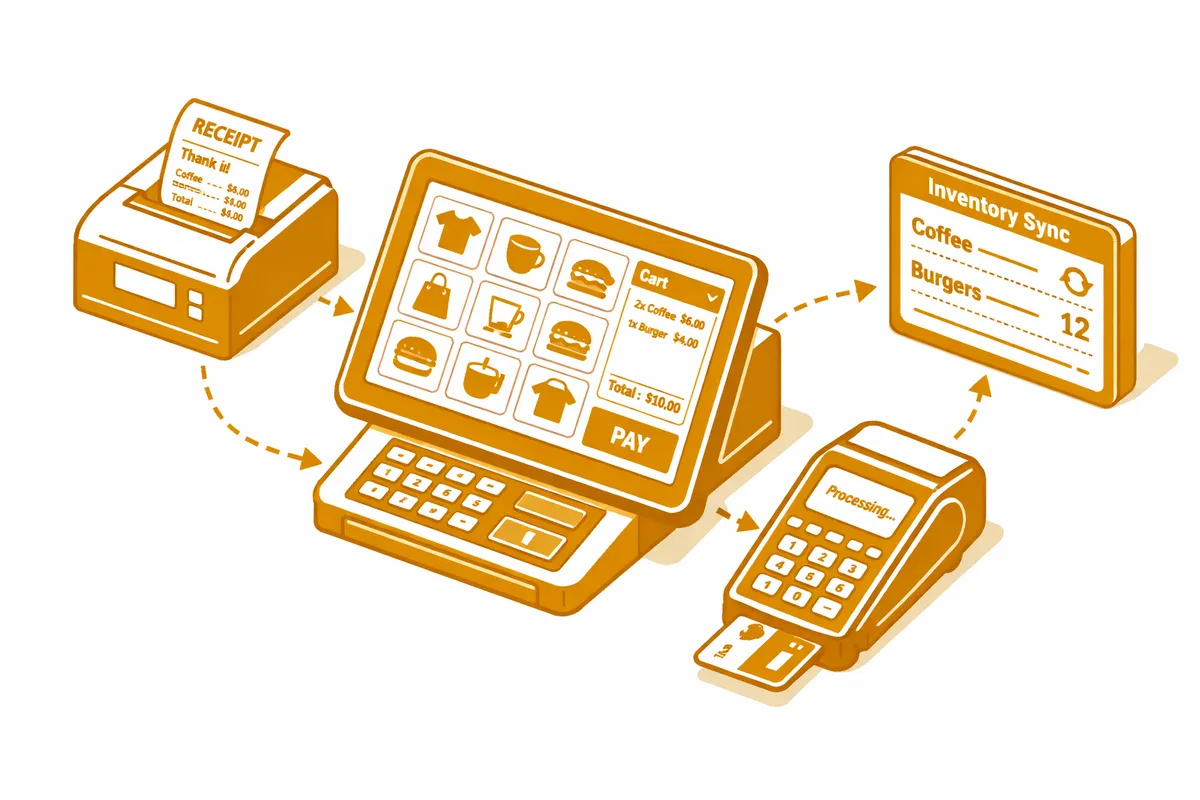
Hardware selection comes first, and it is determined by your service environment rather than your software preference. A yoga studio on Western Avenue needs a tablet-based check-in and retail point-of-sale that a front desk staff member can operate with one hand. A full-service restaurant on Division Street needs kitchen display system integration and a layout that allows multiple servers to run orders simultaneously without collisions. A coffee shop on Chicago Avenue needs a counter-display setup that shows the menu clearly to customers while keeping the order-taking interface efficient for baristas.
We work with the major POS platforms used by Chicago independent businesses: Toast for full-service restaurants, Square for retail and quick-service, Lightspeed for boutique retail with complex inventory, and Clover for businesses that need flexibility across service types. We do not recommend a platform and then adapt the recommendation when it does not fit. We start with your operation and select backward from there.
Software configuration matters as much as hardware choice. A restaurant POS configured by someone who did not understand modifier logic or table layout will produce a daily friction experience for every server who touches it. We configure POS systems based on your actual menu, your floor plan, your tip structure, and your reporting needs before training begins, so the first shift your staff works on the new system is not also the day they discover the configuration errors.
Integration setup is built into every POS engagement we take on. If your business uses QuickBooks, we connect the POS to accounting. If you use a payroll platform, we connect tip reporting. If you use a reservation system like OpenTable or Resy, we connect covers to order data. These integrations exist in most POS platforms and are often left unconfigured because the installation vendor moved on after the hardware was working.
Industries We Serve in Ukrainian Village
Full-service restaurants and bars on Division Street require POS configurations that handle split checks, server sections, bar tabs, and kitchen routing simultaneously. Toast's table management and course firing features are well-suited to the Division Street restaurant environment, and we configure them for the specific floor plan and service style of each location. Late-night bar operations require different modifier logic than dinner service, and we build both into the same system.
Independent coffee and espresso shops along Chicago Avenue run on speed: barista efficiency at the counter is directly correlated to throughput during the morning rush. We configure espresso POS setups with fast modifier flows, loyalty integrations, and mobile order-ahead connections so the barista's workflow during a 7 AM rush is as streamlined as possible. Square and Toast both work well in this environment with the right configuration.
Boutique retailers near Hoyne Avenue and Damen Avenue need inventory management that goes several layers deeper than what standard retail POS offers out of the box: consignment tracking, multi-vendor inventory, size and color variant management, and customer purchase history. Lightspeed Retail handles this inventory complexity better than most alternatives and connects to the accounting and ecommerce platforms that boutique operators typically run alongside their physical store.
Yoga and fitness studios near Smith Park use POS primarily for retail supplement and merchandise sales alongside their scheduling and membership platform. We configure studio retail POS to separate product revenue from membership revenue clearly in reporting so the studio owner can see whether retail is a meaningful business line or just a convenience offering.
Salons and personal care businesses throughout Ukrainian Village manage service revenue, retail product sales, tip collection, and booth rental income through a single transaction environment. We configure POS systems that handle all four cleanly, with correct tip reporting for W-2 employees versus 1099 contractors, and separate revenue categories that map to the right accounting classifications.
Specialty retail and gift shops near the Ukrainian National Museum and throughout the neighborhood need POS systems that accommodate tourist-season volume spikes around Ukrainian cultural events without requiring a hardware overhaul. We configure these systems with scalability in mind so an unexpected busy weekend does not expose a transaction ceiling.
What to Expect Working With Us
1. Operations interview and system selection. We spend one to two hours documenting your service environment, transaction types, staff size, and integration requirements before recommending any system. A Ukrainian Village business that gets a POS recommendation in the first five minutes of a conversation with a vendor is being sold to, not served. The right POS is determined by your operation, not by commission structures.
2. Hardware procurement and network configuration. We handle hardware ordering, delivery coordination, and network setup. POS systems depend on local network reliability, and we configure dedicated network hardware for POS operations so a busy dining room's guest WiFi does not interfere with payment terminal performance on a Saturday night.
3. Software configuration and staff training. All menu items, modifiers, pricing, tax rates, and reporting configurations are complete before your staff sees the system for the first time. Training covers the full order-to-close workflow for each staff role: server, bartender, manager, and front-of-house lead. We train in your actual environment, not over a screen share.
4. Go-live support and first-week check-ins. We are available by phone and on-site for the first three service periods after go-live. Configuration issues that only surface under real service conditions get fixed immediately rather than waiting for a scheduled support call. After the first week, we transition to regular support hours.