How We Build Logo Design for Ukrainian Village
We start with a visual audit of your competitive context. Before we put a mark on paper, we look at the logos of every comparable business within a quarter-mile of your location, as well as the broader category of your industry in Chicago. The goal is differentiation, not imitation. If every coffee shop in a six-block radius uses a wordmark in a thin sans-serif, the opportunity is to do something else with equal rigor.
Our process for Ukrainian Village clients includes a neighborhood character session, where we discuss the specific visual references that matter to your brand: the architecture of your street, the heritage of the community you are serving, the aesthetic direction you want to establish. This session is not about asking what you like on Pinterest. It is about understanding what visual story you are trying to tell in this specific geography.
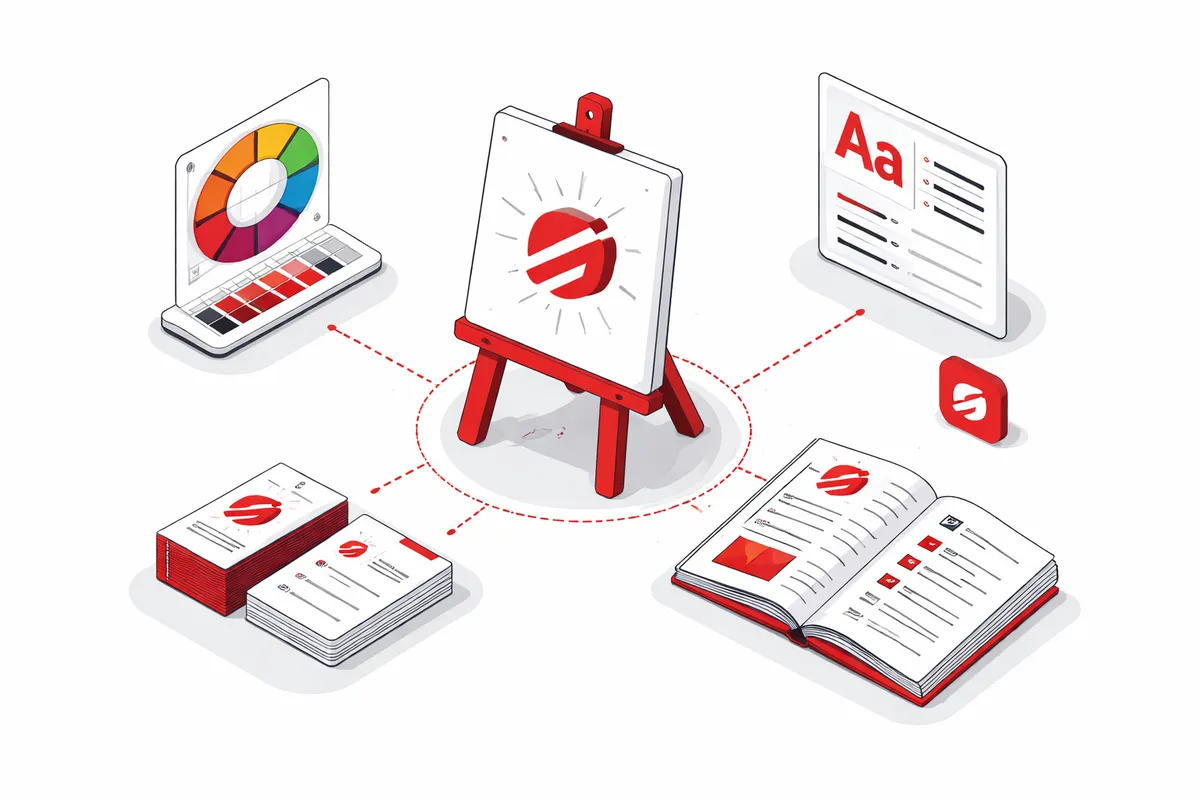
From that session, we develop three distinct creative directions: different in approach, not just variations of the same concept. Each direction includes a primary logo, a wordmark or monogram variant, a color palette, and a brief explanation of the design reasoning. You select one direction to develop further, and we build out the full system from there: secondary marks, favicon, single-color versions, reversed-color versions, and size-specific adaptations.
Every logo we deliver is tested for legibility at small sizes before we sign off. A logo that looks elegant at 400 pixels wide but dissolves into noise on a business card or a favicon has failed its primary job. We test at small sizes, at full size, on white backgrounds and dark backgrounds, before any file is delivered.
Industries We Serve in Ukrainian Village
Independent coffee shops along Chicago Avenue need logos that communicate quality and specificity without leaning on the visual shorthand of the third-wave coffee category, which has become so legible as to have lost meaning. We design coffee brand marks that are distinctive to the particular shop: its aesthetic, its sourcing story, its relationship to the block where it operates. The result is a mark that regulars can identify from the other side of the street.
Restaurants and bars on Division Street require logos that work across the full range of hospitality materials: menus, signage, coasters, glassware, and social media. A bar mark that only looks good on a website but not on a pint glass or a neon sign has not been designed for the actual application environment. We design hospitality logos with the physical material in mind from the start.
Boutique retailers near Hoyne Avenue and throughout the neighborhood need brand marks that hold up on shopping bags, tissue paper, and hang tags as well as storefront signage. The logo that carries the brand through the unboxing experience is doing some of the most important brand work the business produces, because it is the last thing the customer sees before they connect the purchase to the memory of the shop.
Design and creative studios throughout Ukrainian Village face the challenge of designing a logo for a business that produces design. The mark needs to be good enough to impress clients who are sophisticated about design, but not so self-referential that it communicates nothing about the studio's specific orientation. We design studio marks that communicate the right level of craft and clarity without becoming a design exercise for its own sake.
Yoga and fitness studios near Smith Park and along Western Avenue need marks that balance energy with legibility at the sizes these businesses use most: class schedule posters, window signage, and small-screen digital content. We design fitness marks that read as intentional rather than generic, which in this neighborhood means avoiding the category's overused visual tropes.
Salons and personal care businesses throughout the neighborhood earn a significant percentage of their new bookings through Instagram and Google Maps, where the profile image is a small square. Logo design for personal care businesses means designing for that square first and scaling up, rather than designing a beautiful horizontal lockup that becomes unreadable at 80 pixels.
What to Expect Working With Us
1. Competitive and neighborhood visual audit. We document your competitive landscape and your neighborhood's visual character before the first design session. For a Ukrainian Village business, that means a genuine walk of Chicago Avenue and Division Street with attention to what your neighbors are signaling visually and where the gaps are. This audit shapes the creative brief that drives the entire project.
2. Three distinct creative directions. We present three genuinely different approaches to your logo, not three colorways of the same concept. Each direction reflects a different interpretation of your brand story and a different relationship to the neighborhood's visual context. You choose one direction and we develop it into the complete mark.
3. Full system build. Once the direction is locked, we build the complete logo system: primary horizontal lockup, stacked version, icon or monogram variant, favicon, and all required color variations. You receive every file you will ever need, including vector source files, in a clearly organized delivery package.
4. Brand standards document. We produce a one-page brand standards document that specifies your exact colors in Pantone, CMYK, RGB, and hex, your approved fonts, clear space requirements around the logo, and approved and prohibited usage examples. Any designer you work with in the future can open that document and understand exactly how to handle your brand.